

Hybrid and State Threats
We analyse how hostile state and non-state actors use hybrid activity, covert influence and strategic disruption to undermine security, resilience and democratic stability in the UK and among its partners and allies.


Modern state threats increasingly operate below the threshold of conventional war. They combine political influence, cyber activity, illicit finance, sabotage, coercion and information manipulation to exploit vulnerabilities across societies, economies and critical infrastructure. These activities are often difficult to detect, attribute and counter, yet can have significant consequences for national security and defence.
Hybrid threats are central to this evolving landscape. States and their proxies combine covert networks, force projection, economic pressure and influence operations to weaken resilience, destabilise institutions and create strategic advantage without triggering open conflict. From sanctions evasion and clandestine financing to attacks on subsea infrastructure and coordinated disinformation campaigns, these methods increasingly converge across multiple domains.
As strategic competition intensifies, countries are adopting whole-of-government approaches to address the interconnected nature of these threats. Security agencies, policymakers, regulators, military institutions and private-sector actors are increasingly required to coordinate responses across domestic and international arenas.
RUSI’s research and engagement activities examine how hostile actors exploit gaps in governance, infrastructure and social cohesion, while identifying effective approaches for deterrence, resilience and response. Our work builds an evidence base to support policy development across a range of interconnected threat areas, including:
- Financial dimensions and covert networks
- Political influence, information manipulation and gender and security
- Critical infrastructure, energy and economic resilience
- Maritime, Arctic and subsea security
- Force projection and strategic disruption
Themes
View related research projects on hybrid and state threats.
Financial Dimensions and Covert Networks
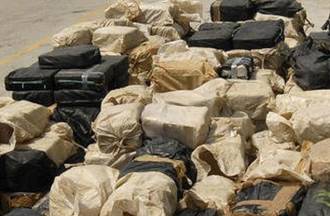
Hostile actors rely on illicit financial systems, sanctions evasion mechanisms and covert commercial networks to sustain influence and hybrid operations. Our research examines how financial activity supports strategic disruption, force projection and hostile state objectives.




Political Influence, Information Manipulation and Gender and Security
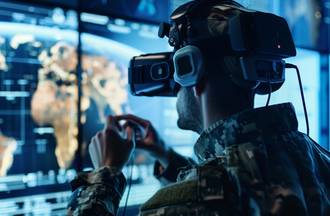
State and proxy actors use disinformation, political interference and influence operations to exploit social divisions, weaken democratic institutions and shape public discourse. These resources explore evolving methods of manipulation across digital, political and social environments.




Critical Infrastructure, Energy and Economic Resilience
Hybrid threats increasingly target the infrastructure underpinning economic stability, energy security and national resilience. Our work analyses vulnerabilities across energy systems, supply chains and critical national infrastructure, including the growing risks facing undersea and maritime networks.



Maritime, Arctic and Subsea Security
The maritime and seabed domains are becoming increasingly important theatres for hybrid activity, strategic signalling and geopolitical competition. These resources examine subsea sabotage risks, Arctic security dynamics, military adaptation and the protection of critical maritime infrastructure.



Force Projection and Strategic Disruption
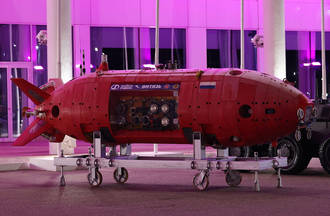
States employ military posture, coercive diplomacy, proxy actors and non-conventional methods to project influence and challenge regional stability. Our research explores how force projection increasingly intersects with hybrid tactics and strategic competition.


The threat landscape continues to evolve rapidly. Through research, analysis and convening activities, RUSI supports policymakers and practitioners in understanding and responding to the complex interaction between hybrid threats, hostile state activity and national security resilience.
Latest publications
Read the latest publications on state threats and filter by project and research group.
Loading results...
Our experts
Dr Jessica White
Director of Terrorism and Conflict Studies
Terrorism and Conflict


Michael Jones
Senior Research Fellow
Terrorism and Conflict

Dr Joana de Deus Pereira
Senior Research Fellow
RUSI Europe

Christopher Hockey
Senior Research Fellow
RUSI Nairobi

Dr Antonio Giustozzi
Senior Research Fellow
Terrorism and Conflict

Tom Keatinge
Director, CFS
Centre for Finance and Security

Matthew Redhead
RUSI Senior Associate Fellow, CFS

Eliza Lockhart
Senior Research Fellow
Centre for Finance and Security

Arzu Abbasova
Research Analyst
Centre for Finance and Security

Cathy Haenlein
RUSI Senior Associate Fellow, Organised Crime and Policing

Elijah Glantz
Research Fellow
Organised Crime and Policing

Mark Williams
Former OCP Senior Programme Manager | SHOC Network Member - Researcher

James Sullivan
Director, Cyber and Tech
Cyber and Tech

Joseph Jarnecki
Senior Research Fellow
Cyber and Tech

Jamie MacColl
Senior Research Fellow
Cyber and Tech

Dr Burcu Ozcelik
Senior Research Fellow, Middle East Security
International Security

Matthew Savill
Director of Military Sciences
Military Sciences
