

Indo-Pacific and Euro-Atlantic Security is Not Just Indivisible, it Merges

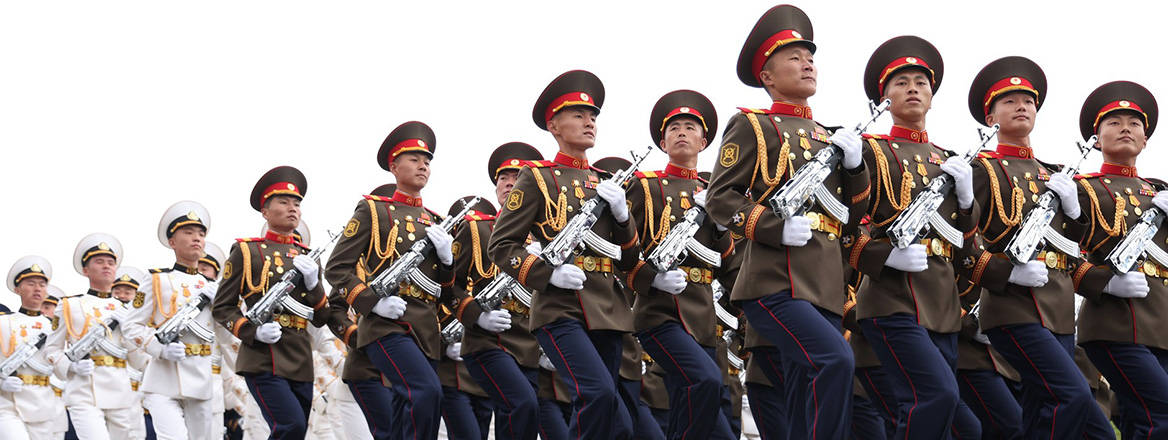
Conflicts are connecting in Europe and the Middle East, but could Asia be next?
Conflicts arising independently in 1930s Asia and Europe converged into a ‘World War’ that broke the European empires and defeated revisionist Germany and Japan, ushering in a US-dominated world order.
Today, wars in Ukraine and the Middle East are connecting. Former UK Foreign Office Minister Tobias Ellwood sees the emergence of ‘a chaotic situation until eventually we have a world at war. It’s not the Second World War; it’s a world where there’s constant conflict.’ Revisionists sharing the objective of ending US hegemony see opportunities in its overstretch and are driving the convergence of contemporary conflicts in Europe, the Middle East, and Asia.
How Did it Happen?
There are many parallels between Imperial Japan’s efforts to control China from 1931 and Russia’s war against Ukraine today. As with the Kremlin’s ‘Special Military Operation’, the war Japan called the China ‘incident’ dragged on far beyond expectations. As months turned to years, it drew in foreign support and merged with conflict on the far side of the globe.
The first point from this history is that protracted war fosters a coalition of support based on common strategic objectives. China’s resistance was sustained by support from powers that stood to lose if Japan achieved regional predominance. The Soviets (long viewed by the Imperial Japanese Army as the main enemy) sent aid from China’s north-west, the French from Indochina, and the British through Hong Kong and Burma.
The second point is this can trigger a counter-coalition based on an opposing set of common objectives. Throughout the 1930s, Japan (hoping America might remain neutral) found common cause with Berlin and Rome to suppress London and Moscow. Hitler and Mussolini may have been indifferent to China’s fate, but the drain on British and Russian resources caused by Japan’s war in Asia offered advantages for revisionist ambitions in Europe and North Africa. Equally, Japan had no direct stake in European politics, but through a series of agreements (1939 Molotov-Ribbentrop, 1940 Tripartite ‘axis’ pact with Germany and Italy, 1941 Soviet-Japanese non-aggression pact), Tokyo’s plans in Asia benefitted from Britain’s enforced focus on defending the home islands.
The third point is that even a badly coordinated coalition (Hitler did not inform Japan about Barbarossa – his surprise attack on the Soviet Union), can produce reciprocal effects that alter the course of events in European and Asian theatres. The Red Army’s struggle in the west against Barbarossa practically eliminated the threat to Japan from the north. Conversely, when intelligence of Tokyo’s decision to ‘strike south’ (attack European colonies in Southeast Asia) reached the Kremlin in September 1941, Stalin knew it was safe to recall from the Far East eighteen Red Army divisions that would tip the balance for the defence of Moscow. There is nothing new about Euro-Atlantic and Indo-Pacific security being ‘indivisible’.
Based on my very good relationship with Kim Jong Un, of North Korea, I am not happy with the fact that the United States has, long ago, agreed to participate in Joint Military Exercises with South Korea
The clues had been there for years. In the inter-war period, Germany drew close to China as a source of industrial resources and provided extensive military and economic support. Then in 1937 the Nazis cut ties to align with Japan based on common objectives of diminishing other European powers and intimidating America into neutrality. Choices made as non-belligerents early on about support for one side or the other can close down other options later on. Under the non-aggression pact with Japan, Stalin reduced support to China, prompting Europeans and Americans to fill the gap. This leads to the fourth point, that long before hostilities begin, risk assessments force choices and trade-offs because of the need to allocate resources to deter or confront the main threat. The Axis emerged after Germany initiated war in Europe. Germany only declared war on the US after Japan attacked Hawaii, but the groundwork had been laid years earlier.
Compared to the war machines of the 1930s, the sophistication of modern weapons systems creates path dependencies that narrow the scope for diplomatic ‘multi-alignment’ or hedging. Information processing systems on which modern networked weapons depend can be incompatible with legacy systems, especially systems they were designed to defeat. Turkey and India face challenges in adopting western aircraft systems alongside Russian air defence systems. Likewise, AUKUS and Global Combat Air Program (GCAP) are drawing US allies Australia, Italy, Japan, and the UK together with consequences that may only become apparent decades into the future. Bandwagoning on procurement by countries sharing broad strategic objectives and threat assessments contributes to a spiral of bloc formation.
The fifth point is that once the logic of shared strategic objectives has hardened the logic of ‘my enemy’s enemy is my friend’, further conflict protraction can become more likely. After Barbarossa, allied support to China was motivated by fear that once Japan finished off China it would turn once again on a vulnerable Soviet Union - to Hitler’s great advantage. Maintaining Chinese resistance was an imperative not principally for the sake of China’s survival, but to keep Stalin in the fight. The Soviets’ capacity to draw off German strength was a critical factor in allied planning for the invasion of Europe in Sicily (July 1943) then Normandy (June 1944).
Could this be Happening Again?
In February 2022, Presidents Xi Jinping and Vladimir Putin announced their ‘no limits’ friendship just before Russia’s full-scale invasion of Ukraine. These leaders share a faith that changes ‘unseen in a century’ are taking place, and they are driving them. As Russia’s assault bogged down, it sourced military support from Iran and North Korea, raising speculation about a ‘CRINK Axis’ or a New Axis of Upheaval uniting China, Russia, Iran and North Korea.

As with Japan’s invasion of China in 1931, opposing coalitions including the great powers from opposite sides of the globe are forming around Russia’s war. South Korea’s arms exports to Europe increased in step (if not in proportion) to the strengthening of Russia-DPRK relations. Japan is weighing the advantages of getting closer to Ukraine to learn vital lessons about the modern battlefield against the cost to its interest in longer term relations with Russia. Four Self Defence Force personnel deployed to the NATO Security Assistance and Training for Ukraine (NSATU) headquarters in Germany.
Arms interdiction is a vector that aligns coalitions and pulls independent conflicts together. Even before the imperative of seizing Indonesian oil, the motivation for Japan’s ‘strike south’ was to sever support flowing to Chinese resistance through Hong Kong, French Indochina and Burma. On 26 July 2026, Iran’s Foreign Minister posted ‘Zelenskyy has attacked an Iranian commercial vessel, killing a sailor. A blatant UN Charter violation done at Israel's behest to drag Europe into its war.’ Ukraine's Foreign Minister replied ‘The regime in Tehran is a direct accomplice to Russian aggression against Ukraine’. Media reported the ship was suspected of carrying missile components from Russia to Iran. Iranian retaliation was reportedly called off after receiving an apology.
Interdicting the flow of intangible military enablers is more difficult but no less important. The Lowy institute examined the development of drone technology as an example of how ‘China, Russia, Iran, and North Korea have built an authoritarian knowledge market in which battlefield insights transfer rapidly.’ In May 2026 the US announced sanctions on entities providing ‘satellite imagery that enables Iran’s military strikes against US forces in the Middle East’, adding that it ‘will continue to take action to hold China-based entities accountable for their support to Iran’. President Zelenskyy alleged on 25 July 2026 that Russia is providing ‘new assistance’ to Iran, including satellite surveillance of four US bases in Bahrain, Jordan and Kuwait.

Now Taiwan is quietly joining the coalition opposing CRINK, based on converging interests and through the medium of intangible support. Taiwan has a strategic interest in Ukraine demonstrating that aggression doesn’t pay and the ability of its victims to mobilise international support preventing a more powerful adversary from taking political control against the popular will. On top of supporting sanctions on Russia, research by Taiwan’s ‘Research Institute for Democracy, Society, and Emerging Technology’ (DSET) found the top destinations for Taiwan’s drone exports to be Poland and Czechia, with the bulk being transferred to Ukraine. Taiwan gets intangible enablers in return. Taiwan’s s private companies are working with Ukrainian counterparts to gain insights from their use of uncrewed and autonomous systems and interceptors. Taiwan’s drone industry alliance, TEDIBOA, signed a memorandum of understanding with Ukrainian defence tech hub ‘Iron Cluster’ in September 2025. A DSET report entitled The Invisible Drone Wall: Taiwan’s Quiet Support for a China-Free European Drone Supply Chain indicates the wider implications, including the emergence of a supply chain that reduces dependence on Chinese components, capital, software, platforms and raw materials; a so called ‘non-red’ supply chain. The risk for Kyiv – and for conflict convergence – is Chinese retaliation could punish Ukraine directly (Ukraine relies on Chinese components for drone manufacture), or by expanding support to Russia.
As Britain found in 1942, the geographic extension of coalitions and counter-coalitions obliges globally postured powers to manage stretched resources and the risk that exposed vulnerabilities incite opportunism. In the first half of 1941 Japan feared becoming trapped into a choice between withdrawal from China or a slow defeat under the pressure of US oil and scrap metal sanctions. The ‘strike south’ proposal to seize European colonies was made more tempting because Nazi occupation of the Netherlands in May 1940 and the fall of France in June 1940 left them weakly defended. Just as Britain lost Singapore to the choice of ‘Europe first’ (over Asia), the same problem faces the US and its allies on how to manage stretched resources and deter opportunistic aggression.
What Comes Next?
As Japan’s Prime Minister acknowledged in November 2025, a Chinese attack on Taiwan may produce a threat to Japan’s survival. Japan is increasingly active in setting regional military power balances to deter aggression, through its Overseas Security Assistance program, foreign military sales (for example, Mogami class frigates to Australia), and co-development (GCAP with Britan and Italy). As the host of US power projection capability in Northeast Asia, Japan may be more assured of American support than any other ally in the world, but this also puts it squarely in the way of China’s regional hegemony ambition.
Whether conflicts in Europe, the Middle-East and Asia become simultaneously active or merge as they did in 1942, Europe’s place in an allied coalition would appear to be the softer target. If, as NATO’s Secretary General Mark Rutte warned on 5th July 2025, China attacks Taiwan and asks Moscow to open a second front against a NATO nation, how many European allies would cut a deal with Beijing if it meant not having to fight?
© RUSI, 2026.
The views expressed in this Commentary are the authors', and do not represent those of RUSI or any other institution.
For terms of use, see Website Terms and Conditions of Use.
Have an idea for a Commentary you'd like to write for us? Send a short pitch to commentaries@rusi.org and we'll get back to you if it fits into our research interests. View full guidelines for contributors.
WRITTEN BY
Dr Philip Shetler-Jones
Senior Research Fellow, Indo-Pacific Security
International Security



- Jim McLeanMedia Relations Manager+44 (0)7917 373 069JimMc@rusi.org