

Collective Defence: Women, Peace and Security in a Divided World

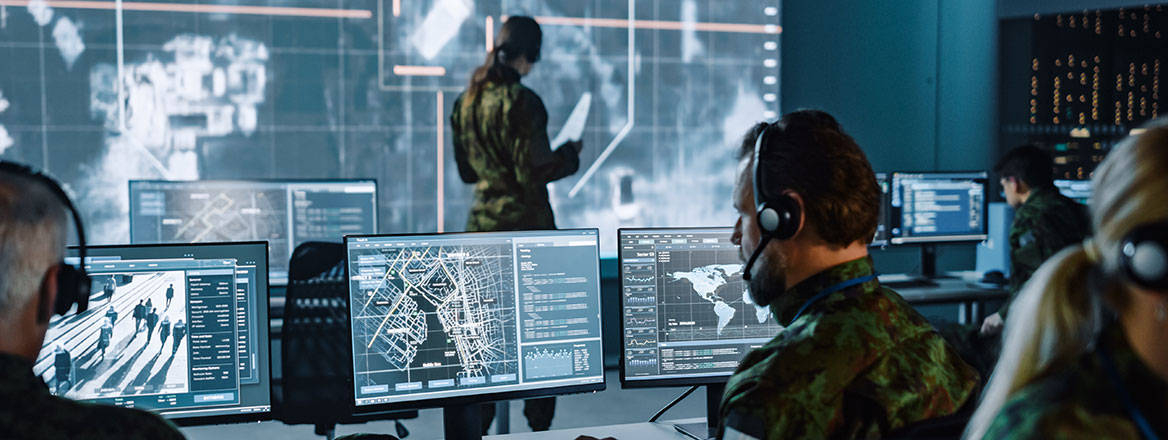
The future of collective defence and the Women, Peace and Security agenda relies on gender and identity analysis to build societal resilience to modern hybrid threats.
Overview
In today's divided security environment, adversaries exploit social divisions, gendered narratives and identity-based grievances to undermine democratic cohesion and NATO's legitimacy. The Women, Peace and Security (WPS) agenda, if operationalised beyond its traditional protection focus, offers practical tools for strengthening collective defence and resilience. This paper provides actionable recommendations for NATO and its Allies and partners to embed gender and identity analysis into core security practices, helping the Alliance to better anticipate and respond to evolving hybrid threats.
Key Recommendations
- Modernise the strategic argument for WPS: Communicate WPS as central to operational effectiveness and resilience, not just protection.
- Integrate gender and identity indicators: Embed gender- and identity-sensitive indicators into early warning and situational awareness systems to identify when gendered or identity-based activity is being coordinated, amplified or exploited for strategic effect.
- Embed in training and exercises: Include gendered and identity-based hybrid threat scenarios in NATO exercises and training for all relevant personnel.
- Strengthen cross-policy coordination: Improve collaboration between WPS, human security, hybrid threat, intelligence and resilience communities within NATO.
- Support national resilience planning: Encourage Allies to incorporate gender and identity analysis into national resilience and civil preparedness strategies.
By making gender and identity analysis a routine part of threat assessment and operational planning, NATO can better anticipate, detect and counter the tactics adversaries use to destabilise societies and alliances.
Register or log in to continue reading
Account creation is quick, free and gives access to all RUSI research and more
- FREE account
- One-time set-up
- Easy to manage
Introduction
The Women, Peace and Security (WPS) agenda is under renewed political pressure. Across NATO Allied and partner countries, gender equality, women’s rights and LGBTQIA+ rights have become increasingly contested. Gender mainstreaming – a strategy to ensure policy, programming and law prioritise achieving gender equality – can struggle to gain traction when it is treated as politically contentious, or less urgent than immediate security demands. In a context of strategic competition, war in Europe, pressure on defence budgets and renewed focus on deterrence and collective defence, the WPS agenda risks being perceived by policymakers as valuable in principle, but too easily set aside in practice when harder security challenges dominate attention.
This tendency within the security establishment to view WPS as an important but optional agenda reflects a deeper failure to acknowledge the operational relevance of gender and identity analysis for contemporary security. WPS has often been presented through its most visible protection use case, focusing on the need to protect women and girls from the harms of armed conflict, including conflict-related sexual violence, exclusion from decision-making, and the gendered consequences of displacement and insecurity. These remain urgent concerns. However, when WPS is framed primarily as a protection agenda for vulnerable groups, it can be treated as separate from the core business of defence. In moments of acute military threat, gender analysis is too often seen as something to return to later.
This framing is not sufficient for the threat environment NATO faces. Gender and identity shape how societies experience insecurity, how hostile narratives gain traction, how trust in institutions is eroded and how adversaries identify pressure points. Contemporary hybrid campaigns operate through these social dynamics by targeting how people understand themselves, whom they trust, which institutions they believe in and which groups they fear. Gender and identity influence belonging, grievance, credibility and vulnerability and therefore shape how these campaigns take hold. Russia, China, Iran and aligned networks have all exploited identity-based grievances, gendered narratives and social polarisation to weaken democratic cohesion, intimidate critics, undermine support for alliances and contest the legitimacy of liberal democratic values. Gender backlash, anti-rights mobilisation and identity-based disinformation are therefore part of the operating environment in which NATO must deter, defend and build resilience.
NATO was conceived to provide collective defence in a divided world, and its strength depends not only on military capability, but also on the cohesion, legitimacy and resilience of its member societies. The Alliance rests on the assumption that Allies share enough values, interests and trust to regard a threat to one as a threat to all. Yet adversaries increasingly seek to weaken that foundation by amplifying division, targeting participation and portraying democratic commitments to equality and pluralism as evidence of weakness, hypocrisy or moral decline.
If adversaries are exploiting gender and identity to weaken the cohesion and resilience of target societies, then the agenda needs to be understood and enacted by a broader set of security actors. Protecting women and girls in conflict remains a core part of WPS, but it should not be the only argument for the agenda. WPS can also act as a practical tool for analysing and responding to the ways in which gender and identity are used to shape conflict, weaken resilience and constrain political decision-making.
This policy brief argues that WPS will be more durable and effective if it is made operationally relevant and focused on the long term. It distils policy recommendations for NATO, its Allies and partners and encourages future discussion and action. The paper first examines the current state of the WPS agenda as it relates to NATO and its wider network of Allied and partner countries, focusing on the challenges that have limited its integration into core security practice. It then maps existing NATO policy frameworks that provide entry points for a more operational approach to WPS, before turning to hybrid threats as a key test case for future-proofing the WPS agenda. The paper concludes with recommendations for embedding gender and identity analysis into NATO’s threat assessment, early warning, training, resilience and partner engagement processes.
The WPS Agenda: Background and Current Challenges
The WPS agenda was established through UN Security Council Resolution 1325 in the year 2000. It responded to longstanding gaps in international peace and security practice, such as the exclusion of women from peace processes, the limited recognition of women’s roles in conflict and peacebuilding, and the failure to address the gendered harms of armed conflict. The agenda has traditionally been organised around four pillars: participation, protection, prevention, and relief and recovery. Together, these pillars seek to ensure that:
- women are empowered to shape peace and security decisions;
- conflict responses account for gendered risks and harms;
- prevention efforts address the conditions that enable violence; and
- relief and recovery efforts respond to the needs, capacities and roles of affected populations.
Since it was established, the agenda has expanded through nine additional UN Security Council resolutions and has generated a broad architecture of policy commitments. These include national action plans and multilateral strategies, as well as NATO's WPS policy framework and related Human Security commitments. This evolution has helped to reinforce the idea that gender is relevant to peace and security, rather than only to development or human rights. It has also created a shared vocabulary and framework through which states and international organisations can assess whether women are represented in peace processes, whether security institutions account for gendered harms, and whether conflict responses address the needs of different parts of the population.
However, the development of the WPS agenda has been uneven. The protection pillar has often been the most visible, particularly in relation to conflict-related sexual violence, displacement and other gendered harms. While protection remains a central and urgent part of the agenda, the prominence of this pillar has also contributed to a narrower perception of WPS as an agenda primarily concerned with vulnerable women and girls in conflict-affected settings. This has made it easier for some security actors to treat WPS as morally important but secondary in operational terms, particularly in moments when defence structures are focused on deterrence, warfighting, force readiness and strategic competition. This dynamic is reinforced by the current backlash against gender equality and wider identity politics in several Allied and partner societies, where WPS and gender mainstreaming are increasingly portrayed as ideological, divisive or unrelated to national security.
This means that the relevance of WPS has not always been communicated or operationalised in ways that resonate across security institutions. RUSI's January 2025 expert roundtable on WPS in NATO and subsequent ‘WPS in Action’ discussions identified three recurring implementation challenges: communication, operationalisation and accountability. These challenges are closely connected. Weak communication makes the WPS agenda easier to dismiss. Limited operationalisation makes it harder to demonstrate practical value. Insufficient accountability allows policy commitments to remain disconnected from institutional incentives, planning processes and operational behaviour.
Communication remains one of the most significant challenges. WPS is often presented as an agenda for women, rather than as an agenda that improves security analysis and outcomes for entire societies. This framing can obscure the wider analytical value of gender analysis in explaining and understanding how power, status, identity, social norms and institutional access shape insecurity, influence conflict dynamics and affect the credibility of security responses. Lessons from counterterrorism and preventing and countering violent extremism illustrate this point. Gender analysis has helped identify recruitment dynamics, mobilisation narratives, community vulnerabilities, the roles of women in extremist movements and the gendered assumptions that can weaken threat assessment. The same analytical logic can strengthen hybrid threat analysis by showing how gender and identity can shape how influence operations gain traction, how identity-based grievances are mobilised and exploited, who is targeted or silenced, and how adversaries seek to undermine democratic resilience.
Operationalisation of the WPS agenda would allow the policy to move from declarations to operational reality, but so far, it remains inconsistent. Many NATO Allies and partners have developed WPS commitments, national action plans and gender advisory structures, but these do not always translate into routine practice across defence planning, intelligence, strategic communications, resilience, crisis response or exercises. Responsibility for WPS can remain concentrated among gender advisers or specialist teams, rather than being treated as a shared analytical responsibility across relevant functions. This can create a gap between high-level policy language and the practical use of gender analysis in threat assessment, operational planning and evaluation.
Accountability is also limited. National action plans and NATO reporting mechanisms provide important structures for tracking progress, including the NATO Committee on Gender Perspectives’ summary of national reports and the requirement for Allies to discuss WPS progress on a regular basis. Yet implementation often depends on political will, individual leadership and the capacity of specialist staff, rather than on embedded institutional incentives. Where WPS objectives are not integrated into performance management, planning requirements, evaluation frameworks or operational lessons processes, commitments can remain vulnerable to changes in leadership, funding or political climate.
These challenges are especially important in the current strategic environment. War in Europe, intensifying hybrid threats, democratic polarisation, technological disruption and rising anti-gender mobilisation have placed new demands on the WPS agenda. Meeting these demands requires an approach that protects the core commitments of WPS while also demonstrating their operational relevance to contemporary and future conflict.
WRITTEN BY
Claudia Wallner
Research Fellow


Dr Jessica White
Director of Terrorism and Conflict Studies
Terrorism and Conflict

Balázs Gyimesi
External Relations and Communications Manager, RUSI Europe
Communications and Marketing

Rachel Grimes MBE
RUSI Senior Associate Fellow, Terrorism and Conflict

- Jim McLeanMedia Relations Manager+44 (0)7917 373 069JimMc@rusi.org