

If NATO Cannot Protect Everyone, It Cannot Defend Anyone

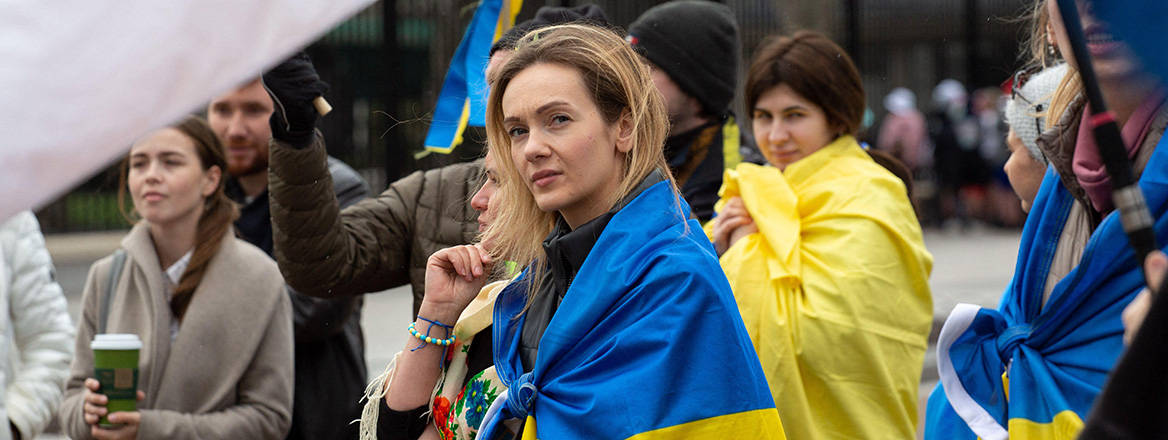
Vignettes of Article 5 responses reveal wide, plausible consequences of NATO shortcomings in pursuit of the Women, Peace and Security agenda.
This International Women’s Day falls during a moment of profound geopolitical challenge. The US and Israel have launched coordinated strikes on Iran in recent days, triggering a rapidly expanding regional conflict in the Middle East.
This war is not unfolding in isolation. From Kyiv to Khartoum to Tehran, multiple conflicts are evolving, devastating the lives of those caught within them. They are also reshaping how we think about national security and how democracies organise to defend themselves.
With large-scale attacks already underway and the potential for spillover to involve NATO allies, questions of societal resilience and preparedness for a possible Article 5 scenario are becoming increasingly urgent.
Within these debates, gender continues to be treated as extra rather than essential, despite more than twenty-five years of the UN’s Women, Peace and Security (WPS) agenda.
NATO and its member states have repeatedly committed to the WPS agenda. Most Allies now have National Action Plans and NATO has developed an ambitious policy framework. Yet a clear implementation gap remains, one that would be felt acutely in an Article 5 scenario. For those decision-makers in defence, gender can still appear abstract or peripheral to their core focus on deterrence and defence.
The missing piece is the ability to imagine what WPS looks like in practice, and why it matters for NATO’s collective defence. If the Alliance is serious about Article 5, gender perspectives must shape how militaries understand, plan and prepare for the operating environment during conflict.
WPS is not an add-on or a ‘nice to have’. It is central to warfighting readiness, societal resilience and NATO’s credibility as an Alliance. If NATO cannot protect all of its people, it cannot credibly claim to defend them. At a moment of history defined by conflict, the stakes could not be higher.
The Imagination Gap in NATO’s Approach to Article 5
Drawing on experience working with NATO, your authors propose plausible, fictionalised vignettes to illustrate the operational and strategic risks of failing to consider WPS in Article 5 scenarios. This approach allows these dynamics and risks to be explored while navigating sensitivities that often prevent the sharing of real operational examples more widely.
Preparing for war means recognising gendered vulnerabilities while mobilising the full range of societal capabilities required for defence. This is not about representation; it is about operational effectiveness
Put simply, this is storytelling as a risk-revealing and risk-reducing method: using narrative to show what integrating WPS looks like in practice and how it can mitigate harm to the mission. We have used this approach in briefings to NATO allies and partners at the diplomatic level, with policymakers in national ministries of defence and with military commanders and gender advisers tasked with operationalising WPS on the ground. Humans are hardwired to understand complex challenges through stories. When those stories are purposeful, by which we mean specific, detailed and grounded in operational realities, they make the strategic relevance of WPS visible in ways policy frameworks alone often cannot. This has proven to be a powerful way of translating policy commitments into actionable understanding.
The Costs of Failing to Account for WPS in an Article 5 Scenario
For our first story, let us take Anna. She is eight years old and lives in a Romanian village near Vaslui. In an Article 5 situation, the bridge to her school has been bombed. At first, it looks like an infrastructure problem. But six months later, still unable to attend school, Anna is falling behind in reading and increasingly isolated from her friends. She struggles to follow the news and mainly stays in her room scrolling TikTok. In a society flooded with disinformation, she is vulnerable. That is a security risk because it undermines societal resilience.
Next, we move to Italy and Roberto. He is twenty-five years old, working in a supermarket near Rome. When Russia invades, some of its propaganda about family values and the need for women to have more children resonates with him. It makes sense, he thinks. Then Italy calls up men to serve. With two small kids at home, he faces an impossible choice: fight or desert. His dilemma is not just personal – it is about societal resilience and cohesion, but also force readiness and the ability to mobilise in response to Article 5.
Now Ingrid. She is in her early forties, she lives in a smart house on a quiet street in Lund, Sweden. After years of infertility treatment, she finally has a daughter - born premature. When a cyber-attack disables her hospital, the baby survives only because of a generator. But for how long? This is not abstract. Cyber warfare lands hardest on health systems. And it exposes those who depend on them – often women, as primary caregivers.

Her husband, Johan, experiences it differently. A software engineer, he channels his anger into action – joining Sweden’s voluntary cyber-defence corps. But he is exhausted. Nights spent firefighting hostile networks are followed by days of worry at home. Fatigue blunts his skills. Mistakes creep in. His ability to contribute effectively to national cyber defence is weakened just when it is most needed most.
The consequences go beyond one household. Defence loses capacity when caregiving collapses. It also loses capacity when tired, distracted and overstretched volunteers perform below their potential. Societal resilience buckles when families are stretched from both sides.
Then we have Andris. He is a retired ambulance driver in his mid-sixties who lives just outside of Jelgava in Latvia who has been called back up to drive ambulances on the front line as part of the Article 5 response. He, of course, has to travel and leave his wife who has multiple sclerosis, for whom he is the primary carer. While he is gone his town is occupied. The occupying forces commit widescale sexual and gender-based violence against the population.
The tragedy is this: it did not come out of nowhere. Local civil society organisations had raised the alarm weeks earlier. Women’s groups had been trying desperately to engage NATO Officials. If NATO had listened to them, if their warnings had been acted on, the scale of what followed might have been reduced or even prevented. Instead, Andris returns to find his wife alive – but never the same again. His service came at the cost of her security.
Faced with the unbearable contradiction of defending NATO and his homeland while his own family suffered at home, Andris decides to rebel. He leaves the armed forces, no longer able to reconcile his duty with the price paid by those closest to him. On the ground, this means they are now one ambulance driver short. In a place where every trained pair of hands can mean the difference between life and death, the consequences multiply.
The loss is felt on a personal, operational and societal level all at once. It is the direct result of warnings unheard and voices ignored. Of again failing to recognise WPS as a strategic enabler for Article 5 and a necessity for war fighting readiness.

Last we turn to Yasmine, a final-year computer science student studying at a leading university in the North East of England. She is British citizen with Russian heritage. She knows clearly what is at stake, can feel it, and volunteers immediately at a local recruitment centre after the invasion. The British Army values her technical skills – but what surprises her is what they really need are her language and cultural insights. Her story underlines the point: taking Article 5 seriously means tapping into the full range of national talent. This means recognising the necessity of recruiting women to support war fighting readiness. It is about numbers, but it is also about harnessing the full range of capabilities needed to fight and win.
Defending Everyone: What Article 5 Really Requires
Anna, Roberto, Ingrid, Andris and Yasmine are fictional. But they could easily be real. Their stories make a simple point: in an Article 5 scenario, men and women, boys and girls face different risks and bring different strengths. From resisting disinformation to sustaining families, health systems and critical skills, resilience comes from the whole population. Preparing for war means recognising gendered vulnerabilities while mobilising the full range of societal capabilities required for defence. This is not about representation; it is about operational effectiveness.
NATO’s adversaries intimately understand that WPS can be perceived by allies as soft, or incidental and they leverage that belief on a daily basis to the detriment of alliance readiness. For NATO, WPS has always been about mission effectiveness and the protection of Euro-Atlantic security. We simply have not been very good at communicating and making that real to decision-makers at all levels. It goes to the heart of what Article 5 means: protecting people and populations while ensuring NATO forces have the readiness and societal support required to do so.
If NATO is serious about Article 5, WPS must sit at the core of how the Alliance understands the operating environment, prepares for conflict and defends the societies it exists to protect.
© Diana Morais, Samantha Turner and Katharine Wright, 2026, published by RUSI with permission of the authors.
The views expressed in this Commentary are the authors', and do not represent those of RUSI or any other institution.
For terms of use, see Website Terms and Conditions of Use.
Have an idea for a Commentary you'd like to write for us? Send a short pitch to commentaries@rusi.org and we'll get back to you if it fits into our research interests. View full guidelines for contributors.
WRITTEN BY
Diana Morais
Guest Contributor


Samantha Turner
Guest Contributor

Katharine A.M. Wright
Guest Contributor

- Jim McLeanMedia Relations Manager+44 (0)7917 373 069JimMc@rusi.org