

Masculinities and Violence in the Horn of Africa Borderlands

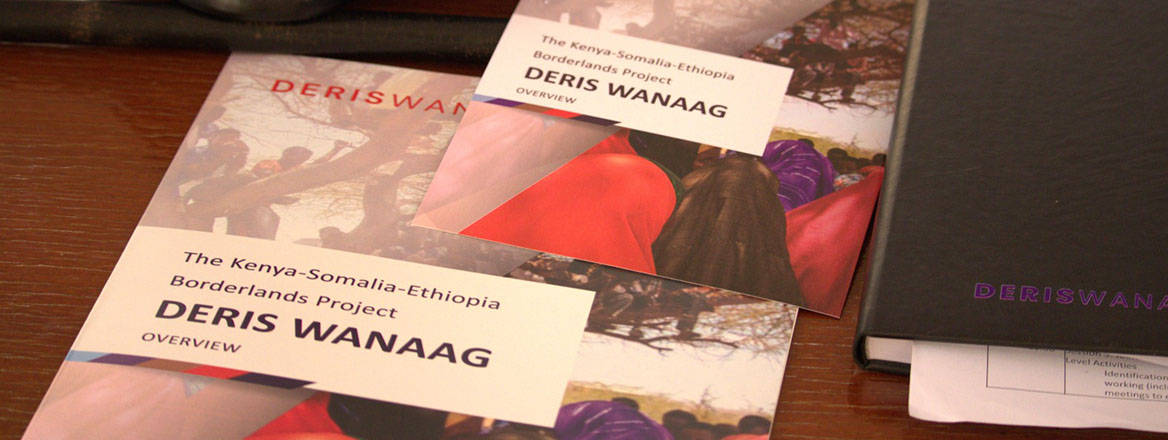
Masculinity norms shape conflict, extremism and gender violence in the Kenya-Somalia-Ethiopia borderlands. Peacebuilding, stabilisation and counterterrorism practitioners must recognise how these interrelationships sustain the threat posed by Al-Shabaab.
Overview
This paper reveals how masculinity norms fuel conflict, violent extremism (VE) and gender-based violence (GBV) in the Kenya-Somalia-Ethiopia borderlands, shaping Al-Shabaab's recruitment and deepening insecurity. It offers actionable recommendations for defence and security practitioners to address these interconnected challenges.
Recommendations
- Apply an intersectional gender lens to analyse and address GBV and community conflict.
- Promote positive, peaceful masculinity norms to reduce incentives for VE and GBV.
- Provide livelihood options for men and women to undermine recruitment by militant groups and to shift harmful gender dynamics.
- Strengthen relationships between communities and law enforcement to build trust and reduce abuses.
- Adopt integrated approaches combining security, development and gender sensitivity for effective violence reduction.
These strategies are vital for sustainable peace and security in this and other conflict-affected borderlands.
Register or log in to continue reading
Account creation is quick, free and gives access to all RUSI research and more
- FREE account
- One-time set-up
- Easy to manage
Acknowledgements
This paper is based on a series of four reports authored from October 2024 to May 2025 by Orly Maya Stern, an independent researcher focused on illicit war economies, gender in conflict zones and transnational threats. For access to the original documents, produced for Deris Wanaag stakeholders, please contact RUSI's Nairobi office on Nairobiinfo@rusi.org
WRITTEN BY
Christopher Hockey
Senior Research Fellow
RUSI Nairobi


Claudia Wallner
Research Fellow

- Jim McLeanMedia Relations Manager+44 (0)7917 373 069JimMc@rusi.org
Footnotes
For every year since 2015, the Global Terrorism Index has reported that at least 95% of terrorism deaths have occurred within war zones. See Institute for Economics and Peace, 'Global Terrorism Index 2025: Measuring The Impact of Terrorism', March 2025, https://www.visionofhumanity.org/wp-content/uploads/2025/03/Global-Terrorism-Index-2025.pdf, accessed 22 May 2026.
Political Economy and Conflict Analysis (third iteration), Deris Wanaag project, March 2026.
In this context, mahram refers to a male guardian serving as an escort.
Xumay means 'wrongdoing', so xumeyn-xumeyn can be interpreted as 'an eye for an eye'.
Please contact Nairobiinfo@rusi.org to request copies of these documents.