

US and Israeli Strikes on Iran: Military and Nuclear Proliferation Analyses

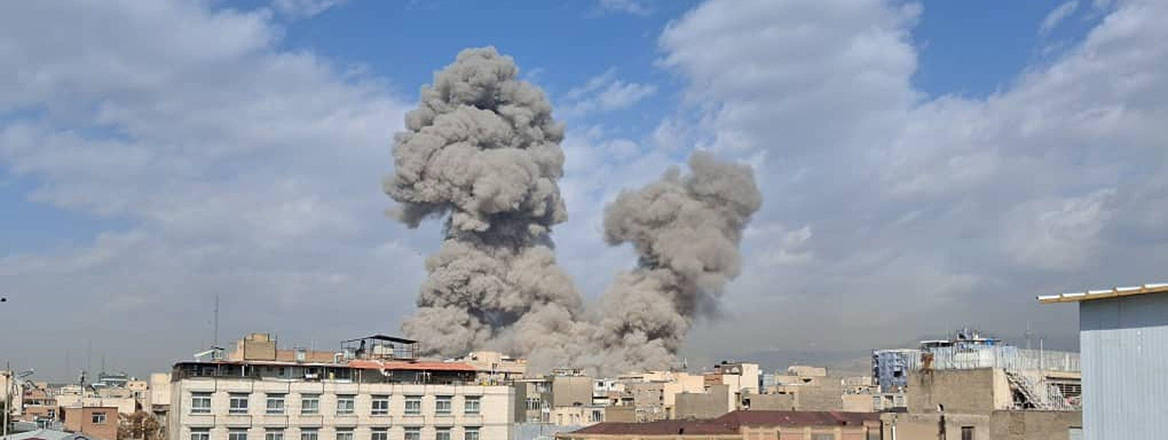
For regime change and the elimination of Iran’s nuclear programme through an air-only campaign, the US and Israel will have to contest with many unknowns.
President Trump and Prime Minister Netanyahu seem to be calculating that the Islamic Republic is weak enough that an air-only campaign will be enough to eliminate the twin threat of its missile capabilities and latent nuclear programme while breaking its ability to repress its population. Targets struck so far are reported to be mostly a mixture of senior leadership, missile and conventional military sites, with the impact unclear. It is likely that ballistic missile launchers, cruise missile and navy targets will be the priorities, as they limit the Iranian ability to retaliate; Iranian escalation to inflict unacceptable losses may be their only option if they wish to curtail the campaign. The alternative is to hunker down and hope they can exhaust the Israeli and US capacity to inflict damage, though with the forces assembled, they can probably strike hundreds of targets a day – for now. The Iranian response has been more rapid than in 2025, and broader in terms of striking US regional bases, even at the risk of bringing countries like Qatar, Bahrain, Saudi Arabia and the UAE out in support of the US.
The unknown is whether the regime is genuinely brittle enough that its conventional weakness in the face of US and Israeli firepower will give an opportunity for domestic opposition to come out onto the streets and take their country as President Trump has suggested.
Iran’s nuclear programme predates the Islamic Republic by some time, having been initially pursued by Imperial Iran; it has survived one change in regime, it can survive another
The UK finds itself sitting on the margins of a war that may still drag it in: UK Typhoons are based in Qatar, and could be called upon to defend against drones or cruise missiles, and UK personnel and a naval facility are in Bahrain, which has already been struck because of the presence of the US Fifth Fleet.
Nuclear Programme Consequences
Trump’s comments, which followed today’s attack, make clear that a key objective of the strikes is counter-proliferation through regime change. Whether this latest military operation will be successful to that end will depend on a number of material and strategic factors.
Without a clear sense of the targets of today’s attack, it is difficult at this point to assess what the material implications – if any – may be for the nuclear programme. The ability of Iran’s nuclear programme to continue to pose a serious proliferation threat following the US and Israeli attacks in June will have hinged primarily on the state of Iran’s fissile material (enriched uranium) stocks and Iran’s ability to enrich them further using whatever centrifuges may have survived the initial attacks. Some of Iran’s highly enriched uranium stocks are suspected to have survived and could have been stored at the Isfahan nuclear complex; it is likely that some centrifuges also survived the June strikes. Whether and to what extent either of these two aspects of the nuclear programme may have been targeted in today’s round of strikes will be key to assessing what additional material damage – if any – has been done to the programme.

Help your search results show more from RUSI. Adding RUSI as a preferred source on Google means our analysis appears more prominently.

In the short-term, instability and confusion will complicate any efforts to rebuild or advance the programme – whatever state it may be in. However, it would be misguided to assume that even regime change would necessarily mean that Iran ceases to pose a proliferation threat. Iran’s nuclear programme predates the Islamic Republic by some time, having been initially pursued by Imperial Iran; it has survived one change in regime, it can survive another. Whether a new leadership emerges in Iran after this latest round of military action or the current regime remains in place, Tehran will have to consider a range of factors when deciding whether its security is better assured by pursuing a nuclear weapon or abandoning its nuclear activities completely. This will depend, for instance, on the broader security situation in the region, its relationship going forward with the US and Israel, and the state of its other means of deterrence – namely, its missile capabilities.
Finally, it is unclear what Washington’s desired end-state is when it comes to its counter-proliferation aims in Iran. It seems that the wide-spread military attacks on Iran’s nuclear sites in June were insufficient to set the programme back to a state that the US would have found acceptable. Iranian statements of commitment to not pursue a nuclear weapon as a party to the Nuclear Non-Proliferation Treaty and in the text of the JCPOA are clearly unconvincing to Washington. The expansive limits on Iran’s nuclear programme and accompanying enhanced monitoring and verification measures secured under the JCPOA Washington has also been found to be lacking. Iran’s engagement in diplomacy over the last few weeks has ultimately also proven to be insufficient for the Trump administration. While it is right to continue to question Iranian intent and to look for ways to resolve the very real proliferation concerns that the Iranian nuclear programme continues to pose, today’s military action further reinforces the impression that Washington does not have a clear strategy to address these concerns.
© RUSI, 2026.
The views expressed in this Commentary are the authors', and do not represent those of RUSI or any other institution.
For terms of use, see Website Terms and Conditions of Use.
Have an idea for a Commentary you'd like to write for us? Send a short pitch to commentaries@rusi.org and we'll get back to you if it fits into our research interests. View full guidelines for contributors.
WRITTEN BY
Darya Dolzikova
Senior Research Fellow
Proliferation and Nuclear Policy


Matthew Savill
Director of Military Sciences
Military Sciences

- Jim McLeanMedia Relations Manager+44 (0)7917 373 069JimMc@rusi.org