

Learning the Wrong Lessons? Counterterrorism Amid a Jihadist Revival

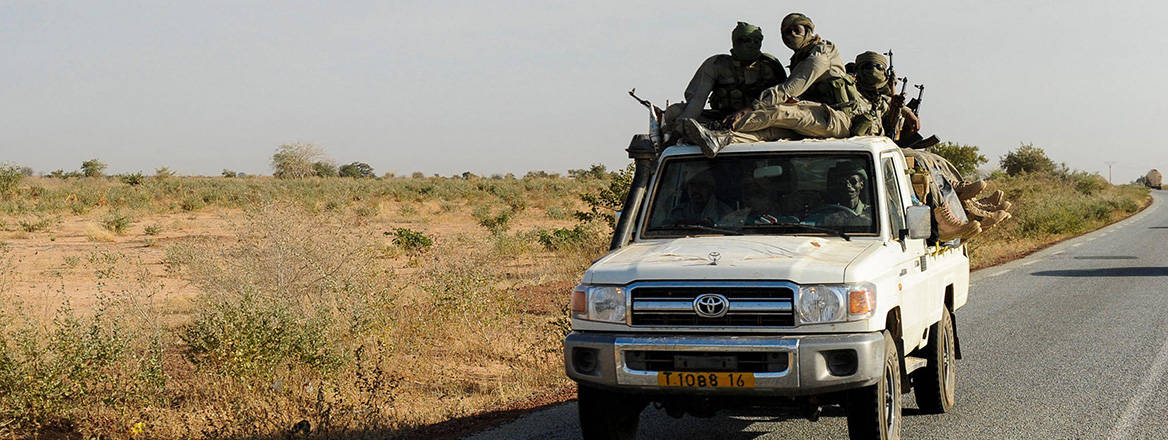
With violent extremism pushed to the periphery of mainstream security debates, the concern is not just a lack of resourcing, but a revival of obsolete assumptions and policy approaches.
The UN Sanctions Committee’s latest report on Al-Qaeda (AQ) and Islamic State (IS) takes stock of global jihadism today. The prognosis for policymakers is bleak, reflecting a complex, multipolar threat dispersed across different theatres; a polycentric network where momentum generated in one context provides capability, narrative and facilitation in another. There is no ‘epicentre’, only epidemicity.
Additionally, anxiety is growing over an ‘increase in the effective use of new technology’, with groups exploiting satellite communication systems, artificial intelligence and UAVs. Much of this equipment is cheap and readily accessible, supplied as component parts from (legitimate) commercial vendors or pilfered from local warzones.
Leakage from Sudan – a country now saturated in heavy weapons, loitering munitions, small arms and missiles – is a prime example, with the conflict quickly assuming regional proportions. Emadeddin Badi has already described a ‘collateral circuitry’ of guns, fighters and fuel crosscutting the Sahel – dynamics analogous to (and surpassing) Libya’s collapse in 2011, while others reference the transit of illicit goods through entrepôts along the Darfuri border. Allegations of a (planned) drone delivery to IS brokers suggest the spillover may reach as far as West Africa: a precursor to an interconnected crisis spanning the Horn to the Gulf of Guinea.
The scale of contemporary jihadism is similarly alarming. The Sanctions Committee indicates Al-Qaeda’s membership, alongside its immediate affiliates, could amount to 25,000 alone, a figure eclipsing the few hundred acolytes led by Osama Bin Laden back in 2001. Nor does this estimate include sympathetic outfits like the Tehrik-e-Taliban Pakistan (TTP); IS’s various wilayat (stretching from Lake Chad to the Sinai, eastern Congo, Somalia, Mozambique and Afghanistan); or the amorphous assembly of individuals and ‘small cells’ operating without any ‘defined or discernible . . . structure at all’. After a 25-year long ‘War on Terror’ (WOT), the threat has metastasised even as global attention – and funding for preventive programming – wanes.
Familiar Concerns
The recent focus on Al-Qaeda is not incidental. Western preoccupations with IS – driven in part by the group’s ‘tech-savvy’ appeal and global reach – have created space for competitors to reorganise (despite their greater lethality). The network has been under ‘new management’ for almost four years, with Saif ul Adl – the presumptive emir – continuing a franchise model grudgingly adopted by his predecessor, Ayman al-Zawahiri. By licencing (or actively encouraging) larger affiliates to ‘go local’, AQ Central (AQC) is, on the one hand, acquiescing to a strategic reality – as many nodes are bound within specific geographies – while building in layers of redundancy. It has, in other words, prioritised resilience in breadth, ‘trad[ing] . . . control and financial efficiencies for security and organisational survival’. Extending across the Sahel, Horn, Arabian Peninsula and South Asia, many of AQ’s ‘subsidiaries’ are effectively becoming mass movements: insurgencies and ‘multi-dimensional bureaucracies’ replete with ministries, police and public services.
Despite claims that sharia should be imposed without ‘concession [or] compromise’, day-to-day administration is often an exercise in ‘improvisation’, not the ‘mechanical’ application of ideological diktats
Somalia’s Al-Shabaab is perhaps the most prolific of these enterprises, establishing a ‘counter-sovereignty project’ that rivals the legitimacy (and capacity) of authorities in Mogadishu. Described as ‘part terrorist organisation . . . part shadow government and part mafia’, the group blends violence, intimidation and rudimentary forms of welfare, supplying ‘little solutions’ to insecurities as a means of eliciting public compliance. In a war-torn context, this coercive monopoly, administrative consistency and judicial machinery often appears expedient (if not popular); an uncomfortable corollary reflected in the expansion of insurgent-run towns like Jilib since 2017.
At the same time, a matrix of tolls and checkpoints regulates domestic roadways, enabling Al-Shabaab to profit from the circulation of goods while levying fees on land, crop and cattle sales. Similar patterns encompass districts beyond the group’s (direct) control, including the extortion of households, companies and NGOs under the rubric of ‘protection payments’ in cities such as Jowhar and Kismayo. This ubiquity across the Somali economy not only attracts buy-in – as residents, clan elders and businessmen routinely depend on jihadi brokerage – but ensures a level of financial self-sufficiency. If the upper estimates of revenue generation are to be believed, Shabaab could effectively rake in double the federal budget, equating to roughly 20% of the country’s GDP.
Further west, ‘sporadic governance’ by Jama'at Nusrat al-Islam wal-Muslimin (JNIM) – an umbrella coalition of AQ entities including Ansar al-Din, AQIM, Al-Mourabitoun and Katibat Macina – is likewise shaping the behaviour of Sahelian populations in an area ‘five times the size of Texas’. By exploiting social tensions (particularly those between farmers and herders) and long-standing fears of IS and government forces, the group has fashioned something resembling a coherent (if non-contiguous) polity without the need for occupation – an impossibility given the sheer distances involved. Relying, for the most part, on weekly visits to extract taxes, deliver ‘justice’, recruit and proselytise, JNIM can market itself as a credible alternative in subaltern backwaters where anything is preferable to an avaricious state.
Insurgent operations have also diffused southward, ratcheting up in scale and intensity. IEDs and motorcycle raids are now supplemented by aerial surveillance (reportedly using off-the-shelf brands) and improvised drone strikes (at least 17 since September 2023). While media coverage has fixated on the blockade of Bamako – which temporarily starved the metropole of fuel – fatality rates are surging across the region, with studies documenting at least 16,000 incidents between March 2017 and late 2025, resulting in a total of 39,850 deaths in Benin, Burkina Faso, Mali, Niger and Togo.

Against this backdrop, Al-Qaeda and its affiliates pose a serious, persistent threat to Western interests and/or allies. Across Somalia, federal (and sub-federal) authority is confined to urban enclaves, while Shabaab has retaken swathes of Middle Shabelle and Hiraan and encircled much of Mogadishu itself, erecting roadblocks in the suburbs and storming Godka Jilicow, a high-security prison close to the presidential palace. Compounded by quarrels over upcoming elections, the country seems to be ‘at a tipping point’, with US officials openly asking, ‘what if we just let [Somalia] burn?’ Although the crisis may not be quite so acute in the Sahel, where JNIM still lacks the manpower to hold major cities, the ‘inability of civilian governments and their Western partners to stem [AQ’s advance]’ has already precipitated – or prefaced – several coups, notably in Burkina Faso (2022), Niger (2023) and Benin (2025). As extremist networks push deeper into littoral West Africa, European officials are not only raising concerns over rampant insecurity but its wider implications, namely an escalation in violence driving geopolitical realignments favourable to rivals such as Russia.
From Cosmic to Capricious
Of course, this jihadist resurgence comes with important nuances, not least because franchising incurs ‘heavy costs’, both strategically and ideologically.
Alongside other external actors, AQ has experienced numerous difficulties attempting to navigate or co-opt existing conflicts, as evidenced by its dismal efforts to nurture a Somali network in the 1990s. Initial outreach across Ras Kamboni communities proved more superficial than soteriological, renting loyalty with cash or basic goods, while foreign fighters faced extortion by local militiamen. At best, operatives exerted ‘marginal influence’ over jihadi outfits like Al-Ittihad Al-Islamiya (AIAI), which remained beset by clan cleavages and collapsed shortly after an Ethiopian offensive in 1997.
Yes, inroads were belatedly made across weak (but stable) states such as Kenya, where AQ could leverage a ‘mixture of mosque, madrasa, marriage and money’ to infiltrate the Swahili Coast, but later affiliates – including AQAP, Al-Shabaab and JNIM – found traction precisely because they were (largely) endogenous expressions of local militancy, rather than transplants or ‘roving predators’.
As Alex Thurston elaborates, these organisations are ‘intimately familiar with the micro-politics that surround them’, driving a process of acculturation that is not just strategic, but a ‘logical outgrowth of their core identity’. JNIM, for instance, regularly resorts to ‘pastoral populism’, tapping into long-running grievances among Fulani nomads; in the Horn, extremists exploit frustrations with Somalia’s ‘patrilineal clan[-based] . . . system of governance’ to rally support.
Tellingly, Al-Shabaab recruitment only peaked after its religious discourse was laced with Pan-Somali tropes and anti-Ethiopian demagogy in the late 2000s. Insurgent outlets – Az-Zallaqa and Al-Kataib – ‘occasionally [pay] lip service to global jihadi causes’ but deliver a ‘constant stream of content anchored to [domestic] developments’, while the groups’ operational coverage rarely stretches beyond their respective regions.


Territorial control has amplified this inclination, given field commanders routinely confront ‘political problems for which jihadist doctrine does not provide ready-made solutions’. Despite claims that sharia should be imposed without ‘concession [or] compromise’, day-to-day administration is often an exercise in ‘improvisation’, not the ‘mechanical’ application of ideological diktats. Al-Shabaab’s ‘social contract’ varies across time and place: coercion and zealotry are still pronounced, but so too are (shades of) pragmatism, contextual sensitivity and clannism. Judicial decisions, norms and prohibitions are dependent on the whims of individual qadis/judges. JNIM’s writ is similarly tied to ethnic and social linkages, delegating power to neighbourhood preachers or provincial big men (‘chefs de markaz’), many of whom prioritise their own interests. The insurgency isn’t unitary but a fluctuating composite of different (sometimes competing) stakeholders, incentives and ideas, with Stig Hansen noting how porous the boundary between ‘jihadist, bandit and self-help groups’ has now become. The result is a diminution, or dilution, of Al Qaeda’s global aspirations, where ‘franchises . . . [are] entangled in local conflicts’ that distract from the network’s original objectives.
Diverging preferences have already stoked friction among affiliates and allies. To take the latter, Al Zawahiri appeared to be on a collision course with the Taliban after concerns that a US peace-deal would render Al Qaeda ‘impotent’. Following Kabul’s collapse in 2021, suspicions re-surfaced as the victorious mullahs called for the registration of foreign fighters and banned international attacks from inside Afghanistan. In contrast to his predecessor, Saif has avoided trying to steer local policy (for instance, blocking any engagement with governments considered ‘kafir’), opting instead to work discreetly, cultivating support for the TTP among the Taliban’s rank-and-file (especially in the eastern and south-eastern borderlands) and training Pakistani militants. By doing so, AQ has found a new niche, but it remains constrained by Afghan politics and the reliance on a host that is shifting from insurgency to bureaucracy.
Elsewhere, strategic rifts have turned into outright secession. The defection of Al Qaeda’s Syrian branch in 2016 was a particular setback, with Jabhat al-Nusra/Hayat Tahrir al-Sham (HTS) coalescing around technocratic modes of Islamist governance. The split, driven by Ahmad Al Sharaa, seems vindicated by his recent coronation as Syria’s strongman, but also speaks to the centrifugal pressures straining AQ’s federated structure more broadly.
While Saif enjoys sympathy from elements of the ruling coalition in Damascus, he has inherited a tough position. Loyalist groups like Hurras ad Din clashed with HTS until 2025 but found little purchase and were left increasingly redundant after the fall of Bashar al-Assad – contributing to their dissolution a month later. AQ has subsequently positioned itself on the margins of Syrian political debate, calling only for the imposition of religious law and abstaining from any criticism of Al-Sharaa himself, despite his courtship of the West.
Extremism persists as a priority in many domestic settings . . . but its international dimensions are increasingly neglected by Western stakeholders.
In contrast to IS’s aggressive campaign to attract dissidents, this subtly could help cultivate a more permissive environment over time. Alternatively, AQ still draws support from foreign jihadists based in the region, many of whom appear keen to exploit identity-based grievances, as exhibited by skirmishes with the SDF in late 2025/early 2026. This does not necessarily imply a coherent plan to radicalise ethnic, sectarian and political tensions, but there may be mileage in replicating approaches employed in Afghanistan as a means of salvaging some of Al Qaeda’s influence. Either way, HTS’s success provides a model for other branches looking to transition from militancy to statehood, which could pose an exponential threat to Saif’s authority.
Regressive Trends
These changes in clout, complexion and mechanics have significant consequences – sustaining the resilience and capability of AQ’s network while undermining the relevance of AQC itself. Not only have affiliates failed to pledge bayat to Saif, as reports cite ‘increasing dissent and dissatisfaction with his leadership’, but several are pursuing bilateral policies – for instance, Shabaab’s cooperation with the Houthis – that may ignore their ostensible ‘emir’ altogether. Despite a shared appellation, the discrete agendas and interests of AQ’s constituent groups risk leaving the ‘whole’ less than the sum of its parts and by extension creates avenues for disruption, subversion and/or prevention.
Unfortunately, humanitarian crises, inter-state conflicts, US transactionalism and a broader ‘de-institutionalisation’ of multilateral governance have left little bandwidth to address the problem. Extremism persists as a priority in many domestic settings, as flagged in the UK’s National Security Strategy, but its international dimensions are increasingly neglected by Western stakeholders.
This is not just a straight-forward question of resourcing for counterterrorism itself. Financial cuts may be necessary for ‘right-sizing’ inflated budgets, or in other cases have been delayed or scrapped altogether. The ‘CT allocation’ of the UK’s Integrated Stability Fund (ISF) is actually rising from £31 million to £58 million in 2026/27, enabling the maintenance of existing projects across ‘Africa and the Middle East’, even as other strands of the portfolio are chopped or streamlined. Rather, the challenge is a mounting propensity to deploy kinetic CT measures in isolation: a regression back to prioritising symptoms, stripped of long-term programming to resolve their underlying causes. Given most terrorist activity and fatalities stem from conflict zones, with VE emerging more as a product and propellant of local insecurity than its initial driver, the corollary is a need to address the wider ecosystems that breed, facilitate and perpetuate militancy. This coverage has been impacted by seismic contractions in global ODA expenditure, with the gutting of USAID and scrimping among top donors sapping development – from emergency relief to violence prevention – of structure, liquidity and expertise.
Cuts to aid budgets have made crisis management seem more palatable, practical and cost-effective compared to long-running interventions to address deep-rooted structural issues
Of course, aid is not always an unalloyed good. Across Somalia, experiments in state-building have been marked by discrepancies in aim, method and attendant assumptions. Easy access to external rents has produced ‘toxic’ bargains among elites that lack any real capacity or inclination to standardise policy, while poor coordination among international partners feeds extroversion and ‘tender-preneurship’. The outcomes are, in short, lamentable. But cutting off support without a clear strategy for transition would be disastrous, especially in a context where roughly 67% of federal income is supplied by third parties, healthcare is almost entirely outsourced to INGOs and security relies on foreign peacekeepers.
At the same time, the limitations of hard CT methodologies are readily apparent, from a litany of counter-productive interventions during the War on Terror to recent efforts backed by Russia. Mali is a cross-cutting example. After the setbacks of Operation Barkhane (2014-2022), successive regimes in Bamako have farmed out their counter-insurgency to community militias and foreign mercenaries (Wagner/Africa Corps) under the slogan ‘la montée en puissance’ (‘Rise in Power’). The ensuing atrocities have failed to contain, let alone resolve the fighting, with violent incidents doubling across western and southern regions over the past year, deepening JNIM’s ‘territorial reach and tactical sophistication’.
Don’t Repeat the Same Mistakes
The lack of appetite in the West to contend with VE, especially when embedded in conflicts abroad, is understandable. Counter-terrorism has a controversial legacy and there are pressing issues that either have a greater impact on national security (namely, the crisis in Ukraine) or consume political attention (such as migration). Additionally, cuts to aid budgets have made crisis management seem more palatable, practical and cost-effective compared to long-running interventions to address deep-rooted structural issues. But policymakers cannot turn a blind-eye to the threat these insurgencies pose for governments across different regions and the impact they may subsequently have on Western strategic interests over time.
The Sanction Committee’s description of contemporary jihadism is worrying, but there are tensions within the movement itself that offer pathways for prevention, mitigation and/or amelioration. The danger is neglecting these opportunities in the search of a cheap fix. Analysts rightly warn there are ‘no shortcuts to security’; by ignoring the realities of this ‘VE problem’, stakeholders ironically risk recycling counter-terrorism’s worst assumptions, methods and outcomes.
© RUSI, 2026.
The views expressed in this Commentary are the authors', and do not represent those of RUSI or any other institution.
For terms of use, see Website Terms and Conditions of Use.
Have an idea for a Commentary you'd like to write for us? Send a short pitch to commentaries@rusi.org and we'll get back to you if it fits into our research interests. View full guidelines for contributors.
WRITTEN BY
Michael Jones
Senior Research Fellow
Terrorism and Conflict


Dr Joana de Deus Pereira
Senior Research Fellow
RUSI Europe

Dr Antonio Giustozzi
Senior Research Fellow
Terrorism and Conflict

- Jim McLeanMedia Relations Manager+44 (0)7917 373 069JimMc@rusi.org