

Integrating Tactical UAVs into the Infantry Battalion

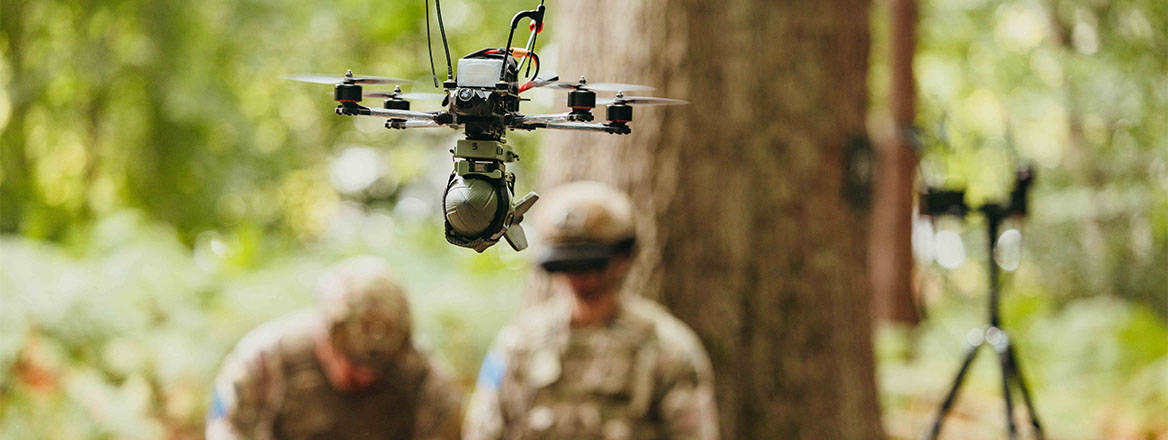
Tactical uncrewed systems are reshaping infantry battalions, demanding new force structures, training and combined-arms integration.
Overview
Tactical uncrewed systems on the ground and at low altitude are becoming essential to infantry effectiveness, with some observers claiming that personnel requirements could be reduced, due to the extent that they enhance lethality and survivability. This paper shows that their integration holds no such promise, instead reshaping battalion structures, training and logistics rather than reducing the need for personnel.
The paper examines how the British Army and NATO forces can embed reconnaissance, strike, counter-UAS and resupply drones into combined-arms operations. Drawing on contemporary conflict, especially Ukraine, it finds that UAVs increase a battalion's ability to see, strike, survive and manoeuvre, but are not a substitute for infantry, mortars, anti-tank weapons or skilled reconnaissance personnel. Effective force design depends on combining crewed and uncrewed capabilities, accepting high platform attrition, and making clear trade-offs within existing formations.
Key Recommendations
- Plan for personnel-intensive UAV operations: Do not assume drones reduce manpower requirements; they require operators, maintainers, logistics support and protection.
- Retain combined-arms capability: Pair UAVs with mortars, anti-tank guided weapons and infantry rather than treating drones as replacements.
- Convert reconnaissance capacity carefully: Shift battalion reconnaissance towards UAV-enabled surveillance while preserving sniper and recce skills in concealment, observation and fieldcraft.
- Build counter-UAS into every tactical plan: Provide battalions with dedicated interception teams, integrated with brigade-level air defence and supported by appropriate sensors.
- Prioritise low-cost, reliable uncrewed logistics: Use UAVs and uncrewed ground vehicles to reduce risk to personnel in last-mile resupply, while designing for frequent losses.
- Protect infantry mass and distribute pioneer skills: Infantry remain decisive for taking and holding ground; UAV operators must retain core combat skills, while digging and explosives expertise should be available across the force.
- Align training and regulation with operational reality: Enable close, routine training between UAV teams and other arms, including realistic counter-UAS and combined-arms activity.
Register or log in to continue reading
Account creation is quick, free and gives access to all RUSI research and more
- FREE account
- One-time set-up
- Easy to manage
Available Downloads
WRITTEN BY
Dr Jack Watling
Senior Research Fellow for Applied Military Sciences
Military Sciences


Robert Tollast
Research Fellow, Land Warfare
Military Sciences


- Jim McLeanMedia Relations Manager+44 (0)7917 373 069JimMc@rusi.org