

Russia's New Cruise Missiles and the Rapid Iteration Trap

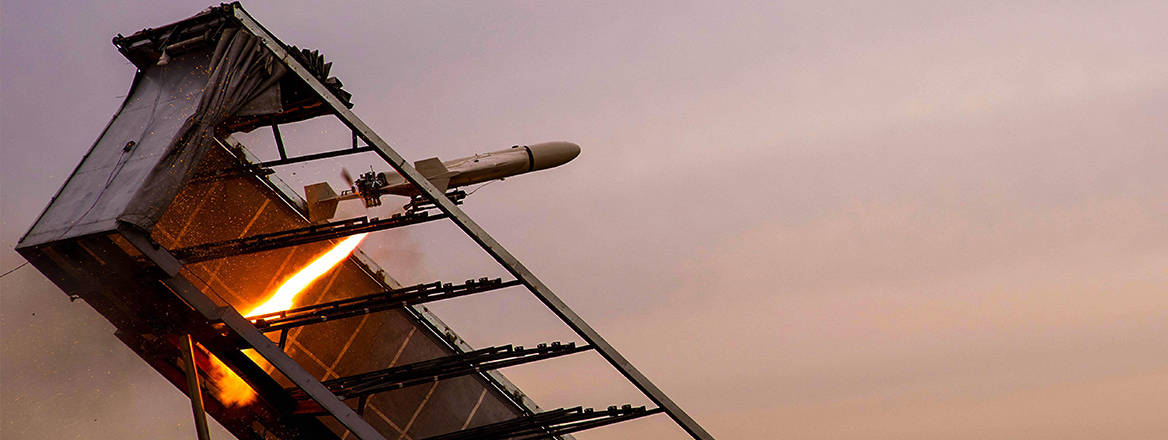
Russia’s jet-powered mini cruise missiles outpaced Ukraine’s cheap interceptor drones. Rapid iteration matters, but speed ultimately depends on sovereign engineering capability built over years.
Ukraine has driven an astonishing overhaul of how NATO thinks about procurement. Much of this is welcome; for example, an army lacking counter-UAS equipment needs to field something soon, rather than seeking perfection with a multiyear equipment programme.
But it is important that we understand some of the limits around fast delivery. The recent surge in Russia’s ‘jet drone’, or mini cruise missile, attacks is a useful case study. Seen by many as an example ofswift adaptation, the ‘jet drones’ in fact tell a story of years-long military-industrial strategy.
The Logic of Speed
Delivering quickly and iterating, or ‘spiral developing’ platforms with future modification in mind and ‘fast following’, are arguably the defining lessons of the war. Low-cost sensors, often commercially available, and software are as important as a platform; in fact, to some they are more important.
Anyone following the debate on defence procurement and the need for ‘pace’ will have heard these ideas repeated like a mantra: free of bureaucracy, tacticians and technicians create fast iteration loops.
Yet on a recent trip to Ukraine, interviewees in air defence described how a gradual change in Russian deep-strike tactics became a surge in ‘jet drone’ use, quickly exposing limits around this thinking. Much air defence innovation had converged around improving cheap interceptor drones, which have little hope of catching the ‘jet drones’.
This is not to say Ukraine’s approach has failed. For most NATO armies, in the time it takes to evaluate, test and assure a modified piece of equipment, the battlefield has significantly changed. Despite carrying the risk of waste, Ukraine’s methods have been rightly praised.
In early 2025, however, Ukrainian analysts at the Centre for Defence Reforms saw that Russia was about to jump several iterations cycles ahead, while huge effort remained focused on intercepting propeller-powered drones. Their warnings were not heeded.
Racing Against the Gerans
In late 2022, Russia embraced a strategy of fielding cheap, rapidly adaptable systems with the propeller-driven Geran 2, facing sluggish cruise missile replenishment.
The task now is for new organisations such as National Armaments Innovation to cohere disparate research and development efforts across the UK, which will be no easy task
As the Gerans flew at various altitudes – low to complicate radar coverage and high to force Ukraine to fire expensive missiles – Kyiv faced a conundrum. The best option was to adapt existing first-person view (FPV) drone technology, harnessing the power of brushless motors on the X-frame racing drones, starting around 2024.
Ukraine found that these could, cued by tactical radars, strike Geran 2s at altitudes above 3 km except in bad weather. Ukraine’s first interceptor drone kill was recorded in May 2025, seven months after the Sting interceptor was tested, at a fraction of the cost of the cheapest air defence missile.
Russia did not stand still. The Geran 2 became the focus of astonishing iteration, equipped with different versions of mesh network technology, rear-facing cameras for avoiding interceptors, deployment alongside decoy models such as the Gerbera and Parodiya, battlefield use as FPVs and even being fitted with air-to-air missiles, albeit ineffectively, and a host of new warheads, and even armour.
Concurrently, it was becoming resilient to electronic warfare (EW) and mass production was underway. In March 2025, Geran 2 attacks, in addition to accompanying decoys, reached 1,000 per week. There was a race to find personnel to crew interception teams and scale interceptor production, but also to increase high-altitude intercepts and speed, to take the strain off crewed aircraft which were under immense pressure to hunt the Gerans.
By September, interceptor drones took down 150 of a single 800-drone salvo of Gerans, decoys and radio relay drones, with others succumbing to small arms fire and auto-cannons, fast jet, helicopter and light aircraft patrols, among other methods.

Interceptors pushed limits to hit upgraded Geran 2s plummeting from altitude at 400 kmph. Rapidly iterated cheap mass fought cheap mass. As interceptions surpassed 80%, Ukraine seemed to be winning this race of iteration loops. But was this ‘race’ an illusion?
Enter the Jet Drones
If we follow this story chronologically, the same period saw the first Russian use of its new mini cruise missiles, tested in 2024 with the Iranian Shahed 238 and scaling with the Geran 3, which could fly considerably faster and over twice as high as the Geran 2.
Interceptor drone iteration continued through 2025 with speeds exceeding 400 kmph by the end of the year. At the end of 2025, some Geran 3s were being intercepted by these systems, with interceptor production reaching nearly 1,000 per day and more than ten companies contracted to build them. Across Europe, a growing number of companies marketed interceptor drones, mainly based on electric brushless motors and in many cases seeking to incorporate machine vision.
Russia was able to scale mini-cruise production using commercial off-the-shelf (COTS) Chinese Telefly and Swiwin jet engines, adapted from the hobby market and occasionally marketed as target drone engines. This is another complex period of iteration but suffice to say the subsequent Geran 4 and 5 joined a host of new Russian mini cruise missiles such as the Banderol (with a not insignificant 114 kg warhead), Dan-T and Filin, with ranges of roughly 1,000 km, warheads larger than that of the Geran 2 and able to fly at vastly higher altitudes, in some cases in excess of 800 kmph.

This left a large inventory of interceptor drones almost entirely useless for their main role, albeit effective at taking down Russian reconnaissance drones. Ukraine’s interim solution has been to use an expensive loitering munition, the micro-jet powered Bars, to hunt them down and is now racing to field a smaller, cheaper version. But immense damage has been done.
A Major Equipment Programme
On the face of it, Russia watched Ukraine's response to the Geran 2, seeing Kyiv’s need to ‘hard kill’ the EW-resilient drones, and decided that the next assault of disposable mass would involve commercially available mini jet turbines from China and entirely new airframe designs.
They did not simply make the Geran 2 faster, settling on the similar Geran 3. Instead, Russia jumped several iteration cycles ahead. Or did it?
The reality is more complex: Russia made its first mini jet turbine prototype in April 2018, the R500: the same engine that now powers missiles such as the S-71K, the Filin and the Dan T. Low-cost Chinese engines, which at first seemed like an efficient move, and so typical of the war (being a COTS solution), may be an interim fix, and one that may be difficult to quit. But there is a strong ambition to scale local production of the R500.
Since at least 2020, Russia has developed a family of mini turbines with a plan to reduce Chinese dependence. They did not simply respond to the appearance of interceptor drones, which did not exist in Ukraine before 2024. Indeed, the only reason why they can now deploy the R500 is that United Engine Corporation / Reynolds were able to harness state-supported research institutes such as the Samara University Engineering Centre. Indeed, a pro-Kremlin outlet wrote in 2023 that mini-turbines would hopefully go on to power glide bombs (the first jet-assisted glide bombs were launched in 2025).

None of this should be surprising, not least because of Russia’s advanced aerospace industry, which likely harnessed institutional knowledge of target drone development. The lesson is that it is critical to harness sovereign engineering capability, building an inventory of knowledge, including the right people in the right place (such as an industrial cluster) who can be quickly mobilised.
To an extent, the UK is already doing this at the frontier of military technology, harnessing university engineering talent through the Defence Universities Alliance, while an increasing number of drone operators are learning the dynamics of uncrewed systems.
Our universities continue to produce new companies grappling with engineering challenges such as metal additive manufacturing, and these same companies are feeding straight into defence.
These complex projects are not radically different from Russia’s alarming journey to sovereign mini cruise missile production in 2018, filling a capability gap in 2025. Sadly, the UK has long had some rather neglected capacity for mini turbine production. Had we seen the opportunity for low-cost fast interceptors or mini cruise missiles years ago, we might be in a far better position to help Ukraine with a cheaper version of the Bars. The task now is for new organisations such as National Armaments Innovation to cohere disparate research and development efforts across the UK, which will be no easy task.
To conclude, pace of iteration and acquisition is critical, but alongside important efforts to improve procurement efficiency such as Task Force RAPSTONE, unlocking speed when really needed may start with a more methodical approach.
© RUSI, 2026.
The views expressed in this Commentary are the authors', and do not represent those of RUSI or any other institution.
For terms of use, see Website Terms and Conditions of Use.
Have an idea for a Commentary you'd like to write for us? Send a short pitch to commentaries@rusi.org and we'll get back to you if it fits into our research interests. View full guidelines for contributors.
WRITTEN BY
Robert Tollast
Research Fellow, Land Warfare
Military Sciences


- Jim McLeanMedia Relations Manager+44 (0)7917 373 069JimMc@rusi.org