

Ramzan Kadyrov: The Kremlin’s Messenger to the Islamic World

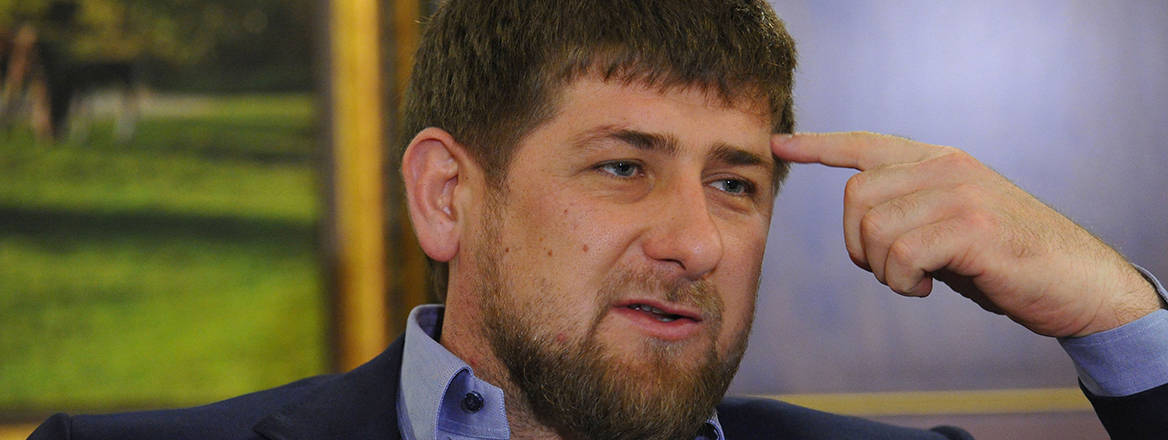
The reported failing health of Ramzan Kadyrov leaves a strategic communications gap for a Kremlin speaking to the Islamic world.
Election campaigns for the head of Russia’s Chechen Republic and members of the regional parliament officially began on June 23 2026, with the official vote being held in September. The result is a foregone conclusion: Ramzan Kadyrov, current Head of Chechnya and self-proclaimed ‘Putin’s foot soldier’, will almost certainly be re-elected; Putin has already given his assent. However, Kadyrov is no longer the long-term asset he once was, as he is in ill-health. Diagnoses vary from kidney failure to pancreatic necrosis, and are accompanied by a steady flow of reports detailing near fatal health incidents. None of these are confirmed, but from photographs, conspicuous prolonged absences from public appearances, and an apparent urgency in appointing members of his immediate family and wider clan to positions of power, it is clear that he is suffering from a debilitating illness.
Kadyrov’s death will have significant implications for Kremlin security policy at home, with Chechnya having always been one of Russia’s most restive provinces. It will also have effects abroad. Earlier research from the Royal United Services Institute, and this author at the NATO Strategic Communications Centre of Excellence, suggests that Kadyrov plays a dual role in the Kremlin’s influence operations abroad, especially in the Islamic world. This article will build on the importance of the Islamic world to the Kremlin, Kadyrov’s role in the Kremlin’s wider influence operations, what impact his death may have, and how the Kremlin’s operations may develop in the aftermath, rather than focusing on the impact in Chechnya.
Kadyrov’s Role
Ramzan Kadyrov became Head of Chechnya in 2007, three years after the assassination of his father Akhmad in the final years of the Second Chechen War, where his clan fought for Russia. The Chechen constitution’s requirements that the Head of State be 30 years old delayed his ascension. Throughout his reign, he has gained a reputation for pugnacious statements, dramatic displays of machismo, and an emphasis on piety and martial prowess. This has been combined with repeated attempts to demonstrate his worth to the Kremlin through heavy-handed displays of loyalty to Putin (including alleged involvement in the murder of his critics), and providing soldiers to the Kremlin’s ongoing invasion of Ukraine. However, his potential as a communicator and links to Islamic culture have made him more significant since the onset of the Kremlin's invasion.
The Gulf states remain globally important financial and energy centres as well as acting as mediators. They also act as a centre for sanctions busting and as a conduit for influence operations in the West
Russia has become increasingly isolated both diplomatically and economically since its invasion of Ukraine, seeking influence elsewhere in the world to achieve its interests. In a 9 August 2024 article, Cameron Hudson (Fellow, Centre for Strategic and International Studies), suggested Africa had become ‘the land of opportunity’ for actors such as Russia and Iran, but this can be applied to the whole Global South. The Global South is a growing power centre, hosting 88% of the world population, holding two thirds of UN General Assembly seats and 10 rotating seats in the UN General assembly. Half of global population growth between now and 2050 is expected to come from just nine countries, eight of them from the Global South. The region is also rich in natural resources and suffers from weak institutions and authoritarian regimes in which corruption flourishes. These factors make influencing states within the Global South a valuable source of immediate diplomatic legitimacy and sanctions busting as well as potentially motivating longer-term shifts in international norms.
This is especially true in the Islamic world. Islamic nations make up NATO's southern flank on the Red and Mediterranean Sea, a region targeted by Russian influence operations. The Gulf states remain globally important financial and energy centres as well as acting as mediators. They also act as a centre for sanctions busting and as a conduit for influence operations in the West. In April 2025, Novaya Gazeta reported that through pseudo-independent Emirati media brands and UAE-based shell companies, the Gulf region had become a new hub for Kremlin channel RT's English-language operations to circumvent bans on their channels and domains within Europe.
Reporting suggests the Kremlin has intensified its operations to influence the Islamic world. In October 2023, Sputnik Arabic launched an Arabic-language station in Lebanon and Syria that was previously occupied by the BBC Arabic’s radio frequency. A 2025 BBC Monitoring report found that, since 2009, the Kremlin's media arms Sputnik and RT have struck partnership deals with outlets in all Arabic-speaking countries except Kuwait, and, further, observed a rise in the volume of Russian media deals signed with outlets in the Middle East and North Africa, as well as increased investment in various networks of international ‘young leaders, journalists and bloggers.’ Kadyrov has his own part to play in this attempt to cultivate positive sentiment.

Kadyrov’s consistent output of radical content makes it easy to miss his strategic moves to advance the Kremlin’s interests. He has sought to build bridges to the Islamic world through elite interaction: hosting the Egyptian football team during the 2018 World Cup; sponsoring Islamic faith conferences; forming part of Russian official delegations; and building business portfolios in Dubai. Social media has expanded Kadyrov’s reach; now Kadyrov can reach not just Islamic elites, but also the population’s newsfeeds, especially as social media becomes increasingly dominated by ‘entertainment value’. His social media feeds consistently highlight his ‘holy jihad’ against a ‘satanic west’ in Ukraine. During the Israel-Hamas War in Gaza (2023-2025), Kadyrov further sought to highlight the perceived hypocrisy of the West, and attempted to equate Russia’s invasion of Ukraine with the Israel-Palestine conflict.
The actual reach and impact of these activities is debateable; using Ben Nimmo’s scale of ‘breakout’ we can say Kadyrov typically achieves category four – Mass media amplification. For example, according to Radityo Dharmaputra, head of the Centre for European and Eurasian Studies at Airlangga University in Indonesia, Kadyrov has an unusual popularity among Indonesian netizens. Statements from Kadyrov are regularly published by the Russian embassy in Indonesia; where he typically rants about the West’s attempt to subvert traditional values with ‘LGBT propaganda’ and emphasises Russia’s ‘respect for Islam.’ Elements of these statements and others are also cited in Indonesian outlets such as Tribun Timur; which has a viewership of approximately 36 million as of January 2026. Similarly, his comments on the West’s attempts to ‘destroy’ Palestine were circulated by the Saudi media channel Al-Hadath, attracting 66,000 views on YouTube. The second order effect in terms of influencing opinions, attitudes and behaviours are more difficult to understand; often such effects do not visibly manifest until crises. But when looking at Global South reactions to Russia’s invasion in Ukraine, there has been a noticeable repetition of Russian talking points. Kadyrov has contributed to this as part of a wider influence ecosystem tapping into existing grievances.
Kadyrov’s Successor
Kadyrov is clearly an asset that the Kremlin will seek to replace. Discussions between your author and Alex Petric, Senior Analyst for Russia, Ukraine, and Eastern Europe at Janes, suggests that whoever may be chosen to succeed Kadyrov as the Kremlin's influence asset will likely also succeed him as the Head of Chechnya. This is because it bestows an authority on the individual, and while others can be communicators, it likely excludes them from being the ‘main communicator’ in the Kremlin’s Islamic influence ecosystem. For this there are several candidates, starting with members of Kadyrov’s own family.

On 5 January 2026, Kadyrov appointed his son Akhmat (20) as the Acting Deputy Chairman of the Government of the Chechen Republic (in effect, deputy prime minister). Likewise, he has already attempted to cultivate his other son Adam’s image as a strongman; publishing a video in September 2025 of Adam (18) beating a man who had burned the Quran, which was deliberately contrasted with the restraint of Swedish and Danish police in punishing Quran burnings that took place in 2023. However, his sons are ineligible for Chechnya’s top job until they reach 30 years of age, so their youth requires them to spend a period in preparatory roles; this carries a risk that is unlikely to appeal to the Kremlin. Furthermore, their youth would likely undermine them as serious communicators in conservative states in which seniority is critical.
A second candidate is Adam Delimkhanov, Chechnya’s Member of the State Duma (Russia’s parliament) and ‘the Man with the Golden Gun.’ Delimkhanov maintains his own communications presence that is on par with Kadyrov’s combative statements and in which he dabbles in Islamic affairs. He commented on reports of Adam’s beating video by saying Adam ‘acted very humanely by leaving him alive.’ As he is based in Moscow, Delimkhanov also enjoys close relationships with the Russian special services that would likely benefit his integration into Russian influence operations in the Islamic world.
Third is Magomed Daudov, ‘the Lord’, as of this article’s writing in March 2026, the Prime Minister of Chechnya. While his social media output is generally focused on Chechen affairs, a transition to the presidency is entirely feasible and with it a transition to commenting on international affairs. He has also been sanctioned for setting in motion and driving the oppression of the LGBT community in Chechnya that began in 2017. Anti-LGBT rhetoric has been a central plank of the Kremlin’s propaganda in the largely more conservative Global South, and so a less repressive branding of Daudov’s role into a defender of ‘traditional values’ could be turned into an asset.
Lastly, is Apti Alaudinov, commander of the Akhmat special forces unit who has risen to prominence due to his involvement in the invasion of Ukraine; specifically countering the Kursk incursion and integrating remnants of the Wagner Group into the Akhmat forces. He often emerges as a Kremlin favourite to replace Kadyrov in sources such as Novaya Gazeta and DW, and Alexander Peric agrees that Alaudinov is ‘the most similar to Kadyrov’ in terms of a militaristic persona and entertaining social media presence, while maintaining an academic background, having graduated from law school and served as government official since 2002.
All pro-Russian influencers have their own agendas and interests and to effectively counter them requires understanding them as a network of individuals rather than a monolith
However, Petric also suggests there is also the possibility of Kadyrov's death being followed by a re-assertion of Russian state power instead of the appointment of a new leader similar in style. Russia does not lack for Islamic leaders; a June 2024 list from ‘Business Gazeta’ lists the top 100 leaders ranging from defence and diplomatic officials to religious figures who could, and likely do, help facilitate elite interactions. Rustam Minnikhanov, the Head of the Republic of Tatarstan since 2010 is number two on the list. Under his leadership, Tatarstan has become a major conduit to the Islamic world through its Kazan Forum. He has also proven an effective political influencer; acting as the Kremlin’s emissary to the Crimean Tartars in 2014 after the Kremlin’s annexation to get them to accept Russian rule. In effect, he could be Kadyrov without the baggage and present a ‘softer’ face.
Another additional influencer is Colonel-General Yunus-Bek Yevkurov, the Deputy Minister of Defence (number eight on the list), a Muslim from the Ingush Republic (Chechnya’s neighbouring province which he lead from 2008 to 2019) with a notable military and political career. He has also attained international exposure in the aftermath of the death of the head of the Wagner Group, Yevgenny Progozhin, in August 2023; travelling to Africa to reassure Wagner’s clients that support would continue as normal, and overseeing Wagner’s integration into the ‘Africa Corps’. This positions him to be the face of Russian-backed counter-terrorism efforts abroad, another core component of the Kremlin’s messaging.
The Impact of Kadyrov’s Death
It would be easy to understand why the state would seek to centralise; the Wagner Group’s mutiny in June 2023 showed the perils of allowing proxies to accumulate too much power and popularity. Now the Wagner Group has largely been subsumed by the ‘Africa Corps’, with aspects of its media empire coming under the direct control of Russia’s special services.
This brings us to what Kadyrov tells us about wider Russian influence operations and what impact his death would have. First is the importance of recognising individual agency of Kadyrov and other ‘entrepreneurs of influence’. Kadyrov’s actions are not just about demonstrations of loyalty to the Kremlin, they are designed to build his own influence and security. The same view should be applied to other pro-Russian influencers; all have their own agendas and interests and to effectively counter them requires understanding them as a network of individuals rather than a monolith.
The ability to identify, exploit, and exacerbate existing socio-political fault lines and grievances within individual societies is what makes the Kremlin’s operations so far-reaching
Second, such influencers never stand in isolation They are part of a wider network that amplifies their reach. It is unlikely that Kadyrov would have the same visibility if he were not backed by networks of Russian diplomats, state-sponsored media outlets, and bot and sock-puppet profiles artificially boosting his presence. Concurrently, Russian influence operations occur on all three levels of the information domain (physical, virtual and cognitive). The virtual level has been discussed and often draws the most attention, but there is ample evidence of the two other levels receiving equal attention from the Kremlin. At the physical level, the Kremlin engages in weapons shipments, humanitarian deliveries, troop deployments, and diplomatic exchanges. It has also established a series of ‘Russia Houses’ which ostensibly offer language lessons and teach Russian culture, but frequently lace content with Kremlin talking points such as equating various states’ struggles for independence with the invasion of Ukraine. At the cognitive level, the Kremlin ensures its messaging resonates with target audiences by rooting it in the target’s socio-political profile.
This brings us to the final point. While entrepreneurs of influence play an important role in the Kremlin’s information and influence operations, the ability to identify, exploit, and exacerbate existing socio-political fault lines and grievances within individual societies is what makes the Kremlin’s operations so far-reaching. In the Islamic world, this typically focuses on perceived Western colonialism, military interventions, and perceived double standards in its foreign policy, especially regarding the Israel-Palestine conflict. Nor is the Kremlin the only power to recognise these fault lines and have built a following based on confronting perceived Western hypocrisy; Kadyrov’s popularity remains negligible compared to other Islamic leaders in the Gulf and Turkey.
In conclusion, Kadyrov provides a useful figure for Kremlin influence operations in the Islamic world but is only one part of a holistic approach. Thus, although his death would mean the loss of a valuable asset, ultimately the message and ecosystem will outlast the individual. Consequently, the West must respond in a similarly holistic manner. Some of the recommendations made in the NATO StratCom COE report, published in 2025, remain true today: harnessing emerging communications technology, providing civil society actors with appropriate tools and investment in local language campaigns. This must be combined with more proactive tactics to disrupt Russian operations abroad in the short and medium term through targeting their finances, bringing legal pressure on their members, and, in the case of particularly dangerous operations, employ cyber measures to deplatform and interdict them. In the case of the Islamic world, messaging can focus on the Kremlin’s abysmal record against Muslim populations, including its wars in Afghanistan and Chechnya, the abuses of its mercenaries against civilians in Africa, and its continued prejudicial treatment of Muslim immigrants within its own borders.
At the same time, all despots fear being mocked, because they understand that laughter undermines fear and encourages further action. Targeting Kadyrov and his communications successors with ridiculing content rooted in truth can help undermine their reach and appeal – their behaviour gives plenty of scope for this. Countering elite influencing is more difficult, but in their 2020 article on countering ‘Strategic Corruption’, Zelikow, Edelman, Harrison and Gventer offer some applicable insights, including integrating anti-corruption into national security strategies (in this case regional strategies), tightening transparency laws and expanding oversight and intelligence coordination to disrupt elite influence networks. This can be coupled with maximising diplomatic leverage and ensuring continued engagement between western diplomats and officials at all levels.
Kadyrov demonstrates how Kremlin has recognised the importance of influencing the Islamic world, the West must work to understand and respond, before men like Kadyrov determine the direction of conversation and sentiment for the future.
© Joe Morley-Davis, 2026, published by RUSI with permission of the author.
The views expressed in this Commentary are the author's, and do not represent those of RUSI or any other institution.
For terms of use, see Website Terms and Conditions of Use.
Have an idea for a Commentary you'd like to write for us? Send a short pitch to commentaries@rusi.org and we'll get back to you if it fits into our research interests. View full guidelines for contributors.
WRITTEN BY
Joe Morley-Davies
Guest Contributor


- Jim McLeanMedia Relations Manager+44 (0)7917 373 069JimMc@rusi.org