

Over 11,000 munitions in 16 Days of the Iran War: ‘Command of the Reload’ Governs Endurance

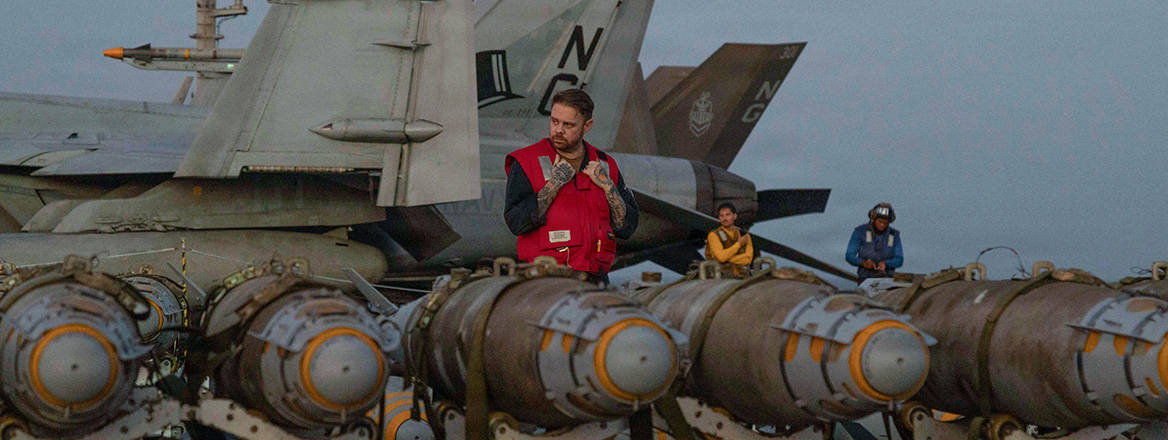
Significant numbers of advanced munitions have been expended, revealing that battlefield dominance matters less than the industrial capacity to replenish critical stockpiles.
If the war in Ukraine was a wake-up call for the Western defence industrial base, the first 16 days of the Iran conflict are a fire alarm signalling a crisis of endurance. The intense consumption of advanced munitions during Operation Epic Fury has revealed a critical vulnerability: a strategically ruinous cost-exchange ratio that the West’s industrial capacity is not prepared to sustain.
While American and Israeli forces achieve some tactical success by striking thousands of targets, the wider coalition is also downing drones and intercepting missiles by expending multi-million-dollar missiles that cost a fraction of the price. These tactics have ‘astonished’ Ukrainian military advisors deployed to the region because they have observed coalition air defences ‘firing thoughtlessly.’
This asymmetry is rapidly depleting high-end stockpiles. As shown in Table 1, our Payne Institute proprietary ledger tool tracked Iran war munition expenditures, which shows coalition forces expending 11,294 munitions in the first 16 days of the conflict, at a cost of approximately $26 billion.
After an initial salvo of over 5,000 munitions in the first 96 hours, the conflict has settled into a grinding trial of attrition. While Iran’s daily missile and drone attacks have fallen by 80-90% from their initial peak, the sustained pace continues to drain the coalition’s most critical assets. Accordingly, our analysis has tracked that since day 5 and after, Iranian missile and drone attacks have averaged 33 and 94 strikes per day respectively.
The true strategic risk, however, is not the total expenditure but the uneven rate of depletion. Inventories of some munitions remain deep and scalable, while others – particularly long-range interceptors and precision strike weapons – are nearing exhaustion.
This dynamic marks the convergence of several established strategic logics. Bertrand Badie’s ‘impotence of power’ captured the paradox of modern warfare, where American hyperpower of battlefield dominance fails to secure political outcomes. Barry Posen’s ‘Command of the Commons’ grounded US military primacy in its ability to project power across global sea, air and space. Yet, as Martin van Creveld warned back in 1991 that advanced militaries become uniquely fragile when their power depends on complex, low-density systems that are difficult to replace under stress.
This emerging imperative demands a new strategic framework: ‘Command of the Reload.’ In a salvo-based environment, where ‘missile math’ governs the intensity of warfighting, the decisive advantage shifts to the actor that can sustain its defensive economy and replenish its most critical assets. Operation Epic Fury is the first test of this new reality, and its initial results are a stark warning.
The Anatomy of Endurance: Critical Categories and the Second-Theatre Tax
The core lesson from the first 16 days is that ‘critical’ is becoming a material condition. A munition becomes critical when its replenishment is gated by thin suppliers, long qualification cycles, or constrained components like rocket motors and guidance electronics. Prior to the conflict, multiple reports had already warned of a ‘deteriorating US defence industrial base’ and its ‘empty bins in a wartime environment.’ The mass of the weapon is not the measure; a few kilograms of a constrained input, such as gallium, battery-chemicals or graphite, can stall the production of various weapons, while a warehouse full of steel is useless if a system is bottlenecked at the sub-tier.
This industrial fragility is exacerbated by both policy inertia and geopolitical realities. Even after the Trump Administration met with defence industry executives on 6 March, our discussions with defence firms indicate that no production surge has occurred because no funded orders have been placed. Industry leaders are reluctant to increase production without firm commitments, having been ‘burned’ in the past by promises of funding that did not materialize. Compounding this, the sole American factory for high explosives, Holston Army Ammunition Plant, has not received orders to increase production. Industrial base production is only made worse by the closure of the Strait of Hormuz, which threatens upstream supply chains for vital materials like sulphur.
As Table 2 shows, over a dozen munition types have been expended by the coalition at a rate that appears to be unsustainable. Already, Rheinmetall CEO Armin Papperger noted on 19 March that global stockpiles are ‘empty or nearly empty’ and that if the war continues another month ‘we nearly have no missiles available’.
This analysis points to three watchlists that govern endurance: interceptors, long-range standoff strike, and the sensor-and-command layer. These categories determine whether bases stay protected, whether the coalition can strike at low risk, and whether the engagement picture remains coherent. Volume munitions are plentiful, but they do not substitute for defeating threats at scale, nor can they compensate for the loss of radar coverage that keeps interception economical. Given that Iran has damaged at least a dozen US and allied radars and satellite terminals, the efficiency of interception decreases; using 10 or 11 interceptors for one missile or 8 patriot missiles for one drone becomes unsustainable.
As seen in Table 3, our analysis shows the magazine abyss for the coalition is coming soon.
What stands out most about Table 3 is that the US military is approximately a month, or less, away from running out of ATACMS/PrSM ground-attack missiles and THAAD interceptors. Israel is in an even more precarious spot, with its Arrow interceptor missiles likely to be completely expended by the end of March. While the war could proceed with other munitions, this implies accepting greater risk for aircraft and tolerating more missile and drone ‘leakers’ damaging forces and infrastructure. The precariousness of this ‘empty bins’ issue could possibly explain why President Trump is already suggesting the ‘winding down‘ of the Iran war; it could take years to replace what was expended in only 16 days.
While the defence industrial base is producing most of these munitions at present, they are incredibly complex and difficult to surge, meaning it will likely take at least 5 years to replenish the 500 plus Tomahawk missiles already fired in the war. Worse, sourcing critical defence minerals, rare earths, and materials to make the weapons and munitions is complicated by China. China controls most of the world’s gallium and germanium, and Beijing has imposed numerous mineral export controls since 2023, to prevent the US and its allies from acquiring these necessary inputs for the defence industrial base.
These dynamics create the strategic consequence Epic Fury makes hard to ignore: the second-theatre tax. Our analysis shows that the coalition can continue fighting Iran, but with increased risk to forces in-theatre. The bigger risk, however, is what continued fighting against Iran does to deterrence and defence elsewhere.
The cost of the Iran war is becoming measured in industrial slack and allied confidence. Modern war must be costed in different units; the relevant metric is whether a coalition can keep firing on Day 20 and Day 60 while sustaining an economical defence and a viable offensive capability.
Endurance is not local. Every interceptor and Tomahawk fired from a finite, slow-to-replenish stockpile reduces the US’ ability to deter and defend in another theatre, such as protecting Taiwan and supporting Ukraine. This is also where alliance politics becomes industrial politics. If the US prioritises replenishing its own stocks, it slows deliveries to other partners, creating a credibility dilemma.
This is where alliance politics becomes industrial politics. The cost of the Iran war is becoming measured in industrial slack and allied confidence. Modern war must be costed in different units; the relevant metric is whether a coalition can keep firing on Day 20 and Day 60 while sustaining an economical defence and a viable offensive capability.
The Defensive Economy: ‘Cheap Defeat’ and the Coupling Trap
In a saturated theatre, the question is not whether a coalition can intercept, but whether it can intercept efficiently enough to keep fighting after the opening weekend. The ledger makes the problem visible. The coalition’s critical categories are disproportionately the high-end interceptors that are slow to replenish. This reality forces a doctrinal choice: either defend everything with premium missiles and accept rapid depletion or build a layered defence that preserves those assets for the targets only they can defeat.
That is why ‘cheap defeat’ is strategically vital. It is easy to treat guns and point-defence systems as tactical housekeeping, and interceptors as the ‘real’ air defence. Epic Fury suggests the opposite. Cheap layers are what keep premium layers from being bankrupted by a target set that includes thousands of drones and decoys. As Table 4 shows, over the first sixteen days, coalition forces fired approximately 509,500 rounds from C-RAM and similar gun systems. That ammunition cost was only around $25 million, whereas at least $19 billion was spent on missile interceptors. That half-a-million-rounds sounds like a rounding error is precisely the point; it shows how different the ‘healthy’ and ‘critical’ categories truly are.
But cheap does not mean disconnected. The cheap-defeat layer reveals a coupling trap, sharing upstream supply chains with the most exquisite missiles. As our analysis in Table 5 shows, replacing the expended gun ammunition will require almost 4,000 kg of tungsten. This material can be substituted, but the most available option for defence uses is depleted uranium, which most US allies refuse to use due to its radioactive and politically toxic nature. With China controlling over 80% of global tungsten production and having introduced export controls in 2025, this bottleneck affects both ground ammunition and naval point-defence systems simultaneously.
The same trap exists for energetics. The cheap-defeat layer alone consumed almost 29,000 kg of propellant and over 10,000 kg of explosives. These flow through the same constrained Holston and Radford facilities that supply every missile programme in the inventory. C-RAM ammunition is competing upstream with Tomahawk, JASSM, and Patriot for the same energetic base. The acquisition system separates missiles from ammunition, but the supply chain does not.
This reality demands a new doctrine: composable air defence. Ukraine’s ‘FrankenSAM‘ efforts are a preview. When premium interceptors become the gating factor, the logic must shift from optimizing boutique systems to fielding a reloadable, adaptive ‘patchwork shield.’ This means mating available sensors to mass-producible missiles, or employing cheaper systems like high energy lasers, as has already been seen in the conflict. A layered defence is not just a technical architecture; it is an industrial survival strategy built around cheap defeat mechanisms that preserve critical munitions for the targets only they can stop. The war has not triggered new industrial capacity; it has only deepened a shortage that already existed.
Command of the Reload: The New Grammar of Defence Industrial Base Endurance
Washington’s use of emergency authorities to accelerate arms packages to Gulf partners is a clear signal that policymakers recognize this conflict is shifting to a contest of endurance. However, this action is a stopgap, not a solution. Emergency authorities accelerate contracting, but they cannot accelerate motor curing times, seeker production rates, or the sub-tier fragility behind advanced electronics and energetics.

Help your search results show more from RUSI. Adding RUSI as a preferred source on Google means our analysis appears more prominently.

The fundamental problem is industrial, governed by the immutable ‘iron triangle’ of the defence industrial base: munitions can be produced well, quickly, or cheaply, but never all three. Surging production under wartime pressure forces a choice to sacrifice ‘cheap.’ This was starkly illustrated when the US Navy required over $2 billion to replenish $1 billion in munitions expended in Red Sea operations. Applying the logic of this iron triangle, the current $26 billion bill for munitions will likely cost the coalition over $50 billion to replace just 16 days of warfighting, demonstrating the true premium of wartime industrial velocity.
The war has revealed that the West has been costing war in the wrong units. The relevant metric for sustained, high-intensity conflict is becoming more about how many interceptors and precision guided munitions can be fired after several weeks and months. This reality creates the second-theatre tax as an operational fact; allies are already signalling concern that an American focus on its own military replenishment will delay weapon and munition deliveries they have already paid for.
This reality does not mean the West is helpless, but that its strategic advantage must be redefined. Command of the commons remains necessary, but Epic Fury demonstrates it is increasingly insufficient without ‘Command of the Reload.’ This requires investing in a defensive economy, hardening the sensor layer, and treating the industrial base (in other words, from sub-tier capacity to energetics) as strategic infrastructure. In the next war, the side that can reload fastest will not merely win the attrition fight; it will determine whether its strategy stays plausible after the opening salvo.
© Macdonald Amoah, Morgan Brazilian and Jahara Matisek, 2026, published by RUSI with permission of the authors.
The views expressed in this Commentary are the authors', and do not represent those of RUSI or any other institution.
For terms of use, see Website Terms and Conditions of Use.
Have an idea for a Commentary you'd like to write for us? Send a short pitch to commentaries@rusi.org and we'll get back to you if it fits into our research interests. View full guidelines for contributors.
WRITTEN BY
Macdonald Amoah
Guest Contributor


Morgan D. Bazilian
Guest Contributor

Lieutenant Colonel Jahara Matisek
Guest Contributor

- Jim McLeanMedia Relations Manager+44 (0)7917 373 069JimMc@rusi.org