

Moscow’s Other Front: Why Ukraine’s Churches Are a Security Issue

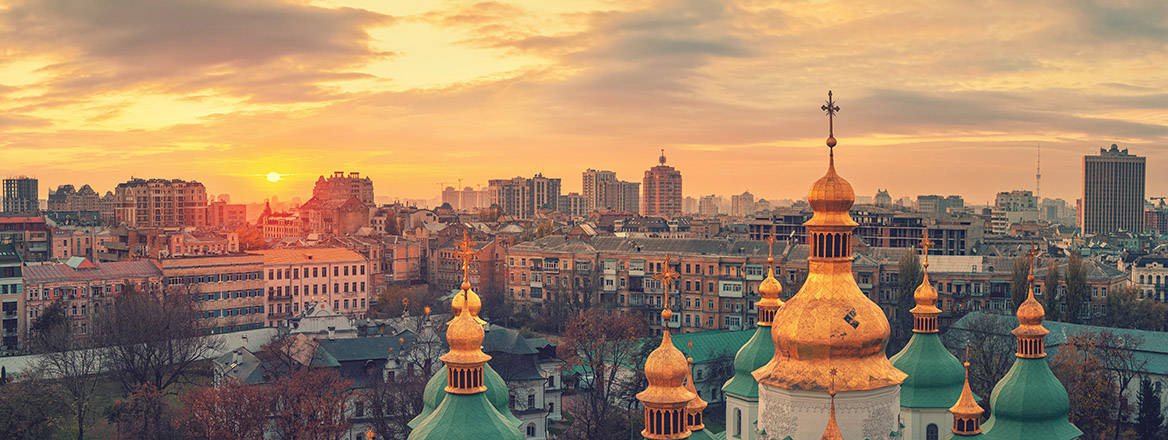
A CIA director and the Vatican’s foreign minister were in Moscow in August. The spy chief drew the coverage; the Archbishop’s visit showed religion belongs in any analysis and resolution of Russia’s war.
On 25 August 2026, two very different representatives of Western power were doing business in Moscow. CIA Director John Ratcliffe flew in unannounced aboard a US military transport for talks with Russian intelligence officials, delivering a bleak assessment of the war and warning against any attack on the Baltic states. He did not meet President Putin and President Trump dismissed the trip as ‘semi-routine’. That same day, Archbishop Paul Gallagher, the Vatican’s British-born Foreign Secretary, met Sergei Lavrov and declared that the war in Ukraine must end. His five-day programme also took in meeting the Moscow Patriarchate and the small Catholic community.
The visits were not coordinated. Ratcliffe embodied raw US power; Archbishop Gallagher embodied soft Vatican influence exercised through access, historical memory and communion with believers across frontiers. The timing inevitably invited a ‘Bad-cop (Ratcliffe)/Good-cop (Gallagher)’ reading. Lavrov dismissed this, saying both visitors merely wanted to ‘come and talk’.
Strategic culture shaped the two missions differently. Western institutions tend to separate intelligence, diplomacy, military power and religion; Moscow treats them as mutually reinforcing. Kremlin and Moscow Patriarchate narratives combine territorial, historical, civilisational and spiritual claims, presenting NATO enlargement and Catholic pastoral activity as two expressions of the same Western encroachment. The war is therefore being fought not only over territory, but over the spiritual inheritance of contested lands.
Theology as a Security Lens
Roman Catholicism and Eastern Orthodoxy both claim catholicity – universality and fullness – but organise it differently. Catholic local churches are united through their bishops under the Pope’s supreme authority. Orthodoxy is a communion of self-governing, or autocephalous, churches ordered by patriarchal precedence rather than a single leader. Each normally claims exclusive jurisdiction within its ‘canonical territory’, while authority to actually recognise a new autocephalous church remains disputed.
Russian usage has moved from administrative boundary to civilisational concept. Moscow measures canonical territory not by Russia’s borders, but by where the 988-AD Baptism of Rus is believed to have reached. Despite the fall of the Soviet Union, the Patriarchate still claims jurisdiction across the former territory – including Ukraine.
To secular strategic audiences, this may appear an obscure ecclesiastical quarrel. It is not. Ecclesiology – how the Church is constituted and governed – raises a question of sovereignty: can an independent Ukraine possess a church independent of Moscow? Constantinople’s 2019 grant of autocephaly to the Orthodox Church of Ukraine aligned ecclesiastical jurisdiction with Ukraine’s borders. Moscow continues to viscerally reject this as spiritual theft.
Ukraine’s Contested Ecclesiastical Landscape
Ukraine’s ecclesiastical landscape is divided among three principal Eastern Churches: the independent Orthodox Church of Ukraine (OCU), supported by most Ukrainians identifying as Orthodox; the minority Ukrainian Orthodox Church (UOC), historically linked to Moscow but claiming independence since 2022; and the Ukrainian Greek Catholic Church (UGCC) in communion with Rome. Their competing allegiances make church governance a question of sovereignty and geopolitical orientation as much as theology.
Without Kyiv, Russia can still hold an empire, but not the account of where that empire began, nor the spiritual legitimacy that this confers
Under Ukraine’s 2024 law on religious organisations linked to Russia, the state concluded in 2025 that the UOC’s Kyiv governing body – the Metropolia – remained affiliated with the Russian Orthodox Church. It then opened proceedings to dissolve it and transfer its non-religious assets to the state. Pressure has also moved to diocesan level: on 30 August 2026, the Zaporizhzhia eparchy was reportedly ordered to sever ties with the Metropolia, according to the Union of Orthodox Journalists, whose coverage reflects the UOC’s position.
A separate judgment shows why Kyiv must proceed carefully. On 6 April 2026, the Sixth Administrative Court of Appeal found that officials had failed to consider the Metropolia’s objections to allegedly biased members of a panel conducting an earlier, 2023 review of its charter. The court neither found the UOC independent of Moscow nor overturned the separate 2025 investigation underpinning the dissolution case. It cancelled only the order approving the earlier review and required reconsideration.
This distinction is legally important but strategically uncomfortable. Each procedural failure gives Moscow evidence from a Ukrainian court that the state failed to act fairly. Combined with Human Rights Watch’s warning that the law is overly broad, it enables Russia to recast a legitimate Ukrainian security concern as religious persecution.
Yet legal precision does not require moral neutrality. Ukraine must uphold due process because it is fighting for government under law, as this ruling itself demonstrates. But expecting a population under bombardment to view structures linked to a Patriarchate that calls the war ‘Holy’ solely through the abstract language of religious liberty is politically unrealistic and humanly unreasonable.
Russkiy Mir: The Russian World and Sacred War
After the Soviet collapse, Orthodoxy offered Russia what a discredited communism no longer could: continuity, sacrifice, moral order and national destiny. Under Putin and Patriarch Kirill these themes converged on the Russkiy Mir, or ‘Russian World’ – a civilisation bound by language, memory and Orthodox inheritance. Under this concept Ukraine, Belarus, and Russia form a single spiritual and territorial space, with Ukraine as its central religious pillar. The 988-AD Baptism of Rus under Prince Volodymyr – Vladimir, in Moscow’s telling – supplies the foundational story. Without Kyiv, Russia can still hold an empire, but not the account of where that empire began, nor the spiritual legitimacy that this confers.
Putin’s 2021 essay ‘On the Historical Unity of Russians and Ukrainians’ called them ‘one people’. Theology and territory were fused explicitly in March 2024, when a decree of the World Russian People’s Council, chaired by Kirill, described the invasion as a ‘Holy War’ defending ‘the single spiritual space of Holy Russia’ and declared that ‘the entire territory of modern Ukraine should enter Russia’s exclusive zone of influence’.

In July 2026 the Patriarchate published Kirill’s War: Beyond Visible Causes and Consequences, which casts the war as metaphysical conflict, describes a soldier’s death as ‘co-crucifixion’ and insists that ‘first and foremost the Church must be mobilised’. Regular religious practice in Russia remains weak, but observance is the wrong metric. The Patriarchate’s power is institutional not parochial: it works through military chaplaincy, state media and national commemoration, not local attendance.
Imperial ambition, not theology, defined the invasion. Putin does not conduct foreign policy from a catechism. Religion is not the cause of this war; it is a resource for propagating, justifying and consolidating Russia’s invasion. Russkiy Mir makes Ukraine’s separation perceived as an amputation from Russia’s national soul rather than as a geopolitical territorial loss. A ceasefire can determine where Russian soldiers stop fighting without determining where Moscow genuinely believes Russia ends.
Rome, Brest and the Polish Pope
Nothing embodies Moscow’s fear of religious encroachment more sharply than the Ukrainian Greek Catholic Church. It originates in the 1596 Union of Brest, when a number of Orthodox bishops in the Polish Lithuanian Commonwealth entered communion with Rome whilst keeping their Byzantine rite and traditions: Rome saw proof that Eastern Christians could retain their identity under papal authority; Moscow saw Polish-inspired Catholic expansion in Orthodox vestments. In western Ukraine it became guardian of Ukrainian language and national memory, thus Soviet authorities used the 1946 Lviv assembly to liquidate the union. Its re-emergence-- after surviving underground for four decades, fused Russia’s worst fears: Polish influence, Vatican infiltration and Ukrainian nationalism.
For Moscow, John Paul II’s 1979 visit to Poland supplied the contemporary warning: religious authority could strengthen national identity outside state control. The Catholic-inspired workers’ trade union movement Solidarność, mobilised within fifteen months and would influence Communism’s downfall in a way Moscow could neither control nor suppress; belatedly answering Stalin’s purported question, about how many divisions the Pope actually commanded.
That history explains both Moscow’s suspicion of Rome and Rome’s value as an intermediary, and why Archbishop Gallagher’s meetings with the Patriarchate mattered as much as his meeting with Lavrov. By condemning Russia’s aggression without echoing Western policy, the Vatican can mediate across religious channels and pursue humanitarian missions – though it risks enabling Moscow to manipulate any contact for propaganda purposes.
What Western Policymakers Should Do
Four practical steps follow. They require attention more than additional funding.
Treat the Moscow Patriarchate as a warning indicator. Synodal decrees and episcopal appointments in occupied dioceses are open, cheap to monitor and rarely noticed strategically. An example being Moscow’s July 2026 appointment of a former Soviet military officer to a Ukrainian diocese carved from the UOC’s Kherson eparchy, renaming its seat from Ukrainian Oleshky to its old Russian Imperial name Aleshki and classifying the territory as ‘Donbas and Novorossiya’ – effectively annexation through church boundaries, personnel and place names. Agencies should also track how death framed as religious duty enters preaching, military chaplaincy and memorial ritual. September’s frontline tour of Prince Dmitry Donskoy’s relics is one example: not conclusive alone, but evidence of sacred sacrifice being used to sustain soldiers and society through a longer or escalating war.

Draft the religious annex now, not in the last fortnight of talks. Negotiations must address contested churches, Moscow-linked parishes, clergy and property alongside territory and security guarantees. Despite institutional complexities this area requires ownership and access to relevant expertise, especially given Moscow’s propensity for weaponising negotiations. Allies should establish both now, before Russia frames ecclesiastical jurisdiction as an internal civilisational matter.
Help Kyiv make its legal process unimpeachable. Ukraine faces a genuine security problem, and no state at war is obliged to tolerate ecclesiastical structures acting on behalf of its invader. But a broad-brush ban is self-defeating. Russia already publishes reports alleging the ‘persecution’ of the Moscow-aligned church, while UN special rapporteurs have raised concerns that the law targets presumed affiliation rather than proven threats. Links to Moscow may be real but should be demonstrated case by case. Western assistance should thus support evidence-based adjudication and genuine appeal rights, denying Moscow the victimhood narrative it promotes among its Western and Global South fellow travellers.
Disaggregate Orthodoxy and protect the Vatican channel. Orthodoxy is not the Moscow Patriarchate. The Ecumenical Patriarchate of Constantinople – first among equals within Orthodoxy – the Orthodox Church of Ukraine and other autocephalous churches require sustained engagement rather than occasional courtesy. Treating Orthodoxy as a single bloc concedes Moscow’s usurping claim to speak for it. Equally, the Holy See is not an arm of Western foreign policy, and its usefulness depends on not becoming one. Its channel – which has delivered where state diplomacy could not, including on prisoner exchanges and the return of deported children – should be protected from allied pressure to align its public messaging.
Western policymakers seek to resolve wars through borders, treaties and security guarantees: the familiar architecture of the Westphalian order. Yet Moscow views Ukraine not simply as a sovereign state, but as part of a ‘single spiritual space’ rooted in ‘the Baptism of Rus’. A territorial settlement may stop the fighting while preserving the religious claim that helped legitimise it – and with it, an ideological basis for renewed conflict. The West cannot negotiate Russia out of its theology, but it must understand its strategic consequences. A settlement may determine where the border lies; the harder question is whether Moscow accepts that the border settles anything. In Ukraine, control of church history supports claims to political authority: thus Moscow’s claim to Ukraine’s past becomes a claim over its future.
© Andrzej Marszewski, 2026, published by RUSI with permission of the author.
The views expressed in this Commentary are the author's, and do not represent those of RUSI or any other institution.
For terms of use, see Website Terms and Conditions of Use.
Have an idea for a Commentary you'd like to write for us? Send a short pitch to commentaries@rusi.org and we'll get back to you if it fits into our research interests. View full guidelines for contributors.
WRITTEN BY
Andrzej Marszewski
Guest Contributor


- Jim McLeanMedia Relations Manager+44 (0)7917 373 069JimMc@rusi.org