

The Great Liquidation: Russia’s Great Imperial Retreat

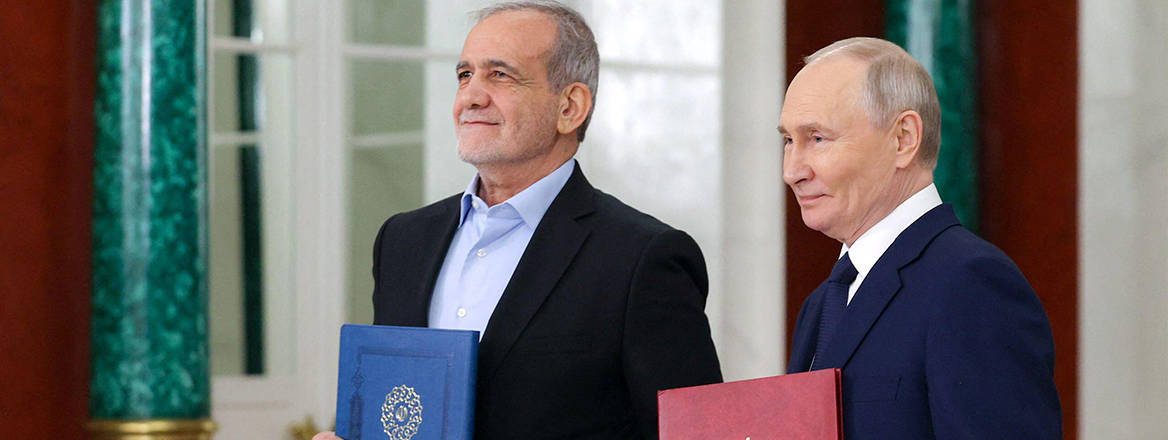
Its ammunition spent on Ukraine, Russia can no longer act on the world stage. The Moscow-Tehran axis is collapsing in real time.
As US and Israeli strikes continue across the country, Tehran is learning a hard lesson. Over the weekend, Iran appealed to its long-term strategic ally, invoking clauses on ‘mutual assistance in the event of a threat to sovereignty’. Moscow did not answer. Even when Tehran askedto activate the S-400 systems and the electronic warfare systems in Russian bases in Syria, Moscow refused to defend Iran’s skies. According to some reports, it even turned off transponders and active radar systems at its bases to avoid any accidental involvement or pretext for entering the conflict.
12 weeks on, the ‘new Monroe Doctrine’ of Trump Administration’s National Security Strategy added Khamenei to Maduroas toppled leaders.
But we are not seeing a simply resurgent American superpower.
We are witnessing a textbook case of Paul Kennedy's imperial overstretch, where the strategic commitments of a power – in this case, Russia – exceed its economic capacity to maintain them, forcing the liquidation of distant positions to preserve core objectives. Maduro, too, made emergency calls for arms shipments that never arrived. He is now in a New York jail.
Tehran. Caracas. Damascus. Bamako. Belgrade.
Havana?
These are the outposts Russia is sacrificing to sustain the assault on Kyiv. Since 2022, Ukraine has transitioned from a near-theatre of Soviet imperial restitution into a financial sinkhole that has dissolved Moscow’s capital, attention and the military assets required to sustain the Russian periphery. The Kremlin faced Kennedy's ultimate dilemma: it could afford Ukraine or an empire. It chose Ukraine.
We see it across the globe – not just Iran and Venezuela – a 21st century imperial scramble for Russia’s distressed assets.
The Middle East: One-Way Extraction
Despite signing a 20-year Comprehensive Strategic Partnership with Iran in January 2025, the relationship has degraded into one-way extraction, with no reciprocal protection. Moscow remained passive during last Summer’s strikes and now only offers muted diplomatic ‘criticism’ while the Islamic Republic faces a potentially regime-ending week. This crisis can be directly traced to Moscow’s failure to deliver the advanced air system weaponry, especially the S-400 air defence system that Tehran ordered, and the Russian specialists it needed.
Europe, especially, must now act: Balkan countries, such as Serbia with its orders of French Rafale jets for Belgrade, eyes EU membership. This would be a major strategic victory.
The Kremlin, though, continued to extract Iranian drones and missiles for the Ukraine front since late 2021. Iran supplied Russia with more than $4 billion in missiles, drones, ammunition and technology transfers, including ballistic missiles and the licensed production of Shahed systems inside Russia. Yet, critically, the 2025 strategic partnership agreement contained no mutual defence clause; Moscow provided no meaningful military assistance during Iran’s 12-day war with Israel last year. While Russia transferred combat trainer jets and a handful of attack helicopters, this could not constitute a coherent, modern air and missile defence to protect Iran. Tehran supplied; Moscow took. Khamenei paid the ultimate price.
Syria reveals the same pattern. In January 2026, Russian forces completed a 48-hour withdrawal from Qamishli Airport in north-eastern Syria, stripping the facility of heavy equipment before retreating to the Hmeimim airbase on the coast. The evacuation marked the functional end of Moscow's decade-long role as regional power broker. Under Ahmad al-Sharaa's leadership, Damascus is a pragmatic landlord rather than a client – a contrast with Moscow-resident Assad’s governance of Syria. By systematically restricting Russian troop movements and reasserting sovereignty over strategic assets like Tartus port, the new Syrian government is liquidating the very outposts that once anchored the Kremlin's Mediterranean presence.
Syria's airbases were never strictly about the Levant; they also served as transshipment points for the Africa Corps, Moscow's primary instrument of influence across the Sahel. The January 2026 withdrawal from Qamishli severed that logistical artery. Russia's mercenary-backed security model in Mali, Niger and Burkina Faso, built on trading regime protection for mineral access, now faces terminal overstretch. Deprived of transit routes and with personnel cannibalized for Donbas, Moscow's African presence degraded into a fragmented shadow. The regimes remain; the protection does not.
A Finite Window
For Western policymakers, Russia's imperial contraction opens a finite strategic window – outside of the immediate crisis. The question is not whether Moscow will continue retreating from its former periphery, but whether the West can translate that retreat into a durable geopolitical realignment before others, or chaos, claim the vacuum.

Help your search results show more from RUSI. Adding RUSI as a preferred source on Google means our analysis appears more prominently.

Danger lays in misreading the nature of Russia's decline. Paradoxically, Russia can achieve tactical victories in Ukraine and Europe while suffering strategic imperial collapse. As Paul Kennedy observed, the final stage of imperial overstretch is often the most volatile. Powers facing terminal contraction do not retreat gracefully; they consolidate remaining resources into desperate, often violent survival strategies. Moscow has already made this pivot: total attritional war in Ukraine, coupled with low-cost hybrid operations across the European continent. Russia may be losing its empire, but it retains the capacity to destabilize the transition.
Yet Russia's forfeit creates a strategic opportunity. In the Caucasus, the Trump Route controls connectivity in the South Caucasus. In Central Asia, the EU is buying out critical mineral supply chains previously dependent on Russian transit. The window, however, is finite, contested and selective. The US and Europe cannot simultaneously contest Russian successor influence everywhere. The Middle East will not default to a Western alignment, and Central Asia may already be beyond retrieval.
Europe, especially, must now act: Balkan countries, such as Serbia with its orders of French Rafale jets for Belgrade, eyes EU membership. This would be a major strategic victory. Unlike more remote theatres, Brussels already possesses regulatory gravity, market leverage and accession tools that can decisively lock-in alignment. Moscow’s influence there has long rested on energy leverage, political networks, and the cultivation of strategic ambiguity in Belgrade. That leverage is eroding. If Brussels treats the Western Balkans as an immediate strategic priority rather than a procedural enlargement file, it can convert Russia’s retreat into irreversible integration. Accelerated EU membership, integration into the European Energy Union, plus the decisive incorporation of the region's mineral wealth into European industrial networks.
Failure to act now will leave a vacuum that others will not hesitate to fill. The West has perhaps 18-to-24 months to lock in structural advantages. Russia's empire is being liquidated to afford Ukraine. The question for Europe and the US is whether it will inherit select strategic assets or watch China, chaos, or others foreclose on the prime estates. All eyes now turn to Cuba.
© RUSI, 2026.
The views expressed in this Commentary are the authors', and do not represent those of RUSI or any other institution.
For terms of use, see Website Terms and Conditions of Use.
Have an idea for a Commentary you'd like to write for us? Send a short pitch to commentaries@rusi.org and we'll get back to you if it fits into our research interests. View full guidelines for contributors.
WRITTEN BY
Maksym Beznosiuk
Guest Contributor


William Dixon
RUSI Senior Associate Fellow, Cyber and Tech

- Jim McLeanMedia Relations Manager+44 (0)7917 373 069JimMc@rusi.org