

The Future of Russian Sanctions After the Hormuz Crisis

US–Iran peace negotiations have stumbled, but if normalcy returns to the Strait of Hormuz, the G7 must be ready to align again on pressuring Russia.
The status of the Strait of Hormuz and ongoing peace talks between the US and Iran continue to dominate the headlines. The signing of the Memorandum of Understanding signalled that negotiations were inching towards a settlement that could reopen the Strait of Hormuz and restore a degree of normality to global shipping and energy markets. Optimism remained fragile and the US and Iran have exchanged renewed strikes, and Iran may close the waterway once again. Under such uncertainty, markets will take time to settle and traffic will resume slowly under continued high risk premiums.
In return for reopening the Strait, the 14-point memorandum presented contentious promises beyond the ceasing of hostilities, such as the full lifting of US and UN sanctions on Iran, access to its blocked funds in US and foreign escrow accounts, a $300 billion reconstruction fund, and a UN Security Council resolution endorsing these points.
While the situation is still volatile, bringing an end to the crisis seems a priority for President Trump and a potential resolution will bring about the possibility of reviving one of the biggest casualties of the conflict: international pressure on Russia.
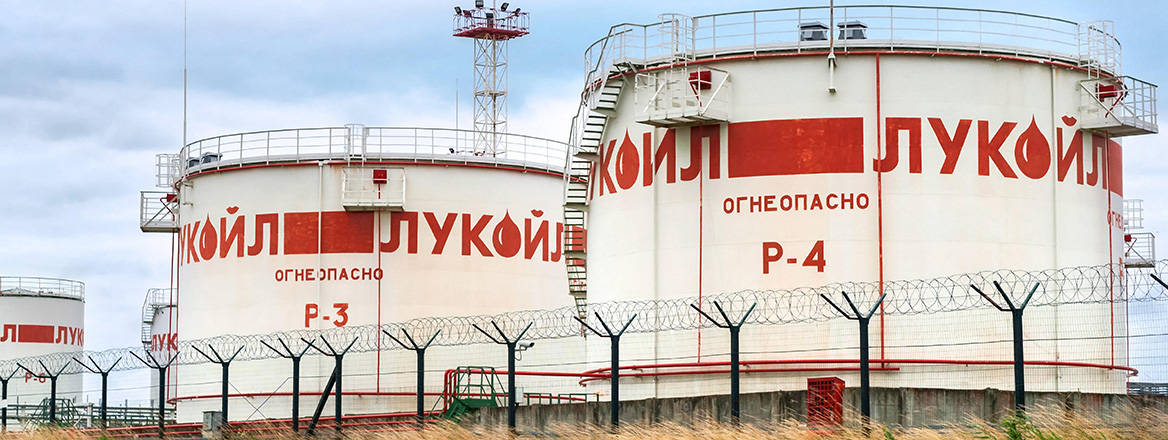
The focus on Iran under the US maximum-pressure strategy had a direct impact on the European priority of constraining Russia’s revenue from its energy exports. International efforts struggled as the new US Administration shifted attention away from Russia in early 2025 and turned towards Venezuela and Iran. Since January last year, the US has not adopted a single designation against the Russian shadow fleet. Two major sanctions were adopted against Russian oil infrastructure with the targeting of Lukoil and Rosneft in October, perhaps the single most impactful measure of the year, but any further disruption of its shadow fleet operations would stem solely from designating or seizing vessels that traded in Venezuelan and Iranian oil that also had links to Russia.
The US bombing campaign under Operation Epic Fury was matched by the raft of sanctions adopted under Economic Fury against the commercial infrastructure behind Iran’s oil exports
Despite the transatlantic divergence, sanctions on Russian oil had started to bite. By December 2025, Urals prices fell below $50 per barrel and Russia’s fossil fuel export revenues reached their lowest post-invasion levels. However, just as Moscow was feeling the pressure, the war with Iran dynamited the market with steep oil price hikes, which the US sought to mitigate with general licences to service Russian oil, generating billions in revenue for the Kremlin and its war machine. As pressure on Iran may start to ease, restrictions on Russia should be tightened once again.
Epic Fury on Iran, Epic Failure on Russia
The US bombing campaign under Operation Epic Fury was matched by the raft of sanctions adopted under Economic Fury against the commercial infrastructure behind Iran’s oil exports.
A prime target was the Shamkhani network, which in July 2025 was the target of the largest single action to date since the Trump Administration revived the maximum-pressure campaign against Iran. Mohammad Hossein Shamkhani’s web of front companies, commodity traders and oil tankers became a central part of Iranian sanctions evasion, allegedly managing a fleet of vessels under obscure ownership and moving billions of dollars to sustain Iran’s energy exports. This sustained targeting approach against hundreds of Shamkhani-linked individuals, entities and vessels showcased the ability of the US to move against an entire illicit ecosystem rather than chasing individual vessels.
The contrast with Russia is stark. As Iran closed the Strait of Hormuz and energy markets tightened, Russian oil became a helpful commodity to push into the market rather than restrict it. Brent surpassed $100 per barrel and the US issued a general licence to authorise the delivery and sale of Russian crude oil and petroleum products already loaded on vessels. After a third iteration, the US allowed the licence to expire in June but Russia’s suffering economy had already received much needed relief.

The political logic was understandable as governments facing an energy shock do not want to remove barrels from the market, but the sanctions logic was weaker. The US was escalating against Iran’s oil smuggling networks while allowing Russian cargoes to keep flowing. The G7 efforts to constrain Russia’s revenue to finance its war in Ukraine were kneecapped just when pressure was proving to bite. The US licence did not discriminate in terms of pricing or origin, meaning that Russian oil trades could be above the price cap, and from a sanctioned source. EU and UK sanctions were still in place, which in practice meant that the licence primarily served the interests of Russia’s shadow fleet. The targeting of the Shamkhani network might have impacted Russian sanctions evasion, as the network also serviced Russian energy exports, but this tangential targeting is insufficient.
The US-Iran memorandum stated that the US will ‘terminate all types of sanctions against the Islamic Republic of Iran, including the United Nations Security Council resolutions, IAEA Board of Governors resolutions, and all unilateral U.S. sanctions—primary and secondary—in an agreed upon schedule as part of the final deal.’ President Trump announced the deal is over after the recent Iranian strikes on transiting ships and revoked the general licence authorising the production, delivery and sale of Iranian oil only ten days into its 60-day waiver. Should the deal return to the table and shipping through the Strait of Hormuz resume, G7 partners must carefully consider the implications of such promise after the snapback of UN sanctions on Iran, but also as an opportunity to turn the pressure on Russia back on.
The Russian Oil Price Cap is Exhausted
The G7 oil price cap began with a compromise, whereby coalition members wanted to limit the Kremlin’s revenue without creating a major shock in the global energy market. The oil price cap was designed to do both, and Western services could still support Russian oil sales, but only if those cargoes were sold below the cap, originally set at $60 per barrel.

The Hormuz crisis should have been the moment to enforce the cap properly. Russian crude could have stayed available to the market, but only under strict price monitoring to provide insurance and payment conditions that limited the Kremlin’s margin. Instead, the emergency licensing prioritised market stability and negated any use of the cap.
The cap also creates a growing credibility problem as the EU and UK continue to target third-country companies for facilitating Russian exports. Ship managers in the UAE, refineries in India, port operators in China, oil terminals in Indonesia and brokers elsewhere are targeted for their dealings in Russian oil. Yet nearly 30% of all Russian crude exports in April were transported on G7 tankers, particularly Greek-owned. At a time when Urals are trading closer to $70, it is hard to believe that these services are price cap compliant and any related documentation is widely considered unreliable, especially after the EU and UK unilaterally decreased the cap to $44.10 outside the G7 framework.
This growing divergence among partners suffered another recent blow. The EU and UK both tried to close another loophole to halt the import of Russian crude that has been processed into oil products in a third country. The EU restriction entered into force in January. The UK followed with its own restriction in May, but the measure came with a controversial general licence for diesel and jet fuel imports, with the same reasoning as the US licence regarding a tight energy market.
If the situation in the Gulf allows, the EU and UK should pursue a more ambitious objective and resume their plans to replace the price cap for a full maritime services ban.
A Viable Future for a Maritime Services Ban
The EU introduced the legal basis for a maritime services ban in its 20th sanctions package, subject to coordination with the G7 partners. Under this new ban, Western operators would no longer be allowed to provide maritime transport, insurance, brokering, finance, technical support or related services for Russian oil exports, regardless of price. This blanket measure would bring policy consistency and simplify industry compliance making Russian oil off limits.
A full maritime services ban would carry risks. Russia would turn even more heavily to the shadow fleet and this growing parallel market would deepen. This risk is real but may not be a sufficient argument for leaving the current system untouched. Russia has already built much of that parallel market and by forcing Moscow to rely on it completely it would expose its limits. Russia would face greater costs to acquire more vessels and expand the ecosystem of enabling actors. Russia is currently unable of sustaining the extent of exports that Western services are supporting and operating costs will continue to rise as the EU and UK become emboldened to disrupt shadow fleet voyages and force longer routes.
The recent G7 meeting in Evian gave the coalition a chance to reset. G7 leaders, including the US, committed to increasing pressure on Russia, including in the oil and gas sectors. The oil price cap was a useful compromise for the first phase of the war, but its glaring ineffectiveness cannot be ignored. Once Hormuz reopens and prices settle, whenever that may be, the G7 should be ready to align its policy on Russian energy with a clearer objective. The coalition, ideally with the US but not dependent on its support, should expand the targeting of vessels and enabling networks around the Russian oil trade, tighten the acquisition of shadow fleet vessels that continue making their way into Russian hands, and move towards a full maritime services ban to truly constrain Russian energy exports once again.
© RUSI, 2026.
The views expressed in this Commentary are the author's, and do not represent those of RUSI or any other institution.
For terms of use, see Website Terms and Conditions of Use.
Have an idea for a Commentary you'd like to write for us? Send a short pitch to commentaries@rusi.org and we'll get back to you if it fits into our research interests. View full guidelines for contributors.
WRITTEN BY
Gonzalo Saiz Erausquin
Research Fellow
Centre for Finance and Security


- Jim McLeanMedia Relations Manager+44 (0)7917 373 069JimMc@rusi.org