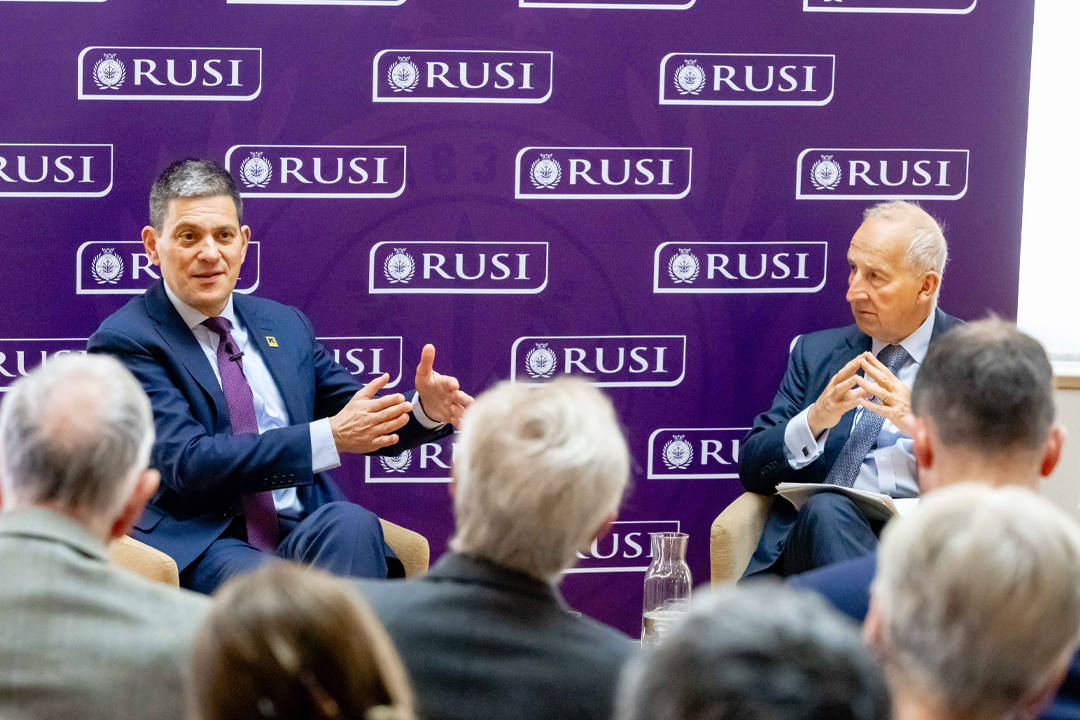
David Miliband Speaks at RUSI on the Humanitarian Impact of the Iran War

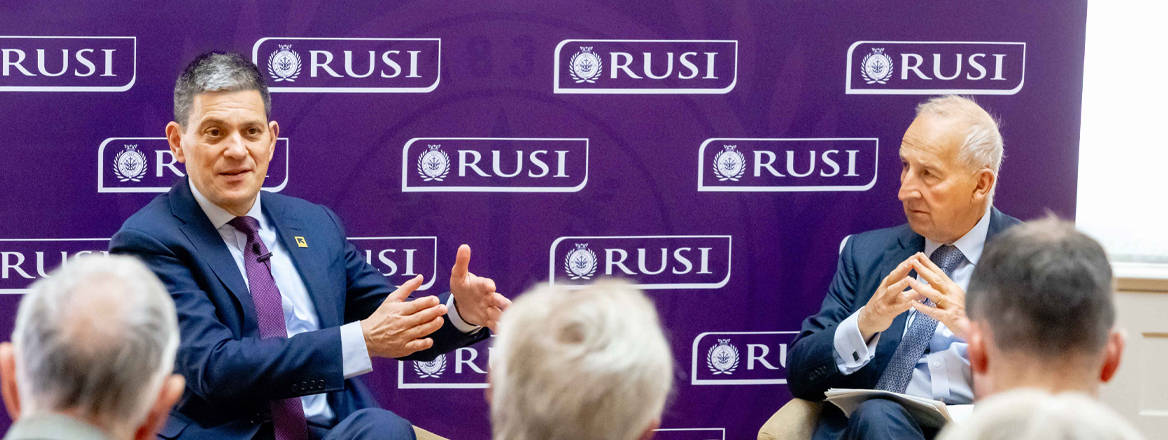
David Miliband, President and CEO of the International Rescue Committee (IRC), told an audience at RUSI that supply constraints resulting from the Iran war, a sharp drop in international aid budgets, and the fragmentation of the global order were severely degrading the security and stability of fragile states.
The former UK Foreign Secretary said the impact of price rises and supply constraints caused by the de facto closure of the Strait of Hormuz − and the resultant shortage of fertilisers and rising fuel and transport costs − were being felt most acutely in states already afflicted by conflict, notably Sudan, Somalia, Yemen, Afghanistan and the Sahel.
He said: 'Whether we're talking about Ukraine, the Middle East, Sudan, it's clear once again that the line between geopolitics, security, and humanitarian consequences is within one… The forgotten victims of the war in Iran are actually living in the Sahel or they're living in Somalia. The IRC saw the effects directly across many of the countries where we operate.'
He added: 'In Yemen, shipping insurance premiums surged by 400 percent and imported goods rose sharply in price. In Somalia, clinics rationed therapeutic food for severely malnourished children because supply chains had broken down. In Sudan, emergency humanitarian supplies previously routed through Dubai had to be rerouted at far greater cost. Afghanistan saw the cost of imported goods triple as aid agencies lost access to direct transit routes through Iran.'
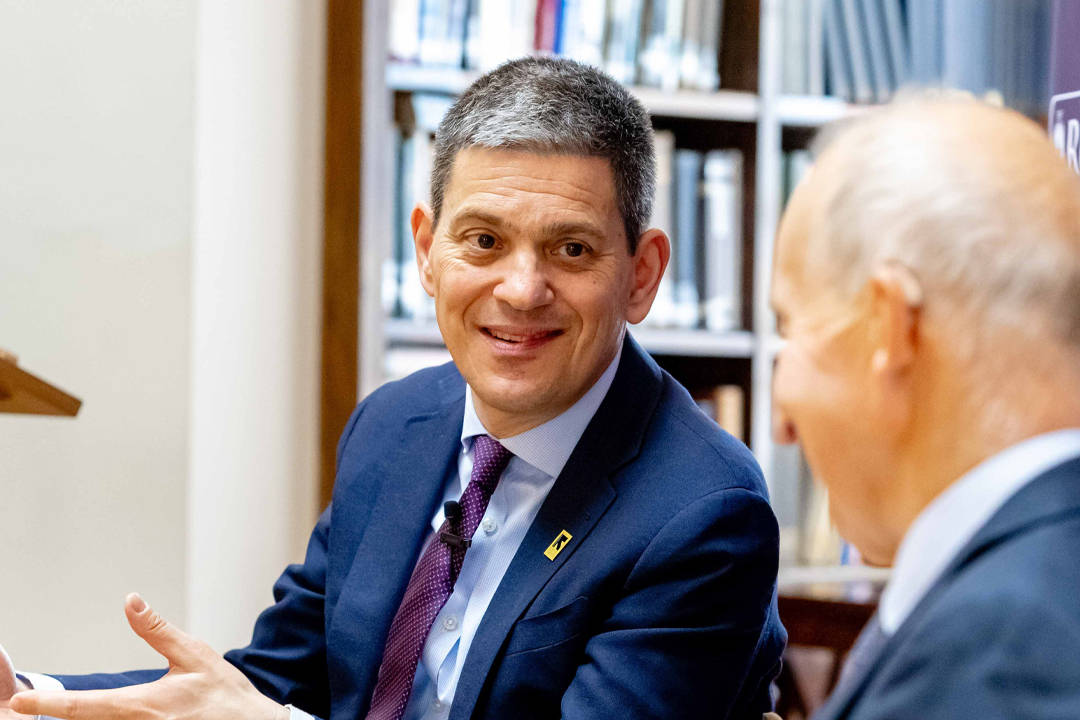
Reflecting on sharp cuts to international aid and development budgets, he said the decline in funding had directly reduced the ability of the IRC and other agencies to deliver health services in the region where the Ebola virus outbreak in central Africa is centred.
He said: 'We had five health promotion and intervention facilities in Ituri [province] in Democratic Republic of Congo. Three of them were shuttered, closed, zeroed out, cut by the USAID cuts last March. And those facilities were doing effectively pandemic preparedness and prevention work. And frankly, it's no surprise that a year later, we've got an Ebola epidemic in Ituri.'
He said the increasing withdrawal of the US from a global leadership role represented a pivotal − or 'hinge' − moment in international affairs, resulting in a more transactional, multi-aligned and fractious world order.
He said: 'I know there's a lot of talk about a multipolar world. That suggests a degree of balance. I think that's wrong. I think it's a much more fluid, much more transactional, much more risky set of relationships…The place of the US – the anchor role the US played in the global system – I don't think that is ever coming back, whoever is elected president. I don't think the old America is coming back.'
He said that 'since wars are the consequences of political failure', this trajectory was contributing to an increase in conflicts worldwide and more forced displacement of people from their homes and migration.
He concluded: 'The fact that there are 60 conflicts going on around the world at the moment is shocking to anyone who's been in diplomacy…There are 122 million people who have been driven from their homes by conflict and disaster, not migrating for economic reasons, but migrating for effectively political and persecution reasons, fleeing from conflict. And their stories are the human version of the instability that we're describing when we talk about geopolitics.'
RUSI Members can access a recording of the event below.