

The UK and the Future of Arctic and High North Security

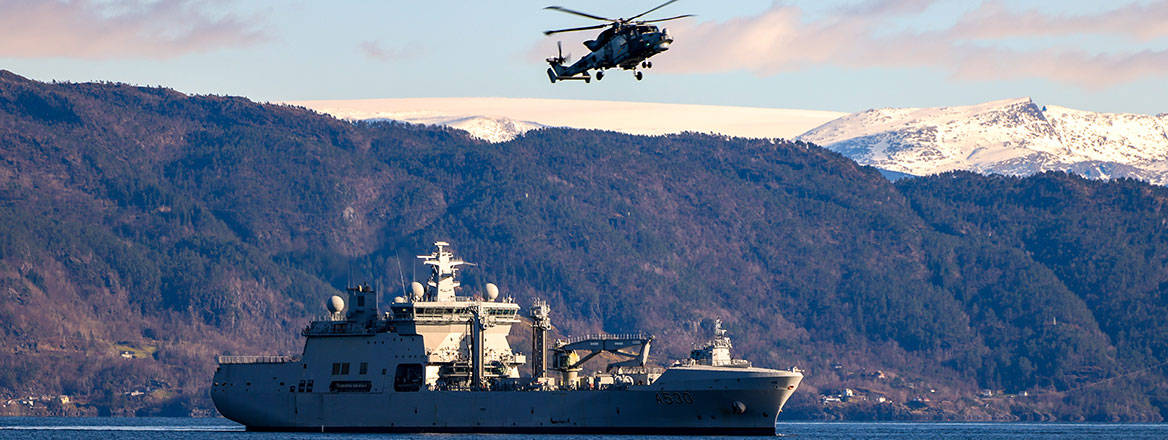
UK leadership in Arctic security is vital as NATO faces new threats from Russia, China and US policy shifts. Strategic action is urgently needed.
Overview
This paper is a pivotal analysis of the evolving security landscape in the Arctic and High North, highlighting the urgent need for UK and NATO leadership as geopolitical tensions rise due to increased Russian and Chinese activity and shifting US policy. It offers actionable recommendations for strengthening regional security and maintaining NATO's credibility, making it essential reading for defence and security professionals.
Key Recommendations
- Own NATO’s Regional Plan Northwest: The UK should take command of NATO’s Joint Force Command Norfolk, ensuring European-led operational planning and accountability, but must address gaps in its national defence plan and Article 3 commitments to deliver credible leadership.
- Rationalise Support to Ukraine and European Regions: The UK must strategically prioritise its defence contributions, focusing on reinforcing the North to realise a NATO First strategy, protect the homeland, and provide leadership where it is most needed.
- Enhance the Joint Expeditionary Force (JEF): The UK should invest in the JEF as a core operational framework, increase defence spending, and commit to persistent deployments, aligning political and military elements to strengthen regional security and keep the US engaged in Northern Europe.
- Leverage Relationship with the US: The UK must maintain its role as a model ally, focusing on defence industrial collaboration, intelligence-sharing and keeping the US engaged in European security, especially in the Arctic.
- Strengthen Nuclear Deterrence in the High North: The UK and France should extend nuclear deterrence to northern allies, increase the 'nuclear IQ' of NATO members, and manage risks associated with Russia’s strategic nuclear forces in the region.
By implementing these recommendations, the UK can reinforce its leadership in the Arctic and High North, bolster NATO’s deterrence posture, and safeguard its homeland and allies against emerging threats.
Register or log in to continue reading
Account creation is quick, free and gives access to all RUSI research and more
- FREE account
- One-time set-up
- Easy to manage
Introduction
Following the end of the Cold War, the Arctic and the High North were deprioritised by both NATO and Russia. The regions have since evolved in three distinct phases as they have become increasingly strategically significant arenas for geopolitical competition.
During the first phase, which started in the early 2000s. Russia began reinvesting in Arctic military infrastructure and capabilities. Its efforts centred on its bastion defence concept to protect its strategic nuclear forces and premier Northern Fleet based on the Kola Peninsula. Meanwhile, in 2018, China officially described itself as a ‘near-Arctic State’, with the region becoming a ‘consistently intensifying’ geographic point of Sino-Russian cooperation. In contrast, NATO – distracted by operations in Afghanistan and Libya – was slow to respond. However, from 2018, the Alliance started to address this strategic disparity: NATO established Joint Force Command Norfolk (JFC-NF), while other Allied actions – such as the re-establishment of the US Navy 2nd Fleet (which had been deactivated in 2011 when tensions with Russia were considered low) – aimed to strengthen NATO in the Arctic and North Atlantic.
In the second phase, starting in 2022, Russia inadvertently reversed this trajectory through the failure of its ‘special military operation’ to subjugate Ukraine. In the conflict, its Arctic land forces were invested and declared combat ineffective multiple times, eroding its force advantage in the North. Of greatest consequence and in contrast to the Russian trajectory, the recent accession of Finland and Sweden to NATO – in direct response to Russian aggression – has expanded the Supreme Allied Commander Europe’s (SACEUR) land area of operations by more than 866,000 square kilometres. Russia is now the only Arctic state that is not in NATO. Therefore, in just five years, NATO has moved from a position of inferiority to one of superiority in the North. Maintaining this overmatch will be central to credible NATO deterrence and defence.
In the third and current phase, US President Donald J Trump has created an unprecedented crisis at the heart of the Euro-Atlantic relationship. This crisis has centred on the Arctic, demonstrated by Trump’s threats to use force to acquire both Canada and Greenland. When NATO is threatened by an external source it can have a galvanising effect, such as after the 9/11 attacks or Russia’s 2022 full-scale invasion of Ukraine. But now the primary source of instability comes directly from the commander-in-chief of the Alliance’s pre-eminent ally. The US threat of tariffs against Europe (expressly undermining NATO’s Article 2) for resisting territorial aggression against a NATO member marks a point of no return for the Alliance. Canadian Prime Minister Mark Carney described the moment as a ‘rupture in the world order, the end of a pleasant fiction and the beginning of a harsh reality, where geopolitics, where the large, main power, geopolitics, is submitted to no limits, no constraints’.
For Europe, this fast-developing third phase creates unprecedented dual internal and external challenges. While Russia’s intent and aggression is threatening but predictable, the US is now erratic and a growing concern for Allied Arctic states. NATO was founded, in part, to eliminate intra-Alliance conflict. Therefore, any significant diplomatic or military engagement between the US and Europe over either Greenland or Canada would be an existential crisis for the Alliance.
The UK is uniquely vulnerable in two ways. For one, it is geographically and intellectually split between allies. To the west, its cultural and historical preference for defence, nuclear capability and intelligence cooperation with the US remains fundamental to UK national security. To the east, its ‘NATO First’ defence strategy, ‘desire to “reset” relations’ with the EU, and deep bilateral and minilateral relationships with European allies – which are particularly strong in the North through the Joint Expeditionary Force (JEF) – are similarly fundamental for UK security. Further, the UK describes itself as the Arctic’s ‘nearest neighbour’. The High North, from the Ministry of Defence’s (MoD) perspective, is the ‘UK’s strategic centre of gravity’, as it is the most likely vector of conventional or nuclear attack against the UK – alongside a persistent hybrid threat. It is, therefore, a priority for homeland defence.
Several contemporary papers have examined the Arctic and High North from the perspective of the external threat posed by adversaries – Russian militarisation and increased Chinese hybrid activity. Instead, this paper focuses on internal Alliance dynamics – particularly the dramatically fluctuating US position – and how Europeans should organise for their defence and deterrence in the region.
This paper examines the drivers of geopolitical change in the Arctic and High North and identifies options for the UK, acting alongside its European allies, to enhance mutual security in the region through keeping Alliance structures together in the face of growing dangers. Over the past decade, the UK has rhetorically pivoted towards the North, but this ambition has not been resourced militarily. This paper argues that the UK should significantly increase its leadership role in the North – backed by credible military forces – as a central manifestation of a NATO First approach to defence, and support the Europeanisation of the Alliance. The renewed focus on emerging crises in the region – while naturally threatening – also presents a strategic opportunity for the UK. If this opportunity is not seized, the UK’s leadership position in NATO and defence and security credibility will be severely weakened, and threats to the UK homeland will increase. This approach will require strategic prioritisation, which the UK has been traditionally reluctant to embrace, and an honest conversation with Allies about the trade-offs involved. If the UK reinforces Northern Europe, it will have limited capacity elsewhere in Europe and globally.
The paper answers two research questions:
- How will the significant US change in approach to the Arctic and High North impact NATO and regional partnership dynamics?
- How should the UK best support allies in the region to preserve security against increasing internal and external threats?
This paper builds on the first paper in the project, ‘The Future of the Euro-Atlantic Security Architecture’, published by RUSI in December 2025. It examines the UK’s role in Northern Europe in greater detail and takes the first paper’s recommendations for Europeans as a baseline:
- Define a long-term strategy.
- Strengthen NATO to work for Europeans.
- Consolidate minilateral security arrangements.
- Modernise military confidence-building measures.
- De-silo considerations for conventional and nuclear contributions to European defence and deterrence.
- Develop options for managing risk.
It then considers the regional implications of these recommendations and explains how UK policymakers within the Foreign, Commonwealth & Development Office and the MoD should support their delivery.
Finally, while there is no universally accepted definition of either ‘the Arctic’ or the ‘High North,’ for the purposes of this paper, ‘the Arctic’ refers to the circumpolar Arctic while ‘the High North’ refers to the European Arctic. Moreover, the paper recognises that NATO as an organisation and its constituent member states (including the UK) often refer to ‘the Arctic’ when discussing diplomacy and soft security, and ‘the High North’ to refer to military and hard security in order to avoid Russian accusations of militarising the Arctic.
The Importance of the Arctic and High North
Historically, a model of cooperation has been practised in the Arctic that has largely insulated the region from global geopolitics. Officially, NATO member states have pursued a ‘High North, Low Tension’ approach. While this mantra sounds good and can be effectively communicated, it can also result in Allies ‘self-deterring’ to avoid raising tensions, a move which Russia and China have successfully manipulated.1. Now, the US threat to acquire Greenland and Canada, renewed strategic competition, a rise in conventional military activity, and broadening hybrid incidents have decisively ended Arctic exceptionalism. And it is likely that the region will become even more significant, for several reasons.
First, the compounding impacts of climate change will continue to open the region to increased activity, including commercially viable shipping routes, competition for resources and tourism. Each of these developments has the potential for significant future economic opportunities, and are driving the wide interest and positioning in the polar regions.
Second, the Kola Peninsula will always be the heart of Russian military power. Russia hosts its strategic nuclear weapons and premier Northern Fleet in Murmansk, which present the most direct threat to Northern Europe as Russian conventional land forces are fixed in an attritional war in Ukraine. The Arctic has already experienced attacks emanating from the war in Ukraine. In June 2025, Russia’s Olenya Air Base near Murmansk – 1,800 km north of Ukraine – and its fleet of Tupolev long-range nuclear-capable bombers were one of the targets of Ukraine’s Operation Spider’s Web. This attack followed Ukraine’s GUR (Intelligence Service of the Ukrainian Ministry of Defence) claim of having conducted a similar attack in July 2024 – the first attack in the Arctic Circle since the full-scale invasion in 2022. The significant increase of military activity raises the risk that a war between Russia and NATO could originate from the Arctic and the High North as a result of miscalculation or a military accident which sparks a conflict.
Third, the region is increasingly a location both for strategic competition and cooperation. In the event of a ceasefire in Ukraine, there is potential for greater bilateral US–Russia energy cooperation within the Arctic and it is the locus for Sino-Russia cooperation on science and technology, which has already developed into a security vulnerability for Europe. A procession of Chinese- and Hong Kong-flagged vessels – such as the Newnew Polar Bear and Yi Peng 3 – have transited via the Northern Sea Route from the Indo-Pacific and been implicated in damaging undersea infrastructure in the Baltic Sea. This has led NATO to establish the ‘Baltic Sentry’ to protect undersea infrastructure. In addition, formal Russia–India cooperation on energy projects is planned in the Arctic, demonstrating the wider global interest in the region.
For the UK and wider Europe, as the Arctic and High North become more important, so will the vulnerabilities emanating from the region. Despite the current Trumpian framing, US and European interests in the North remain aligned and by increasing coherence, communication and capabilities, Europe has the best chance of convincing the US to remain aligned.
A Changing US Approach
There were significant political differences between the first Trump administration and that of President Joe Biden. Nonetheless, there was foreign policy continuity in the central organising principle of strategic competition with China and Russia and the identification of the Arctic as the most likely geography where this would play out. The US enhancements to Arctic security from Trump’s first term to Biden’s were taken with full support of NATO objectives in the region and by working closely with Allies. The US Department of Defense Arctic Strategy 2024 under the Biden administration committed to ‘enhance its Arctic capabilities, deepen engagement with Allies and partners, and exercise our forces to build readiness for operations at high latitudes’. However, Trump’s return to the Oval Office has broken this continuity and driven a dramatic change of approach towards Europe in three central ways that have had an impact on the Arctic. First, and most consequential, attempts to acquire Greenland and Canada as US territory. Second, an aspiration to shift from strategic competition with Russia and China towards strategic stability – to the potential detriment of Europe. And third, a significant reduction in climate science.
The US Departure on Greenland and Canada
Trump first sought to buy Greenland – the self-governing territory of the Kingdom of Denmark – during his first term. The strategic position of the island has historically been valuable to Washington for defence and security and today, the US Pituffik Space Base enables US early warning systems to detect incoming missile threats to the US homeland. Since returning to office in 2025, Trump has demanded that the US needs to ‘own’ Greenland to prevent Russia and China from gaining a foothold. To acquire Greenland, Trump and senior officials have suggested the use of force and threatened to apply tariffs to European countries which challenge Washington’s plans. The US political scientist, Stacie E Goddard, has summed it up as ‘Almost overnight, the United States went from competing with its aggressive adversaries to bullying its mild-mannered allies’. Meanwhile, Denmark has been clear that the territory is not for sale and Danish Prime Minister Mette Frederiksen has said that a US attack on a NATO Ally would be the end of NATO and ‘post-second world war security’.
WRITTEN BY
Ed Arnold
RUSI Senior Associate Fellow, International Security


- Jim McLeanMedia Relations Manager+44 (0)7917 373 069JimMc@rusi.org
Footnotes
Author observations from several RUSI-hosted events on the Arctic and the High North between 2022 and 2026.
British Army, ‘Planning and Execution Handbook (PEHB)’, AC 72099, 2018.
Author interview with former NATO official, online, 12 February 2026.
Figures provided to the author by a military contact in early 2026.
Author conversations with Estonian military officers, Tartu, 4–6 March 2026.