

Why the US’s Financial Efforts to Keep the Hormuz Strait Open Failed

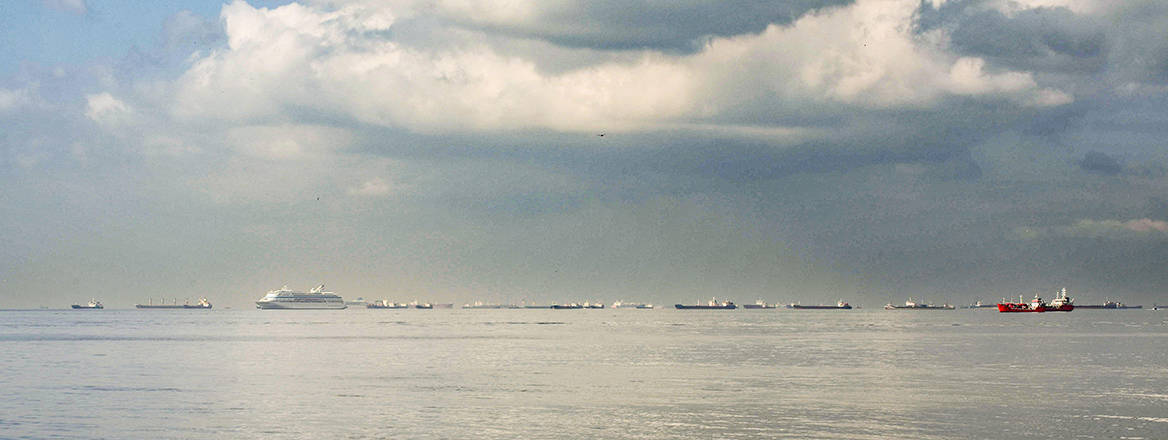
The US government tried to provide political risk insurance and guarantees to shipping and energy firms operating in the Gulf in an effort to keep the Hormuz Strait open. Here is the story why the scheme did not work.
The US government tried to provide political risk insurance and guarantees to shipping and energy firms operating in the Gulf in an effort to keep the Hormuz Strait open. Here is the story why the scheme did not work.
On 23 March 2026, US President Donald Trump announced a five-day pause in strikes against Iranian energy infrastructure. In his own words, this was due to ‘very good and productive conversations’ with Tehran. Iran denied any negotiations had taken place. What exactly forced this decision is something neither side’s official account explains.
Money was never a big motivation for me, except as a way to keep score.
The Art of the Deal, 1987
Imagine a leader who launches a financial programme to collect insurance premiums from shipowners across the world, then opens the Hormuz Strait and declares victory. Sadly, the programme did not work. The central bank did not answer the call. The US Congress blocked the funding. Military advisers pointed to another theatre of operations requiring attention.
In March 2026, Trump found himself alone with four simultaneous failures and a deadline of his own making, without a single instrument to buy more time.
It was financial arithmetic.
In early March and in response to Iranian threats to close the Hormuz Strait, the US administration launched an unusual instrument, one with no precedent in recent American practice. The US International Development Finance Corporation (DFC), an agency whose normal mandate is development finance abroad and does not operate in active conflict zones, offered to insure commercial vessels against war risks in the Gulf. Chubb, the world’s largest publicly traded insurer, took the operational role: accepting applications; issuing policies; and managing claims. The logic was straightforward. Private insurers had withdrawn from the conflict zone. The state would fill the gap. Ships would move. Trade would resume. And the US would collect substantial revenues from a conflict it was already fighting, given that war risk premiums had risen by multiples of their peacetime levels.
The worst thing you can possibly do in a deal is seem desperate to make it. That makes the other guy smell blood, and then you’re dead.
The Art of the Deal, 1987
The business model did not hold. Over three weeks in March 2026, the programme expanded through every stage: from basic ships’ hull cover to full liability insurance including environmental damage from fuel spills. Coverage was available. But ship captains were not willing to take their crews into an active strike zone regardless of what the policy covered.
The mechanism exhausted itself not because the money ran out, but because people declined to risk dying even when they were offered comprehensive insurance.
In parallel, the US government bond market began sending distress signals. There is a specialised indicator, the MOVE Index, which is a stress thermometer for the Treasury market. Under normal conditions, it trades between 60 and 80. On Friday, 20 March, it rose 28% in a single session, reaching 108.
This indicator has form in presaging financial stress. In 2008, a comparable spike preceded the mortgage crisis that cost millions of Americans their homes and brought down banks across the country. In 2020, it rose sharply in the days before the pandemic collapsed markets and destroyed the savings of millions worldwide. In 2023, it signalled the collapse of Silicon Valley Bank, when thousands of companies lost access to their accounts overnight. On each occasion, the Federal Reserve intervened within days, injecting liquidity to relieve the pressure. The indicator had never been wrong in indicating potential financial disaster.
In March 2026, however, the Fed did not intervene in response to movement in the MOVE Index. Its weekly balance sheet report of 19 March confirmed as much; total assets had grown by just $9.6 billion, a routine operational figure. For comparison, at the peak of the 2020 pandemic crisis the Fed injected over $500 billion in a single week. Nothing comparable happened in March 2026.

The reason was straightforward. The economy was simultaneously shedding jobs and accelerating inflation because of elevated oil prices. In that configuration, a central bank has no good options. It cannot cut rates. It cannot print money. The Fed said nothing.
The indicator entered the weekend of 21–22 March at its peak and opened on Monday, 23 March, at the same level. The US government debt market, the foundational asset on which the entire global financial system rests, was signalling loss of control. That signal reached the White House unattenuated. The second mechanism – that of providing central bank support – had failed.
On 26 March, the MOVE Index rose again, to 115 – well above the crisis threshold of 100 and approaching the levels last seen during the 2020 pandemic. Trump extended the pause on strikes against Iranian energy infrastructure by a further 10 days. The world’s greatest dealmaker had now negotiated twice with financial mathematics. On its terms.
Iranian officials characterised the pause as a retreat the day before it was announced. Both sides were reading the same numbers. When your choice consists of having no choice, that is not strategy. That is what 23 March was.
The third failure of this effort to keep the Strait open was military. The US was procuring approximately 90 Tomahawk cruise missiles per year at the outset of the conflict. More than 168 were expended in the first 100 hours – that is nearly three years of production in four days. An Iranian Shahed drone costs roughly $50,000. A Patriot intercept costs $3–4 million. Military advisers were explicit: at this rate of expenditure, strategic reserves would be insufficient for the Pacific theatre.
The fourth failure was fiscal. The Pentagon assessed the cost of the conflict at $11 billion across six days. The administration requested $200 billion in supplemental appropriations. Congress did not release the funds. There was not enough money for fuel, food or logistics for thousands of personnel already in theatre.

Financial constraints stop wars regardless of whether military planners account for them. Russia did not account for them in February 2022. Sanctions hit the financial system within days of the invasion, reserve assets were frozen, and the original plan was dead before the first engagements concluded. The war continued. But not the war that had been planned.
One financial problem is something you manage. When four arrive simultaneously, the situation becomes qualitatively different. Not twice as difficult. A different category entirely. That is what March 2026 was; four constraints converging at a single point, with no instrument remaining to buy more time.
Any leader facing the same configuration would have taken the same pause. The system forced upon Trump the only possible decision.
There is, however, a distinction. For a rational actor, four simultaneous failures are a signal for reassessment. For a man who wrote in 1987, ‘during the bad times, I learned who was loyal and who wasn’t. I believe in an eye for an eye’, these are personal wounds.
The DFC generated no revenue. The Fed did not come. The military flagged another theatre. Congress held the money. All at once.
The DFC precedent has not gone unnoticed. Beijing now understands that if the US activates such a mechanism, it signals military difficulty. Such could be the case for the Taiwan Strait, the South China Sea and the Dardanelles in Türkiye.
The next confrontation over international waterways will begin with the memory of everything that went wrong with keeping the Hormuz Strait open.
© Valery Bonakhau, 2026, published by RUSI with permission of the author.
The views expressed in this Commentary are the author's, and do not represent those of RUSI or any other institution.
For terms of use, see Website Terms and Conditions of Use.
Have an idea for a Commentary you'd like to write for us? Send a short pitch to commentaries@rusi.org and we'll get back to you if it fits into our research interests. View full guidelines for contributors.
WRITTEN BY
Valery Bonakhau
Guest Contributor


- Jim McLeanMedia Relations Manager+44 (0)7917 373 069JimMc@rusi.org