

The US Commits to Venezuela’s Transition. Can it Succeed?

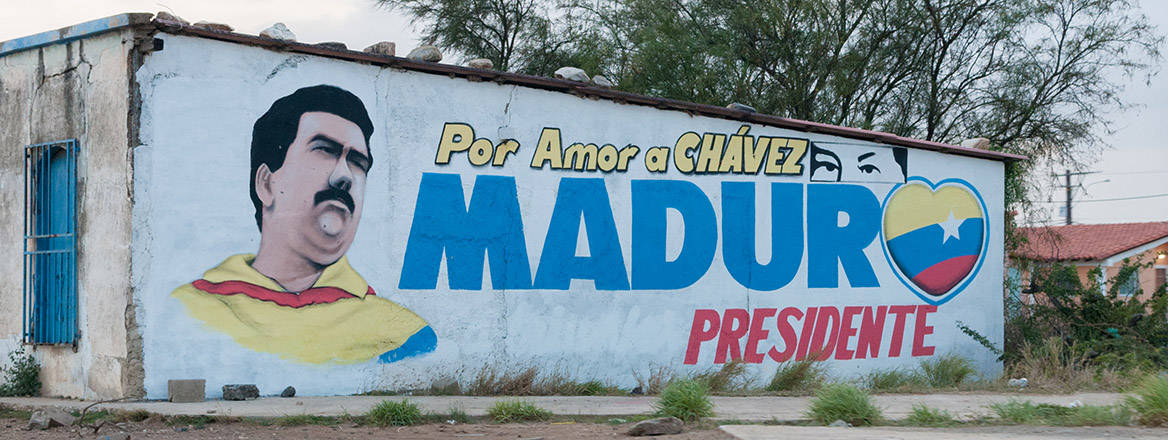
Capturing Nicolás Maduro is not a shortcut to rebuilding a broken country. Washington must now prevent a lengthy interregnum by Maduristas.
The decision by the US President Donald Trump to carry out military strikes inside Venezuela and extract President Nicolás Maduro and his wife Cilia Flores marks a pivotal moment in Washington’s posture toward Latin America, one that abandons longstanding restraint in favour of a more overt and assertive projection of power on behalf of American national security. The execution of precision hits on at least five military bases signals that the administration is no longer treating the region as a peripheral security concern, but as a theatre of direct confrontation. Yet running the country’s transition is a job that very few will want, as many questions remain unresolved.
First, does the US bombing and extraction operation risk triggering unintended escalation? The remaining government in Caracas is unlikely to acquiesce quietly. It is still very early days, too early to decipher what President Trump meant while saying that the US will run Venezuela until a new government is installed. ‘We are going to run the country, until we can do a safe, proper and judicious transition,’ Trump argued from a news conference in Mar-a-Lago, Florida. Yet, the local armed forces, paramilitary actors and criminal networks could intensify defensive operations and build up resistance hotspots, particularly along border zones with neighbouring Colombia, Guyana and Brazil, transforming the Caribbean and Amazonian frontiers into contested spaces to any outside actor, including the US.
In fact, it is likely that the ‘US running the country’ expression is meant to be directed at Venezuela’s leaders as a form of warning more than anything else: the US is now fully committing to drive change in Venezuela, and they better accept – and cooperate with – an approaching transition.
Second, is the legal justification on the entirety of the military build-up and the extraction of Maduro now more certain? While Washington frames its 3 January operation and the almost five months of boat strikes in the Caribbean Sea as part of a counternarcotics mission, critics have questioned the lack of transparency in both intelligence evidence, civilian oversight and command authorisation, raising doubts about compliance with international law and rules-of-engagement norms. The absence of clear communication from the Department of State risks eroding trust and reinforcing perceptions of unilateralism, an issue that has historically strained US-Latin American relations.
For years, US engagement with Latin America and the Caribbean has been driven less by Washington as a whole than by the expanding remit of the US Southern Command
Third, how is this operation likely to reverberate throughout the hemisphere? Many regional governments and civil society actors view the strikes as a reversion to interventionist doctrine. This perception may energise anti-US narratives, strengthen extra-hemispheric alignments with powers such as China and Russia and complicate the very regional cooperation Washington claims to seek. The 2025 US National Security Strategy (NSS) presents the Western Hemisphere as the United States’ primary strategic arena, anchored in what the administration terms a new ‘Trump Corollary’ to the Monroe Doctrine. At first glance, the NSS appeared to mark a major strategic reset, rhetorically elevating hemispheric sovereignty, migration control and anti-narcotics operations as core national security imperatives.
But beneath this ideological rebranding lies a substantial continuity: for years, US engagement with Latin America and the Caribbean has been driven less by Washington as a whole than by the expanding remit of the US Southern Command, whose defence diplomacy, security cooperation and operational partnerships have already positioned the region as a quiet but persistent strategic priority. The question, then, is whether the strategy signals a genuine strategic shift, or simply a refresh of long-standing military-led engagement, repackaged in a more assertive doctrinal frame which now includes steering Venezuela towards re-democratisation, 27 years after the coming to power of Hugo Chávez, the man who gave the Venezuelan Presidency to Nicolás Maduro in 2013.
Hemispheric Security Under America First
The America First policy under President Trump represents a recalibration of US foreign policy toward transactional alliances and a heightened emphasis on measures to achieve strategic homeland security. Within this paradigm, Trump’s administration sees Venezuela not only as a source of regional instability but as a direct challenge to US influence in the Western Hemisphere.
Venezuela’s significance under America First is, however, intricate and multi-layered. First, the country is framed as a hub of transnational crime and narcotics trafficking, which is presented as directly affecting US domestic security. Second, the regime is portrayed as a proxy for extra-hemispheric adversaries, particularly Russia and Cuba, whose presence undermines US geopolitical leverage in Latin America. Consequently, kinetic measures such as strikes on strategic targets and maritime interdiction operations are consistent with the America First doctrine: they are intended to project power unilaterally, degrade Venezuela’s operational capacity and signal resolve without requiring broad international sanction or support.


Domestically, the strikes have occurred in an increasingly polarised US political environment. President Trump’s decision enjoys strong backing among his conservative base, which views decisive military action in the hemisphere as a demonstration of restored American strength and deterrence. According to a Harvard-Harris Poll conducted in early December, 64% of Americans believed Maduro had to be removed from office. On the other hand, a CBS survey from late November found that most Americans opposed military action and instead wanted the administration to explain what the US intends regarding Venezuela.
Yet in Congress, reactions are mixed. Republican leadership has largely rallied behind the Trump administration, framing the intervention as a necessary stand against transnational crime and ‘narco-authoritarianism.’ Democrats, by contrast, have raised alarms over the absence of congressional authorisation, potential civilian harm and the risk of entangling the US in another open-ended regional conflict. The result is a fragmented political consensus, one that may limit the administration’s room to manoeuvre diplomatically even as it asserts military resolve abroad.
During 2025, Trump took an unambiguous turn toward kinetic measures in multiple theatres. In the Middle East, the US conducted airstrikes on nuclear facilities inside Iran, targeting key enrichment sites such as Fordow, Natanz and a facility near Isfahan. In the Red Sea region, the US launched a major campaign, codenamed Operation Rough Rider, of air and naval strikes against the Houthi rebels in Yemen with the objective of stopping attacks on shipping lanes.
Washington has framed these operations as part of a broader approach of forward defence, arguing that there is no need for formal congressional declarations of war in certain contexts, especially when targeting groups he defines as ‘narco-terrorists.’ At the same time, he has proposed a sweeping upgrade in US defence posture, including intensified intelligence operations, special-operations deployments and significant force buildups in both the Caribbean region and overseas. The result is a more assertive, multi-front approach that sees US threats ranging from non-state actors to state adversaries, all while reducing formal legal barriers for unilateral action. In that sense, Operation Absolute Resolve, that took Maduro, was framed by President Trump as a joint military and law enforcement raid at the request of the Department of Justice.
How Do the Strikes Affect What’s Left in Venezuela?
The joint military and law enforcement raid inside Venezuela exerted decisive pressure against the remaining Maduristas left behind: former Vice President and now interim President Delcy Rodriguez; Minister of Defence Vladimir Padrino and Minister of Interior Diosdado Cabello. Yet its effectiveness is not guaranteed.
Politically, the strikes eroded the regime’s aura of invulnerability, a necessary condition if the US hopes to catalyse elite bargaining and have Rodriguez, Padrino and Cabello leaving power
Tactically, the strikes degraded the regime’s immediate capabilities: the reported destruction and damage to military bases, air assets, fuel depots, radar sites and logistics hubs that the Venezuelan military uses to project power and sustain operations. This raises the material cost of continued resistance and complicates day‑to‑day operations and resupply.
At the operational level, the strikes weakened command‑and‑control, disrupted lines of communication and denied safe havens, thereby raising the risk and cost for regime security units and allied militias to operate freely. The coercive air and land strikes could increase incentives for defections among lower‑level officers or transactional elites who fear being cut off from Maduro’s old patronage networks.
Politically, the strikes eroded the regime’s aura of invulnerability, a necessary condition if the US hopes to catalyse elite bargaining and have Rodriguez, Padrino and Cabello leaving power. Trump warned them in Saturday’s press conference: ‘Political figures in Venezuela should understand what happened to Maduro can happen to them,’ he said.
However, military pressure on Venezuela can just as easily produce the opposite: a ‘rally‑'round‑the‑flag’ effect, hardened regime repression, a push toward external patrons (Russia, Iran and China) and a nationalist backlash that complicates efforts to induce defections. Recent reporting shows Caracas seeking external assistance, illustrating that strikes can drive external entanglement. Kinetic action without clear end‑states (Trump even argued from Mar-a-Lago that the US was ready to stage a second, much bigger wave of attacks if needed to do so) and parallel political/diplomatic tracks risks delegitimising US moves, empowering regime propaganda and producing long‑term instability to Venezuela.
Right now, Trump’s NSS and broader posture are widely read as trying to reshape the region’s politics, supporting like-minded governments and punishing others. However, to turn that around the US would need to signal that alignment is not contingent on ideological affinity, but on shared interests. Transnational crime stemming out of Venezuela is a shared interest, even if disagreements persist.
What Happens Next?
The US approach to securing regional cooperation frames collaboration in terms of shared security imperatives (counternarcotics, maritime interdiction and anti-smuggling operations) rather than direct combat involvement with regional countries. But how will the US stress respect for sovereignty and multilateral consultation considering the strikes? These attacks were more than an escalation of force; they are a potential inflection point in how the US engages with Latin America. Whether it leads to greater stability, or a cycle of renewed distrust will depend on Washington’s ability to complement military posture with diplomacy, humility and long-term institutional partnership.
Trump claimed a US administration of Venezuela would take wealth from under the ground, with benefits going to the Venezuelan people and to the ‘US as reimbursement from damages’ inflicted against them
Many Latin American governments, either from the left or the right, will try to preserve their autonomy by balancing between great powers, not by aligning wholly with one side. For them, engaging with China (or other powers) may be a way to strengthen bargaining leverage, extract better deals and avoid over-reliance on the US. This considering the recently released Chinese strategic paper for Latin America and the Caribbean, where Beijing ‘pledges aid’ to the region with little-to-no political conditions attached.
As well, if President Trump can turn US investments in the oil industry in Venezuela, as he mentioned during his press conference at Mar-a-Lago, into a cash return for the American people, then his base will certainly approve of such methods. But getting a return from Venezuela’s deeply shattered and malfunctioning oil economy is still a big bet in the short term.
Trump claimed a US administration of Venezuela would take wealth from under the ground, with benefits going to the Venezuelan people and to the ‘US as reimbursement from damages’ inflicted against them. Yet to do this, the US would need to allow both American and international firms to revamp the oil sector, put untapped resources into existing installations and relocate many engineers and technicians to Venezuela, which is currently a no-travel zone for many Western countries. Issues of criminality, poverty and infrastructure will also need quick fixing for Venezuela to be attractive; all while managing a safe passage for the re-democratisation of the country to support the rule of law and the running of its economy.
Looking ahead, Venezuela hangs in delicate balance. Should the current scenario precipitate the regime’s full capitulation, whether through internal fractures from within, elite defections, or sustained external pressure, the path to democratic transition will be fraught with uncertainty. The opposition, though politically re-energised around the Nobel Peace Prize awardee María Corina Machado, remains mostly abroad and lacks institutional depth after years of repression and separation from politics.
The short-term scenario requires robust negotiation to prevent a lengthy power vacuum where the Maduristas keep running the country. For the US and regional countries, the challenge will lie not in engineering regime change, but in supporting a legitimate, inclusive process that restores governance in Caracas, rebuilds the economy across Venezuela and avoids reproducing the cycle of dependency and mistrust that has long plagued the country’s developmental fruition.
© RUSI, 2026.
The views expressed in this Commentary are the author's, and do not represent those of RUSI or any other institution.
For terms of use, see Website Terms and Conditions of Use.
Have an idea for a Commentary you'd like to write for us? Send a short pitch to commentaries@rusi.org and we'll get back to you if it fits into our research interests. View full guidelines for contributors.
WRITTEN BY
Dr Carlos Solar
Former Senior Research Fellow, Latin American Security


- Jim McLeanMedia Relations Manager+44 (0)7917 373 069JimMc@rusi.org