

US Boarding Russian-Flagged Oil Tanker Breaks Precedent: High Stakes on the High Seas

If the US no longer abides by rules, how does it expect revisionist states to do so?
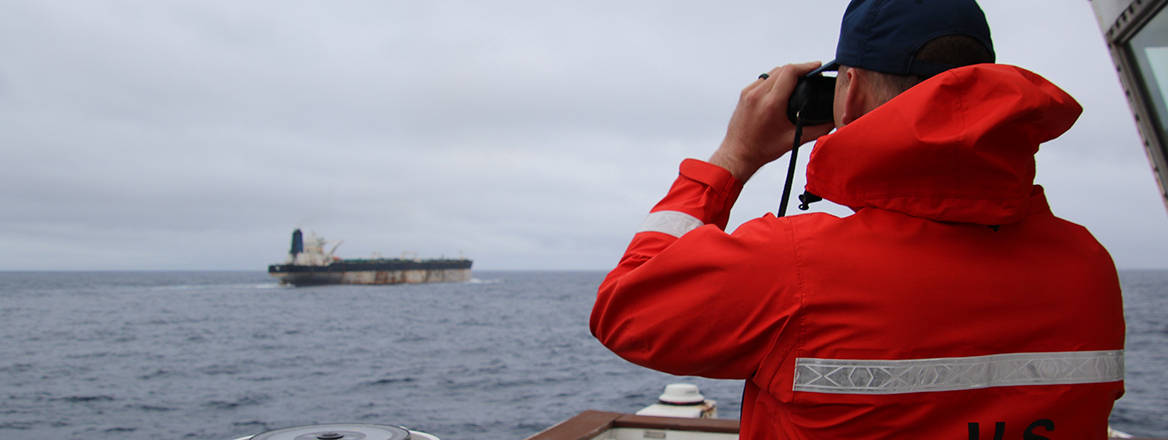
In the first week of January 2026, the world watched as one extraordinary moment followed another, notably the US action in Venezuela and the US pursuit and boarding of an (alleged – more on this later) Russian-flagged ship in the North Atlantic. As well as sharing a principal actor, the US, there is another common factor: the apparent flouting of near-universally accepted international laws, enabled by impressive military might. We consider here the second of these incidents: the maritime interdiction of an oil tanker by the US Coast Guard in the North Atlantic, miles from their usual operating area.
A little background: since late 2025 the US has taken what it claims to be legitimate action against Venezuela, including the interdiction of boats and ships suspected of carrying drugs, sanctioned oil and other contraband. On 20 December, US authorities tried to board an oil tanker, Bella 1, but the master and crew resisted, and the vessel fled into the Atlantic. At that point the ship was a known sanctions-breaker and part of the so-called shadow fleet. Bella 1 was reportedly owned by a Turkish company and registered in Guyana, but it was most probably flying a false flag. Guyana insists that it is not a flag of convenience and that it does not operate an open registry for shipping.
There are a host of cases throughout the last century which set customary practice and precedent, and ultimately became enshrined in the UN Convention on the Law of the Sea (UNCLOS), which set out when a ship could be interdicted on the high seas. Short answer: in very limited circumstances. The valid reasons are piracy, slavery, unauthorised broadcasting, or when the same nationality as the interdicting vessel, or if the ship is without nationality. It is this last justification which is pertinent here. At the time of the first US Coast Guard attempt to board Bella 1 she was flying a flag that had no registry attached to it and thus the ship appeared to be stateless, and therefore liable to interdiction on the high seas. That scenario would then allow the US or another third party, once in control of the vessel, to exert their jurisdiction; in this case sanctions regulations.
The collective West had opted to abide by the law with the expectation that if it did, then so would revisionist states – for now. And if the West doesn’t abide by the laws largely of its own making, why should revisionists?
However, once in the Atlantic and heading north, the crew repainted the ship with a Russian flag and it was re-registered as Marinera, potentially as early as 24 December. On 31 December, Moscow appears to have sent a diplomatic note to the US, asking that the pursuit of the vessel by the US Coast Guard cease, saying that it was Russian flagged. The ship is also listed on the Russian shipping register. After a pretty dramatic pursuit from the Caribbean almost to the Arctic Circle, and whilst allegedly being escorted by a Russian submarine, US forces successfully boarded and seized Bella 1 / Marinera on the high seas, outside any territorial waters. Moscow has protested, citing a breach of UNCLOS.
On the other hand, both the US and the UK (as the principal and supporting military forces in the operation) have claimed that the vessel was ‘stateless’, namely without nationality. This may seem at odds with the facts outlined above. Was Marinera stateless, and therefore vulnerable to interdiction? Or was she in fact a Russian-flagged vessel, subject only to Russian jurisdiction?
Changing a Flag
The changing of a flag at sea, or even in a port of call, is allowed. But, while UNCLOS provides for such a process, it is caveated: there must be a ‘real transfer of ownership or change of registry’. When it comes to the US and Russia acting as registries, there are historical and current examples where both countries have re-flagged or re-registered a vessel underway. On 21 July 1987, the Kuwaiti ship al-Rekkah raised a US flag while at sea in the Gulf of Oman to formally signal it was part of the US shipping registry and therefore under US protection during the ensuing Tanker Wars, when Iran and Iraq targeted merchant shipping. More recently, over 40 shadow fleet tankers have joined the Russian registry since June 2025, presumably seeking Russian protection and with few in their registered port at the moment of transfer.
If the Russian registration of Bella 1 / Marinera is genuine, then the legal basis for the boarding is called into question. It has been suggested that to disregard the claims of a valid state registry (regardless of how one might feel about that state on a geopolitical level), would result in ‘legal chaos’. However, the crux of the UK argument (and presumably that of the US) appears to be that the vessel sought the Russian registration ‘while being pursued’, thereby making it invalid. It is this technical detail which starts to raise the calculus. As has already been commented on, the changing of a flag (or even, as in this case, the acquisition of one) while under pursuit is a seemingly untested area of international maritime law. How this situation plays out has the potential to affect similar interdictions in the future. It will also affect how nations choose to protect their own shipping.


The stakes are high. This is not about a single tanker, and it is not even about oil – the ship was apparently sailing empty. So, what is it about? Raw power? The US has a clear interest in enforcing sanctions, particularly in light of Russia’s ongoing war in Ukraine, its own plans for Venezuela, and for any potential future standoff with Iran. However, enforcement at sea requires a fine balance: too light and the message is one of de facto tolerance, arguably the West’s modus operandi since 2022; too hard and the risk is escalating into a much broader and more dangerous crisis.
Ships of the shadow fleet have been sailing the world’s oceans for years now and are credited with keeping the Russian economy afloat, and Venezuela has been a prime source of the oil that they carry. Attempts by the UK and other pro-Ukrainian states to stop the flow of sanctioned oil have largely failed because, in simple terms, there has been no way of doing so consistent with the international laws we purport to be upholding. The collective West had opted to abide by the law with the expectation that if it did, then so would revisionist states – for now. And if the West doesn’t abide by the laws largely of its own making, why should revisionists?
But the Bella 1 / Marinera incident changes that approach. In fact, it may change everything. If the post-Cold War rules-based international order beloved by liberal democracies was already on life support, then this action may be seen by future historians as the moment the plug was pulled out of the wall. Legally, it will all come down to a simple question: was the ship Russian or not? Geopolitically, it will come down to a simple statement: might is right.
We are now firmly in an era of hard power realism. States are operating in an anarchic world without global governance and the strongest can, and will, do whatever they feel is right for their own national interests. That favours the powerful and puts the weak at risk. The US and those that have supported this action, including the UK, must weigh not only the immediate tactical goal of enforcing sanctions but also the long-term implications for international law, alliance cohesion and global perceptions.
Sanctions are not just paper declarations; they need to be enforced and how this incident is eventually legally assessed will affect how other states justify similar action
Bella 1 / Marinera has already sparked friction between Washington and Moscow at a time when peace was starting to look more likely in Ukraine. Other states will be watching with interest. Who else will be tempted to take similar measures in the knowledge that if the US can get away with it, then so could they? The UK objected, citing international law, when the British-flagged tanker Stena Impero was boarded and seized by Iran in 2019. Stena Impero was widely believed to be a retaliatory action after the UK seized the Iranian vessel Grace 1 in Gibraltar. Should we expect similar retaliation after Bella 1 / Marinera now that a precedent has been set? Quite possibly. Revenge does not have to be immediate and is often said to be a dish best served cold.
But beyond international law and the functioning of the familiar global order, there are other significant implications for the strategic calculus. Sanctions are not just paper declarations; they need to be enforced and how this incident is eventually legally assessed will affect how other states justify similar action. If that assessment takes place in an international tribunal, will the losing party honour the outcome? If it is settled ‘out of court’ then others will take note.
In addition, the incident underlines the vulnerabilities in global shipping networks and shows the potential value and risks of rapid reflagging to suit the occasion. It also shows that no ship, regardless of how well it is insured or where it is registered, is immune from geopolitical currents. Allies with large merchant fleets, and those who rely on seaborne trade, may grow wary of a world in which great powers feel free to board and seize ships at will.
The desire to take action against the shadow fleet is entirely understandable – the wilful disregard for sanctions and the law has gone on for too long. Yet, this incident has not run its full course. As the world watches the unfolding situation in the Atlantic, and then potentially in courtrooms, policymakers should remember that every decision sets a precedent. The seas have always been a testing ground for international laws. They can also be a testing ground for when laws stop applying.
© RUSI, 2026.
The views expressed in this Commentary are the authors', and do not represent those of RUSI or any other institution.
For terms of use, see Website Terms and Conditions of Use.
Have an idea for a Commentary you'd like to write for us? Send a short pitch to commentaries@rusi.org and we'll get back to you if it fits into our research interests. View full guidelines for contributors.
WRITTEN BY
Professor Kevin Rowlands
RUSI Journal Editor
Publications


Caroline Tuckett
RUSI Associate Fellow, International Security

- Jim McLeanMedia Relations Manager+44 (0)7917 373 069JimMc@rusi.org