

Turkey’s Iraq Gambit Amid the Strait of Hormuz Crisis

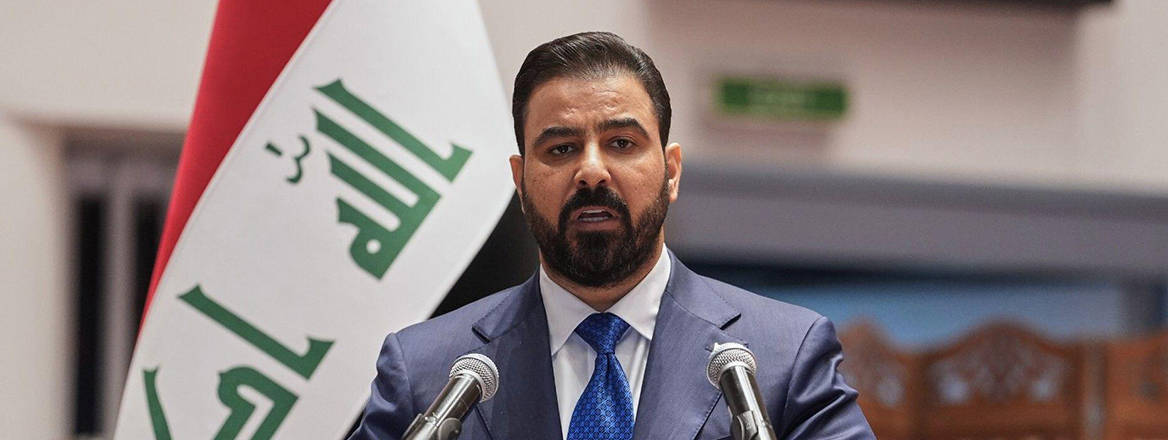
As Iraq faces regional war, fiscal uncertainty and armed-group politics, Ankara is seeking to turn security cooperation, trade and connectivity into strategic leverage.
Iraq has once again become a critical pressure point in the widening US-Iran confrontation. Direct exposure to both American and Iranian military action has sharpened Baghdad’s security vulnerabilities, while the crisis around the Strait of Hormuz and mounting US financial pressure have constrained oil exports and deepened fiscal uncertainty. Reports that drone and missile attacks on Saudi Arabia and the UAE originated from Iraqi territory – with Iran-linked Iraqi militias suspected of involvement – have placed additional strain on Baghdad’s new and still untested government led by new prime minister Ali Faleh al-Zaidi. Iraq has condemned the attacks, and Zaidi stated that Baghdad would work with Riyadh and Abu Dhabi on a joint-investigation.
Iraq now faces a dual challenge: avoiding deeper entanglement in regional escalation while proving that Baghdad can restrain armed groups whose cross-border activity threatens Gulf security and Iraq’s own stabilisation agenda. It is in this fraught environment that Turkey is seeking to recast its Iraq policy as a broader stabilisation agenda linking security cooperation to trade, infrastructure, energy and regional connectivity.
Ali al-Zaidi Invited to Ankara
In mid-May, Iraq’s new prime minister Zaidi secured parliamentary approval for a partial Iraqi government, but the confidence vote has left several key ministries unfilled, underlining the fragility of the political bargain behind his premiership. The cabinet impasse is unfolding against competing US and Iranian pressure over the future of Iran-linked armed factions, placing the new government at the centre of a struggle over whether militias can be disarmed, integrated into the state, or preserved as instruments of political leverage. The war has brought the unresolved challenge of controlling these armed actors back to the centre of Iraq’s stabilisation agenda.
While Zaidi now has formal authority over Iraq, the reality remains more complex and fluid where Iran-backed militias have significant influence over state governance in most provinces
President Recep Tayyip Erdoğan’s invitation to Zaidi to visit Ankara reflects Turkey’s effort to establish an early channel with Iraq’s new leadership and to underline the strategic value it places on the bilateral relationship. Zaidi’s limited political track record makes him an untested partner, but his business background and transactional instincts may also make him an attractive interlocutor for Ankara as it seeks to expand Turkish commercial access in Iraq.
Zaidi’s nomination came with Washington’s blessing, with Tom Barrack, the US ambassador to Turkey and a key Trump envoy, reportedly playing an influential role in American politicking in Iraq and even more in Syria. Barrack has also strengthened US-Turkey ties since his appointment. This context adds Washington’s backing to Turkey’s drive to draw Zaidi into Ankara’s orbit, potentially lessening Iraq’s reliance on Iran. Turkey is also preparing to supply ground-to-air defence systems to Baghdad. If Ankara rolls out such systems, this could create a new opening for Turkey to shape Iraq’s security architecture through state-led defence cooperation, with wider implications for NATO’s role in Iraq.
Turkey’s Interest in Iraq
Ankara wants to strengthen an ‘all-of-state Iraq strategy’ where it sees several files intersecting – counter-PKK operations, the Development Road corridor as a Gulf–Iraq–Turkey–Europe connectivity route, energy exports via Ceyhan, water cooperation, trade expansion and the recalibration of Iranian influence. As the current standoff in the US-Iran war drags on, Iraq is becoming a test case for Turkey’s bid to convert security leverage into regional statecraft.
For the Turkish ruling AKP party, Iraq is a crucial market for boosting Turkey’s fluctuating export economy ahead of the 2028 national elections. The success of the Development Road project connecting Turkey and Iraq through a network of rails, road and trade hubs will require security that relies on dismantling the PKK’s infrastructure. It will also require managing the thornier and unresolved challenge of Iran-backed armed groups, whose influence across Iraq’s political economy could be mitigated not only through coercive pressure but also, potentially, by drawing affiliated commercial actors into infrastructure and reconstruction projects as a way to disincentivise their destabilising elements.
To achieve those goals, Ankara is walking a tightrope. It wants to capitalise on the vacuum created by Iran’s weakening influence over Iraq – caused by both the February war and amplified US scrutiny – and at the same time needs Tehran’s geopolitical acquiescence with Turkey’s Kurdish agenda, one that will contribute to Turkey’s economic upsurge in Iraq. Historically, Turkey and Iran have been rivalling each other in Iraq by supporting different political stakeholders, but they have usually converged over containing the PKK insurgency. Yet, Iran has tactically supported some PKK offshoots in Syria and Iraq, to Ankara’s annoyance.

In 2025, Iraq was one of Turkey’s top export markets and its most important neighbouring market, with bilateral trade reaching $16.8 billion. Turkish exports accounted for the lion’s share of this exchange, at around $12.4 billion, compared with $4.4 billion in imports from Iraq. Turkey wants to ramp up transit and exports to Iraq, taking advantage of Iran’s devastated economy. While Iran might be resorting to export dumping practices to boost its non-oil exports to Iraq, a weakened Iran cannot compete durably with Turkish exports. Baghdad is not left with a multiplicity of options; non-oil imports passing through the Strait of Hormuz are sluggish as shipping risks remain high. While Jordan’s Aqaba port is becoming a hub for Iraqi imports, Amman lacks a broad and robust industrial base compared to Ankara.
Economy is part of a more complex Turkish agenda which Ankara is handling in a piecemeal manner. Iraq is a patchwork state with multiple centres of power. While Zaidi now has formal authority over Iraq, the reality remains more complex and fluid where Iran-backed militias have significant influence over state governance in most provinces. In the north, Kurdistan Democratic Party (KDP) and Patriotic Union of Kurdistan (PUK) party and their Peshmerga forces co-govern the Kurdistan Region of Iraq. As a result, Ankara is by and large engaging each of those actors to achieve its economic and security goals.
The UK’s view of these dynamics has become increasingly explicit. In recent remarks, British Ambassador to Iraq Irfan Siddiq distinguished between the Popular Mobilisation Forces (PMF) as a formal state institution and armed factions operating within or around its umbrella, arguing that London could engage with the PMF only if it remains under government control. He also framed Iran-backed factions as both a security and economic governance problem. For the UK, Iraq’s stabilisation challenge is therefore inseparable from sovereignty, state control over weapons and the use of violence, and the protection of legitimate economic activity from coercive armed actors. This aligns with Ankara’s concern that Iraq cannot deliver security, trade and connectivity while non-state armed groups retain veto power over territory, infrastructure and political decision-making.
Countering the PKK
Prior to Erdogan’s invitation to Zaidi, Turkish FM Hakan Fidan met on 1 May 2026 with Faleh al-Fayyad, Iraq’s Popular Mobilisation Forces Chairman, who has sway over Iran-backed groups that are both influential in the country’s security architecture but also the economy and trade. For years, Iran-aligned factions within Iraq’s PMF have helped sustain a permissive environment for PKK-linked groups in Sinjar district in northwestern Iraq. These networks have complicated efforts to implement the October 2020 Sinjar Agreement between Baghdad and Erbil, which called for the removal of PKK-linked and other armed groups from the district and the restoration of locally recruited security forces under federal authority. Iran-aligned PMF factions and their local allies have opposed or obstructed key elements of the agreement, including security reorganisation and administrative appointments, helping to keep Sinjar outside a stable and unified governance framework.


Erdoğan’s invitation to Zaidi, alongside Fidan’s recent Iraq diplomacy, suggests that Ankara is moving quickly to lock in security understandings with Baghdad’s new leadership. At the centre of this effort is Turkey’s concern that the PKK threat remain contained and that Iran-backed Iraqi groups do not use, tolerate or enable PKK-linked networks as a pressure point against Ankara during the wider Iran-Israel-US confrontation. Towards the end of 2024, Ankara was already concerned about the possible involvement of the PKK in a regional war, prompting it to seek a comprehensive peace deal with the group.
The wider regional conflict has also complicated Turkey’s effort to translate the PKK disarmament process into a durable security settlement. Following Abdullah Öcalan’s February 2025 call for the PKK to dissolve and lay down its arms, the organisation announced in May 2025 that it would disband and end its armed struggle. Yet the Iran war that began on 28 February 2026 has disrupted the regional conditions needed for implementation. Reports that US and Israeli officials explored support for Iranian Kurdish factions as part of a wider strategy to pressure Tehran have revived Ankara’s concern that Kurdish militancy could again be instrumentalised in a broader regional confrontation. The effort to mobilise Iranian Kurdish actors has so far appeared uneven and inconclusive, marked by mixed signals from Washington, reservations among Iraqi Kurdish leaders and denials from Kurdish groups that they have received material aid. Even so, as long as the US-Israeli confrontation with Iran remains open-ended, the temptation to activate Kurdish pressure points against Tehran is likely to persist – with direct implications for Turkey’s own PKK calculus in Iraq.
Ankara’s message to the new government in Baghdad is that Iraq cannot treat the PKK as an external Turkish problem. Much like Iran-backed armed groups, the PKK’s entrenched presence in northern Iraq complicates Baghdad’s monopoly over force, undermines stabilisation efforts and threatens the security environment needed for trade and infrastructure projects. But Turkey’s ability to contain the PKK will also depend on the behaviour of Iran and Iran-aligned Iraqi actors, particularly whether they refrain from using Kurdish armed networks as a pressure point against Ankara.
The Iran War and Its Implications for the Kurdistan Region of Iraq
For its part, Baghdad continues to be caught between external pressure to rein in militia groups and the internal imperative of managing Iraq’s fragile political balance. The war has brought the unresolved challenge of controlling these armed actors back to the centre of Iraq’s stabilisation agenda.
The Iran war has helped Turkey in the Kurdistan Region of Iraq. During the recent war, Tehran launched over 800 attacks targeting sites in the Kurdistan Region, targeting Iranian Kurdish rebels among others, mostly in Kurdistan Democratic Party (KDP) areas; this alienated Iraqi Kurdish parties further from Iran. At the same time, Turkey emerged as the only stable and reliable route for exporting Iraq oil coming through the Ceyhan pipeline.
Turkey is relying on the momentum of the Iran war to expand its economic influence and contain the PKK
While the Ceyhan pipeline does not have the capacity to divert all Iraqi oil bound for exports, it does make Ankara more important for Baghdad and Erbil alike as the Strait of Hormuz remains de facto blocked. Since 2008, Turkey and the Kurdistan Democratic Party (KDP), running the KRI’s capital, Erbil, have been deepening their economic relations by expanding Turkish exports and awarding construction contracts to Turkish companies and importantly establishing security cooperation against the PKK.
The Patriotic Union of Kurdistan (PUK), the second strongest party in the KRI after the KDP, has also emerged from the war disgruntled with Tehran, as Sulaymaniyah, the PUK’s stronghold, also became a target of Iranian attacks. Given geographic constraints, the PUK has historically developed cordial ties with Tehran and its current President Bafel Talabani has developed proximate ties with Asa’ib Ahl al-Haq, one of Iran’s key armed allied groups in Iraq. The war showed that PUK’s close ties with Iran and its local armed groups have not protected the Kurdish party from reprisals.
The Iran war accelerated the PUK’s rapprochement with Ankara to balance its ties with Tehran. Ankara has long protested the PUK’s alleged sheltering of PKK militants. As a gesture of goodwill towards Ankara, in April 2026, the PUK conceded the governorship of Kirkuk to the Ankara-backed Iraqi Turkmen Front politician for seven months. Turkey wants to see the Turkmen Front playing a greater role in provincial politics, not least because any future secessionist gambit by the KRG will need to rely on taking over Kirkuk given its massive oil resources that would endow it economically.
Turkey is relying on the momentum of the Iran war to expand its economic influence and contain the PKK. Ankara is keeping Tehran close enough to manage the Kurdish file, while drawing Iraq’s Kurdistan Region closer into Turkey’s economic and security orbit. It is also moving to bind Baghdad and Erbil into Turkish-centred infrastructure and energy routes and position itself as Iraq’s indispensable northern gateway. Yet what is unmissable is that this strategy depends on a fragile alignment between Baghdad, Erbil and Ankara – and remains vulnerable to intra-Kurdish competition, Iran-backed armed actors, oil-revenue disputes and Iraq’s own sovereignty dilemmas.
The future of the Iran-US ceasefire process will have significant second-order effects in Iraq, from armed-group behaviour to fiscal stability and regional alignment. Turkey’s attempt to position itself as a security, trade and connectivity partner should therefore be understood as an increasingly important variable in Iraq’s stabilisation prospects.
This article is part of a policy series for the 'Turkey’s Peacebuilding in a Disordered Middle East' project of the Centre for Applied Turkey Studies (CATS) network.
The Centre for Applied Turkey Studies (CATS) at the Stiftung Wissenschaft und Politik (SWP) in Berlin is funded by Stiftung Mercator and the Federal Foreign Office. CATS is the curator of the CATS Network, an international network of think-tanks and research institutions working on Turkey.
© RUSI, 2026.
The views expressed in this Commentary are the authors', and do not represent those of RUSI or any other institution.
For terms of use, see Website Terms and Conditions of Use.
Have an idea for a Commentary you'd like to write for us? Send a short pitch to commentaries@rusi.org and we'll get back to you if it fits into our research interests. View full guidelines for contributors.
WRITTEN BY
Tamer Badawi
RUSI Associate Fellow, International Security


Dr Burcu Ozcelik
Senior Research Fellow, Middle East Security
International Security

- Jim McLeanMedia Relations Manager+44 (0)7917 373 069JimMc@rusi.org