

Turkey’s Peacebuilding Efforts in a Disordered Middle East
We examine the direction of Turkey’s regional diplomacy to better understand the emergent security order.

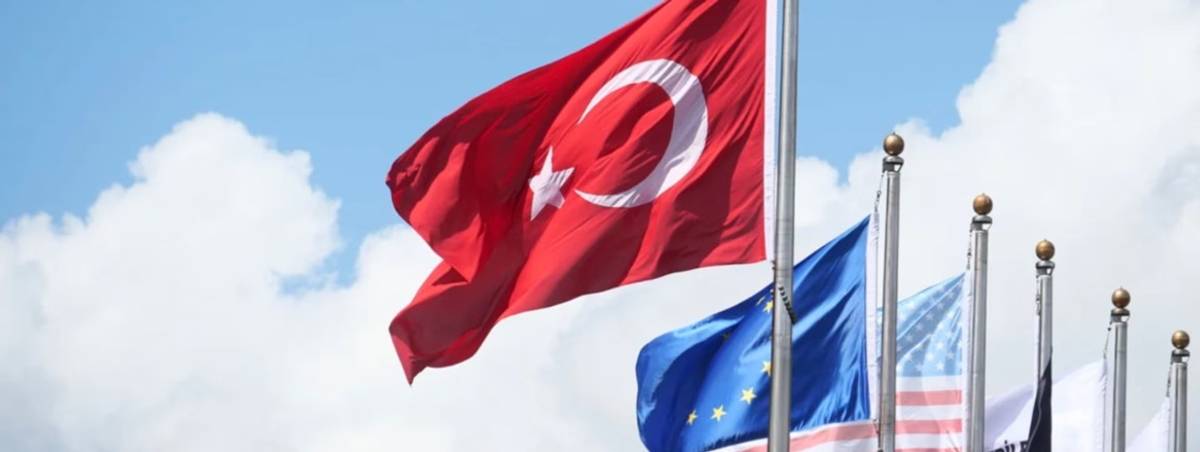
This project examines Turkey’s aspirations, and the constraints it faces, as a stabilisation actor operating across multiple conflict theatres simultaneously, often in ‘no war, no peace’ environments where violence and bargaining sit on a spectrum shaped by shifting geopolitical and geo-economic variables. This matters because external interventions can have significant unintended consequences at a critical moment for the Middle East: they may complicate the delivery of humanitarian aid, inadvertently strengthen armed non-state actors and make inclusive, durable political settlements harder to achieve.
Project sponsor
The Centre for Applied Turkey Studies (CATS) at the Stiftung Wissenschaft und Politik (SWP) in Berlin is funded by Stiftung Mercator and the Federal Foreign Office. CATS is the curator of the CATS Network, an international network of think-tanks and research institutions working on Turkey.
Aims and objectives
Over the last two decades, Turkey has expanded its engagement across the Middle East and North Africa, positioning itself as a stabilisation actor, mediator and stakeholder in the resolution of regional crises. Ankara has sought recognition as a peace broker in Israel–Palestine, Sudan and Libya, describing its approach as a 'third voice' for peaceful resolution, yet results have been uneven.
Since the 7 October 2023 Hamas attacks and Israel’s subsequent military operations in Gaza, the region has entered a period of acute upheaval. This project assesses Turkey’s peacebuilding and conflict-management interventions to clarify the dynamics shaping the emergent regional security order and to evaluate their implications for regional stability and contemporary peacebuilding norms. It also examines how Turkey’s bilateral relationships – particularly with Iran and Israel – shape its diplomatic room for manoeuvre and influence across key theatres.
The research programme analyses how Turkey’s diplomatic initiatives, security partnerships and on-the-ground engagements interact with local political economies and governance arrangements. The project will translate findings into actionable policy recommendations for UK and European decision-makers seeking to work with Turkey on the stabilisation effort in Gaza, the support pathways to a political settlement in Syria, and the reinforcement of stability in Iraq.
Project team
Dr Burcu Ozcelik
Senior Research Fellow, Middle East Security
International Security


Dr Neil Melvin
Former Director of International Security
International Security
Dr Serhat Erkmen
RUSI Associate Fellow, International Security

Tamer Badawi
RUSI Associate Fellow, International Security

Madison Agresti
Programme Manager
International Security

Alaa Zoubi
Research Assistant, Middle East Security
International Security

Latest publications
View all publicationsWorkshop convening
On 15 May 2025, RUSI convened a half-day workshop on the concept and practice of illiberal peacebuilding, with a focus on the Middle East. The workshop examined how prevailing peacebuilding and security paradigms can generate unintended illiberal outcomes when applied in non-Western contexts, drawing on critiques of international stabilisation efforts and emerging academic insights.
Framing illiberal peacebuilding as both an approachand an outcome, discussions explored how local, regional and international actors—including states such as Turkey—may instrumentalise peacebuilding in ways shaped by domestic political priorities and normative frameworks. Participants assessed how such dynamics can affect humanitarian access, civilian protection and the prospects for inclusive, sustainable political settlements.
This deliverable brought together academics and practitioners to test the analytical utility of the concept across multiple conflict and post-conflict settings. Key contributions from the workshop will be developed into a special report edited by Dr Burcu Özçelik.