

From Syria to Somaliland: Turkey-Israel Competition Reshapes Region

As Turkish and Israeli planners increasingly frame their rivalry as an interconnected, multi-theatre contest, the margin for miscalculation is narrowing.
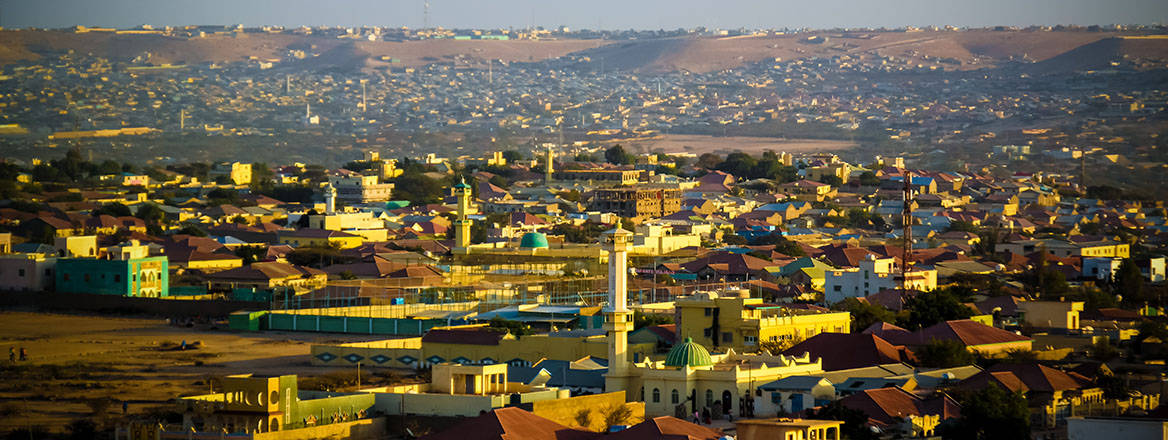
Somaliland declared independence from Somalia in 1991 but functioned as a self-governing republic until December 2025 when Israel became the first state to extend formal recognition. The decision has generated controversy not least because of the legal precedent it sets under international law and its potential to exacerbate geopolitical competition in an already fragile and neglected policy space. More specifically, it risks accelerating competition between Israel and Turkey as their interests continue to diverge across the Horn of Africa, the Red Sea and the wider Middle East.
Somaliland sits at a critical geostrategic crossroads opposite Yemen, overlooking the junction of the Gulf of Aden, the Bab el-Mandeb Strait and the Red Sea, an area that has become increasingly vulnerable as Yemen’s Houthi movement has targeted international shipping lanes following the 7 October Hamas attacks on Israel and the ensuing war in Gaza. The crucial maritime space is increasingly securitised amid heightened competition over port access, basing rights, freedom of navigation and security partnerships.
Following Israel’s recognition of Somaliland, the European Union reiterated the importance of respecting Somalia’s unity and territorial integrity, and a joint statement by 21 Muslim and African states condemned the decision as a dangerous precedent.
In the immediate aftermath, Somali President Hassan Sheikh Mohamud travelled to Istanbul for talks with Turkey’s President Recep Tayyip Erdoğan. Turkey has played a sustained and influential role in Somalia since at least 2011, positioning itself as a key external partner in the country’s stabilisation, economic development and state-building efforts.
Within Israeli strategic thinking, Somaliland is seen as offering an operational and intelligence value in relation to Houthi activity, given its proximity to key Red Sea and Gulf of Aden maritime routes. Houthi leader Abdul Malik al-Houthi condemned recognition of Somaliland, stating ‘We consider any Israeli presence in Somaliland a legitimate military target for our forces, as it constitutes aggression against Somalia and Yemen and threatens the security of the region.’
For Somalia, the recognition challenges efforts to consolidate federal authority and could complicate Ankara’s growing diplomatic and security engagement in the country. More broadly, the move underscores how peripheral theatres in the Horn are becoming increasingly entangled with Middle Eastern security calculations, particularly as states seek strategic depth, maritime leverage and alternative footholds along critical sea lines of communication.
Turkey’s East Africa and Horn of Africa Policy
Under the Military Training Agreement signed in 2012, Turkey deployed military personnel to support the rebuilding of the Somali National Army, embedding long-term security assistance alongside political engagement. Turkish companies have also taken on the construction and operation of critical national infrastructure, including the Port of Mogadishu and Aden Adde International Airport. Turkey has invested heavily in roads, hospitals and public buildings across Somalia, as well as a space launch facility and hydrocarbon exploration in around 15,000 square kilometres of Somali offshore blocks.
Ankara views itself as holding a legitimate and demonstrable role in influencing the emerging regional order. In ways that matter, so does Israel
The opening of the TÜRKSOM Military Training Base in Mogadishu in 2017, its largest overseas base, marked a significant expansion of Turkey’s security footprint in Somalia. The base has played a central role in training tens of thousands of Somali security personnel engaged in the fight against Al-Shabaab. Beyond its counter-terrorism function, TÜRKSOM has become an important node in Turkey’s broader approach to stabilisation and security provision in the Horn of Africa, a region that sits at the intersection of Red Sea maritime routes and Middle Eastern security competition, including training Somali forces aimed to enhance naval and coastguard capabilities.
Bilateral relations entered a more consequential phase in 2024 following two major agreements – a comprehensive 10-year maritime and defence agreement signed in February (known as the ‘Defence and Economic Cooperation Framework Agreement’), followed by an oil and gas cooperation deal reached in March. Turkey agreed to help Somali naval forces counter illegal fishing within Somalia’s Exclusive Economic Zone (EEZ) and enhance Somalia’s capacity to fight against ‘terrorism, piracy, illegal fishing, toxic dumping and any external violations or threats’ to Somalia’s coastline, with Turkey reported to receive 30% of revenue generated by Somalia’s exclusive economic zone, although details are unconfirmed.
A Cold War? Israel-Turkey Rivalry Across Intersecting Theatres
Developments in Somalia/Somaliland needs to be understood as part of an increasingly concerning pattern of competition between Turkey and Israel, which now extends across multiple, strategically connected theatres. Tensions increasingly resemble a low intensity ‘cold war’ dynamic. Ankara views itself as holding a legitimate and demonstrable role in influencing the emerging regional order. In ways that matter, so does Israel.
Turkey’s engagement in Somalia can be characterised as a state-centric approach operationalised through long-term investments in institutional rebuilding, security-sector reform (SSR) and economic stabilisation. At the same time, Turkey’s role has not been without criticism. Some Somali political actors and observers have raised concerns about Turkey’s reported role in carrying out drone strikes against al-Shabab in Somalia (al-Qaeda’s ally) that has resulted in civilian casualties. Other concerns target the depth and transparency of Turkey’s security and economic footprint, arguing that extensive concessions over strategic assets risk constraining Somali sovereignty and limiting domestic oversight.
As Turkey and Israel risk becoming entangled in Somalia’s internal fault lines, this dynamic only adds to a growing deck of bilateral tensions in the Levant, Gulf and the Eastern Mediterranean:
In Syria, Turkish and Israeli interests diverge sharply. Turkey’s priorities remain centred on border security, countering Kurdish armed groups and shaping post-conflict political outcomes in northern Syria. Israel has focused on constraining the interim government led by President Ahmed Al-Sharaa and preventing advanced weapons transfers to Hezbollah or other non-state armed actors. While both actors seek to limit Iranian influence, their operational objectives and acceptable end states differ, generating security postures that contribute to Syria’s fragmentation rather than convergence.


A central fault line in the Syrian theatre is the potential instrumentalisation of Kurdish armed actors in northern Syria, particularly the Syrian Democratic Forces (SDF). Ankara views the SDF as inseparable from the Kurdistan Workers’ Party (PKK), which Turkey designates as a terrorist organisation and considers an existential national security threat. From the Turkish perspective, even limited or indirect Israeli support is interpreted in Ankara as a form of strategic hedging that exploits Kurdish actors as leverage against Turkey. This has deepened mutual suspicion, reinforcing Turkish concerns that Kurdish factions could be weaponised as proxy instruments within a broader pattern of competitive regional positioning rather than as partners in a coherent stabilisation strategy.
In parallel, Ankara and Damascus increasingly view Israeli-linked signalling around Druze autonomy or secessionist claims in southern Syria as potentially encouraging or enabling wider autonomy claims, including among Kurdish actors in the north, thereby reinforcing centrifugal dynamics across the Syrian state. This logic also runs counter to current US thinking, which, despite continued engagement with local partners, has emphasised avoiding local autonomy arrangements as part of the new Syrian state.
In Gaza, the divergence is more overt and politically charged. Turkey has positioned itself as a vocal advocate for Palestinian political rights and humanitarian access, maintaining engagement with Gaza as part of its broader regional diplomacy.Ankara has signalled its readiness to deploy military, civilian and logistical assets to Gaza, but the main stumbling block remains Israel’s categorical opposition to any Turkish military presence.
The Eastern Mediterranean continues to be a particularly salient arena of structural competition. Israel’s deepening strategic alignment with Greece and Cyprus, spanning energy cooperation, defence ties and maritime delimitation, stands in contrast to Turkey’s priorities. The Israeli Air Force is reported to have elevated its operational capabilities in Cyprus to counter Turkey and reinforce Israel’s air superiority. For Ankara, this ‘anti-Turkey’ axis is perceived as part of a broader effort to marginalise Turkish influence in the Eastern Mediterranean and constrain its maritime claims.
In the Gulf, Israel’s deepening ties with the United Arab Emirates can be interpreted as serving a dual purpose: strengthening bilateral security and technological cooperation while also reshaping intra-Gulf power dynamics in ways that dilute Saudi Arabia’s traditional primacy. From this perspective, Israel-UAE cooperation is less an isolated normalisation track and more a broader strategy to entrench alternative regional partnerships that expand Israel’s strategic depth across the Red Sea and the Horn of Africa. The UAE has been moving to amplify its influence and secure strategic footholds across the region, including through the Southern Transitional Council (STC) in Yemen and its complicated role in Sudan, where it has been accused of backing the paramilitary Rapid Support Forces, allegations which Abu Dhabi denies.
Israel’s recognition of Somaliland is one part of its security doctrine that it has been quietly cultivating, shaped largely by opportunities created by the Abraham Accords
Turkey, by contrast, claims a more flexible, multifaceted approach to the Gulf, maintaining working relationships with several states while remaining most closely aligned with Qatar. Ankara frames this posture as pragmatic and interest-based, spanning trade, defence cooperation and diplomatic engagement. In Somalia, Turkey’s engagement increasingly intersects and at times competes with that of the UAE, which has long treated the Horn of Africa as a strategic priority. Israel, meanwhile, remains sceptical of both Turkey and Qatar’s regional roles, arguing that their political positioning and channels of engagement have, at various points, enabled Hamas to operate with political latitude. These competing alignments reinforce mutual distrust and further entrench Turkey–Israel competition within the Gulf, adding another layer to an already fragmented regional security landscape.
The Role of Recognition in Israel’s Security Toolbox
Israel’s recognition of Somaliland is one part of its security doctrine that it has been quietly cultivating, shaped largely by opportunities created by the Abraham Accords. Within this framework, recognition politics can be understood as a tool to mitigate Israel’s encirclement by hostile actors, while incrementally extending the political and geographic reach of the Abraham Accords beyond their original Middle Eastern scope.
More recently, Israel’s recognition politics have begun to intersect more directly with developments in Yemen. On 2 January, the UAE-backed, separatist Southern Transitional Council (STC) announced in a constitutional declaration the outline for a self-determination referendum for the ‘State of South Arabia’ within the borders of the former People's Democratic Republic of Yemen in Southern Yemen. On 4 January, reports confirmed that the capital of Hadramout province had returned to the control of the internationally recognised, Saudi-backed government after days of Saudi airstrikes on STC positions. The episode reignited speculation over the extent of external backing for the STC’s secessionist ambitions, including suggestions that Israel may have been broadly supportive of such a trajectory. As RUSI examined in December 2025, the STC itself has contributed to these perceptions by signalling a willingness to align with the Abraham Accords in a post-independence scenario – highlighting how secessionist projects in fragile states are increasingly intersecting with wider Middle Eastern geopolitical realignments.
Israel’s relationship with the UAE serves as a strategic gateway and lever that has arguably provided Israel access across the region. The UAE has reportedly invested more than $442 million to transform the port of Berbera into an advanced military and logistical hub, without consultation with Mogadishu. In 2017, Somaliland approved the UAE’s plans to operate a military base at the site in Berbera, a clear geostrategic asset given its location approximately 250 kilometres (155 miles) south of Yemen.
Looking ahead to 2026, the risk of escalation in Turkey-Israel relations is likely to grow as areas of friction increasingly overlap across multiple theatres
Less overtly, Israel may have ambitions further afield. Informal iterations of Abraham Accords-maps circulated by Israeli-affiliated groups have, at times, listed the Kurdistan Regional Government (KRG) as a prospective future signatory. These depictions reinforce a longer-standing Israeli posture that has viewed Kurdish political autonomy through a strategic rather than purely domestic lens. Israel’s decision to publicly support the KRG’s independence referendum in 2017 remains a salient reference point in this regard, underscoring its willingness to engage with Kurdish statehood claims despite regional opposition. For Turkey, such signalling touches a core national security red line.
Looking ahead to 2026, the risk of escalation in Turkey-Israel relations is likely to grow as areas of friction increasingly overlap across multiple theatres. That said, important constraints remain. The US is unlikely to favour an intensification of rivalry between two close regional partners, while Turkey’s position within NATO imposes limits on how far confrontation can be pushed without broader alliance consequences. These factors mitigate against direct military confrontation. However, Turkish and Israeli planners increasingly assess their areas of competition as interconnected, narrowing the margin for miscalculation and raising the risk that indirect or peripheral disputes – whether in the Horn of Africa, the Red Sea, or the Levant – spill over into more consequential forms of confrontation.
Implications for UK and EU Red Sea Strategy
For the United Kingdom and the European Union, these diverging approaches underscore the need for a more coherent Red Sea and Horn of Africa strategy that links maritime security with onshore political stabilisation onshore, rather than treating freedom of navigation as a standalone objective.
Now, the risk is that ad hoc recognition decisions and competitive external engagement further securitise the Gulf of Aden-Red Sea corridor without addressing the governance vacuums that enable instability, piracy and militant mobilisation. A UK/EU approach that aligns freedom-of-navigation objectives with support for recognised state institutions, while remaining attentive to the knock-on effects of Middle Eastern rivalries playing out in the Horn, will be critical to preventing further strategic drift in this increasingly congested theatre. From a NATO perspective, instability along the Horn–Red Sea axis increasingly intersects with the Alliance’s southern flank, linking threats to maritime trade, terrorism and regional spill-over into the eastern Mediterranean.
This article is part of a policy series for the 'Turkey’s Peacebuilding in a Disordered Middle East' project of the Centre for Applied Turkey Studies (CATS) network.
The Centre for Applied Turkey Studies (CATS) at the Stiftung Wissenschaft und Politik (SWP) in Berlin is funded by Stiftung Mercator and the Federal Foreign Office. CATS is the curator of the CATS Network, an international network of think-tanks and research institutions working on Turkey.
© RUSI, 2026.
The views expressed in this Commentary are the author's, and do not represent those of RUSI or any other institution.
For terms of use, see Website Terms and Conditions of Use.
Have an idea for a Commentary you'd like to write for us? Send a short pitch to commentaries@rusi.org and we'll get back to you if it fits into our research interests. View full guidelines for contributors.
WRITTEN BY
Dr Burcu Ozcelik
Senior Research Fellow, Middle East Security
International Security


- Jim McLeanMedia Relations Manager+44 (0)7917 373 069JimMc@rusi.org