

Russia’s Selective Adaptation: Command, Control and the Limits of Learning in War

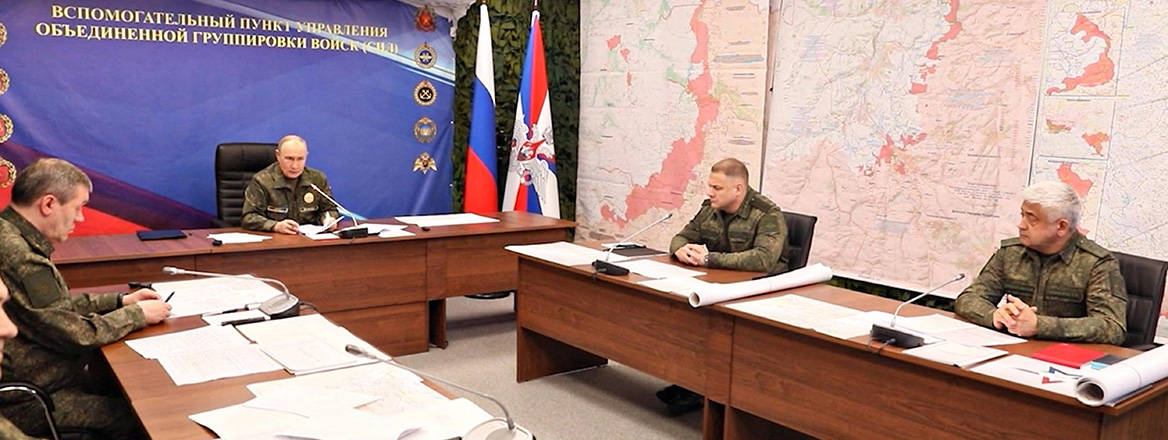
The contrast between Russia’s tactical flexibility and operational rigidity is revealing of the insecurity in its executive function.
Adaptation dominated over innovation across most of military history. Byzantine commanders, First World War staffs, and Second World War armies all adjusted doctrine under fire and forced by the opponent’s opposition. Russia's experience in Ukraine is no exception. What distinguishes the Russian case is not adaptation per se, but its pattern; that is, rapid at the tactical and technological level, terribly slow at the organisational. Indeed, Russia operates according to a logic fundamentally different from Western military doctrine.
Western planning often assumes, and it is based on the principle, that superiority in precision, speed and coordination will produce decisive outcomes. The Russian model suggests otherwise. It is organised around endurance, mass and the willingness to absorb losses over time. Understanding this distinction is the prerequisite for any honest analysis of Russian adaptation which, usually, lags behind a Western-oriented analytical framework, which in turn can skew objective understanding of the Russian ‘model’, if there is one.
Zapad exercises offer a particularly useful lens to sift through the noise and mirror imaging. Conducted on a roughly four-year rotation and focused westward, these are not merely rehearsals. They are diagnostic moments for the Russian Ministry of Defence to stress-test doctrine and signal intent. Scrutinised in sequence, they reveal not linear modernisation, but an uneven process shaped by battlefield experience, political constraint and bureaucratic and institutional inertia.
From Reform to Illusion
Zapad 2013 and 2017 portrayed a military in visible transition. The shift toward brigade-based structures, improved interoperability with Belarus and the integration of electronic warfare and A2/AD capabilities suggested a force attempting to modernise. Yet key assumptions remained unchanged: future wars would be short, controlled and centrally managed. The concept of 'active defence', a doctrine with roots stretching back through the Cold War and, in diluted form, to the Second World War – appeared to be receiving renewed coherence, even if its intellectual foundations were older than the exercises rehearsing it.
The Russian military tried a deliberate recalibration toward disaggregated, small-unit operations reflecting battlefield lessons from Ukraine
By 2021, Zapad projected confidence in large-scale conventional conflict against a near-peer adversary – specifically, inter-state war of the kind NATO might represent. In retrospect, that confidence rested on a flawed premise common to most militaries: the system had been validated in scripted exercises but never stress-tested against a prolonged, adaptive, well-equipped opponent. The Russian case is not distinctive because of this gap, as this is structural across modern militaries. The Russian gap is distinctive because it was never closed, even after it became visible. The choice of which scenarios to rehearse and which to exclude was not a purely professional-military judgment. It reflected what the political leadership wanted to believe about the character of future conflict, and what the military was institutionally incentivised to confirm rather than challenge.
Zapad 2025: Learning Under Constraint
Zapad 2025 reflects a military adapting under pressure. With an official participation figure of roughly 13,000 personnel, compared to figures approaching 200,000 claimed for Zapad 2021, the exercise is not only smaller but more modular and distributed. Two explanations are commonly offered. Firstly, there are resource constraints imposed by an ongoing attritional war. Secondly, the Russian military tried a deliberate recalibration toward disaggregated, small-unit operations reflecting battlefield lessons from Ukraine. The shift from army-level to battalion- and company-level combined arms tasks suggests that the Russian military is attempting to improve performance tactically where losses have been more significant, rather than practicing the large-scale manoeuvre it can no longer afford; the shift assumes this is a desirable operational action on its own.
Strategic ambiguity is a third explanation. Under the Vienna Document framework, exercises exceeding 13,000 troops trigger mandatory OSCE observation rights. Russia has historically managed its exercise declarations carefully, and Zapad 2025's reported figures sit at precisely the threshold that limits external observation. Smaller declared exercises serve multiple purposes simultaneously: they reflect operational lessons, conserve forces committed to Ukraine and deny Western intelligence a window into evolving Russian doctrine and command architecture.
Substantively, Zapad 2025 signals a doctrinal shift toward the Initial Period of War (IPW): deep strikes against command nodes, airbases and logistics infrastructure to disrupt an adversary before decisive ground engagement. The exercise also embeds a broader turn toward attritional warfare – prioritising mass over precision, saturation over surgical effect. The question of whether this is deliberate doctrine or forced adaptation matters analytically.

As Amos Fox argues, precision strike can generate diminishing returns, creating a feedback loop in which repeated use depletes high-value stockpiles without achieving strategic effect. The Russian turn toward artillery dominance and drone saturation reflects both a recognition of this problem and a realistic accounting of what Russian industry can produce at volume. It is adaptation from constraint as much as from insight – but the result is a model increasingly calibrated toward attrition rather than manoeuvre. This could be due to the strategic failure during the early stages of the full-scale invasion of Ukraine in February–May 2022, which in turn forced adaptation following the reality of a failed fast acquisition of the control of the Ukrainian capital. However, this regrouping, though painful, could lead to success depending on the Ukrainian capacity to hold the ground in 2026 and beyond.
Belarus plays a structural role in this architecture, functioning as an extension of Russian strategic depth and a platform for expanding the A2/AD envelope westward. Its participation in Zapad exercises since at least 2017 has been consistent, but the relationship has deepened qualitatively since 2022. Belarus now provides basing, logistics, and territorial access that effectively extend Russia's operational reach along NATO's eastern flank, creating further pressure due to the geographical and strategic placement of the country. However, there are points of friction. Minsk's commitment in scenarios involving direct defence of Russian territory remains untested and politically fraught, without even considering the complications of joint forces operations between the two militaries.
Adaptation in Contact: Ukraine as a Real-Time Laboratory
Since late 2024, Russian forces have demonstrated a notable capacity to adjust at the operational level. One of the most significant developments is the evolution of Russia's battlefield interdiction campaign. Rather than relying on traditional airpower, Russian forces have progressively built a distributed strike complex centred on drones, long-range fires, and real-time reconnaissance. ISW assessments document systematic strikes against Ukrainian ground lines of communication such as roads, railways, and bridges, reaching up to 100 km behind the frontline. Moreover, the Rubikon centre is reportedly very active in anti-logistics and prevention of concentration of supplies and forces behind the line of fire. These are not isolated attacks; they are part of a coordinated effort to disrupt sustainment, isolate tactical sectors and shape the battlefield before manoeuvre operations begin.
The integration of commercially derived technologies including satellite communications and mesh networks improved the drone guidance procured and adapted from civilian suppliers. Iranian and North Korean systems have extended the range and effectiveness of Russian strikes. This increased guidance fidelity allows strikes on moving targets at operational depth, which might appear to contradict the 'mass over precision' thesis but it does not. Precision at the individual platform level and mass at the system level are complementary. Russia employs large salvos of relatively cheap systems, some of which will achieve precise effect; the operational logic is saturation, not surgical strike.

Yet adaptation also reveals its limits. The coordination of effects across land, air, electronic warfare and cyber domains remains uneven and unequally distributed across the lines. So far, Russian forces achieve localised tactical success without converting it into decisive operational outcomes. This gap is not primarily a consequence of Ukrainian resistance, remarkable as it is. This is due to internal bottlenecks within the Russian armed forces, rooted in command architecture that will not yield to tactical improvement on its own.
The Command-and-Control Bottleneck
At the core of this limitation is the Russian Command and Control (C2) model, which must not be understood as any specific technological system but as a human and organisational structure of decision-making and feedback. It is the ‘human in the loop’ at issue here. The Troika Compendium reports that Russian C2 is not simply centralised in a structural-military sense as it shaped by explicitly political motivations. That is to say, the military as a whole is politicised by the Kremlin and the specific needs of Putin. The regime's vertical power structure treats operational initiative at lower levels as a potential threat, not an asset. Military rigidity is not a flaw to be corrected, and it remains a structural property to be preserved.
The NEST Centre's 2025 assessment of Russian political transformation documents a regime that has become more personalised, centralised and dependent on loyalty over competence. This political logic cascades directly into military command from the very top to the bottom. Senior officers are rewarded for compliance and punished for unauthorised initiative; the decision-making cycle is therefore slow by design and intended to be so. As drone-based strike systems and long-range interdiction have increased the volume and reach of Russian operations, the ability to detect and strike targets at extended range has outpaced the system's ability to prioritise and synchronise effects across domains. The result is a paradox: greater technical capability does not translate into greater operational coherence, let alone strategic dominance. Whether Russia achieves strategic objectives despite this bottleneck or simply imposes costs until the adversary exhausts its will to resist, is a question that the operational record through 2026 has not yet resolved – and that Western analysts should approach with less certainty than is often expressed.

The contrast with Western doctrine is visible in this regard. Western militaries emphasise decentralised execution and initiative at lower echelons, enabling faster adaptation within the decision cycle. The Russian system prioritises control over speed, producing structural lag. Efforts to decentralise command remain limited even when operational necessity pushes in that direction, because political logic pulls back.
The Human Factor – Leadership Without Depth
These structural constraints are reinforced by a personnel gap. The absence of a professional NCO corps is a significant hurdle in the totality of the Russian armed forces. The lowest-level professionally trained leader is a lieutenant. Russian sergeants lack the leadership training or delegated authority that Western NCOs possess. In NATO militaries, NCOs provide the connective tissue of decentralised command able to translate officer intent into tactical action and maintain continuity across echelons when command personnel are lost. In the Russian system, this layer is structurally underdeveloped, forcing junior officers to fill a role that overextends them and concentrates decision-making upward.
The consequences are documented by multiple sources. Senior officers have been pushed closer to the frontline to maintain control, contributing to disproportionate command casualties. Units frequently lack the internal leadership to operate independently. What is often described as 'corruption' in this context requires specification. The problem is less illicit resource acquisition than systematic politicisation, which forces informational tailoring toward superiors, logistics padded to conceal shortfalls, personnel records that diverge from combat reality. This is the corruption of information, not merely of money or resources structurally produced by a system that punishes honest ‘bad news’.
A system that accepts inefficiency as the cost of political control can sustain operations that a more optimised, less politically constrained force could not
Faced with sustained attrition, the Kremlin is moving towards rolling mobilisation – leveraging reserve forces in a continuous, controlled cadence rather than through large-scale mobilisation events. This approach reduces domestic political exposure: the Kursk incursion illustrated how sensitive Putin remains to the optics of conscript deployment, moving quickly to clarify that recruits were not being used and introducing North Korean troops as a substitute. Rolling mobilisation, like C2 centralisation, is optimised for regime stability rather than operational flexibility, but it allows Russia to sustain the war at acceptable political cost for the foreseeable future.
Adaptation Without Transformation
Despite these constraints, the Russian military has demonstrated genuine capacity to learn. Defensive systems have become more resilient. Drone integration has improved. Rail-based logistics, back then criticised in 2022 as an anachronistic vulnerability, have proven durable. Though this reflects continuity of a pre-existing capability rather than innovation, this might count as an example of adaptability over revolutionary change that proved able to sustain the stress test of a conventional war. Commercial technology adaptation has enhanced targeting at operational depth. But these changes are incremental and occur within fixed institutional limits. They do not alter the fundamental structure of how Russia fights.
Historical comparison gives a sense of perspective that cannot be ignored. No military has achieved fundamental organisational transformation during a large-scale conventional war. The Romans adapted between conflicts, not during them. The US Army's most substantial mid-conflict adaptation, such as the shift in Iraq and Afghanistan toward population-centric counterinsurgency at the operational level, took years and remained contested. To expect Russia to transform its C2 culture while simultaneously fighting a multi-front attritional war is to set an analytically impossible standard. The more appropriate question is whether Russia's pattern of selective tactical adaptation, within a structurally rigid organisational framework, is sufficient to achieve its strategic objectives and at what cost, which could prove to be unsustainable economically and politically in the long term. For example, the Russian demography was falling well before the war – alongside its life expectancy. It remains, then, questionable whether these adaptations will prove good enough, grand-strategically.
Implications: Endurance as Strategy
For Western militaries, the key analytical challenge is not determining whether Russia is strong or weak. It is understanding that Russia is operating according to a different strategic logic built around endurance, mass and the absorption of loss, not around precision and speed. A system that accepts inefficiency as the cost of political control can sustain operations that a more optimised, less politically constrained force could not. This creates an asymmetry in time horizons. The West seeks to shorten wars; Russia prepares to outlast them. It might sound out of fashion, but only results tell the difference.
Early assessments of Russian performance in Ukraine focused heavily on visible failures – logistics breakdowns, poor coordination, catastrophic officer casualties and those failures were real. But they obscured the system's capacity to absorb losses, replace formations, and adjust tactics without altering the political structure that drives the pathologies in the first place. The Zapads do not tell the story of a military that has failed to adapt, nor does it describe one that is modernising in any Western sense. It reveals a system that learns selectively, within limits it cannot cross, not necessarily because it lacks awareness of them, but because crossing them would threaten the regime itself. In that sense, Russia's military rigidity is not a military problem. It is a political solution.
© RUSI, 2026.
The views expressed in this Commentary are the authors', and do not represent those of RUSI or any other institution.
For terms of use, see Website Terms and Conditions of Use.
Have an idea for a Commentary you'd like to write for us? Send a short pitch to commentaries@rusi.org and we'll get back to you if it fits into our research interests. View full guidelines for contributors.
WRITTEN BY
Fabrizio Minniti


Dr Giangiuseppe Pili
RUSI Associate Fellow, Proliferation and Nuclear Policy
- Jim McLeanMedia Relations Manager+44 (0)7917 373 069JimMc@rusi.org