

Rosatom is a Military Supplier – Europe Must Treat It as Such

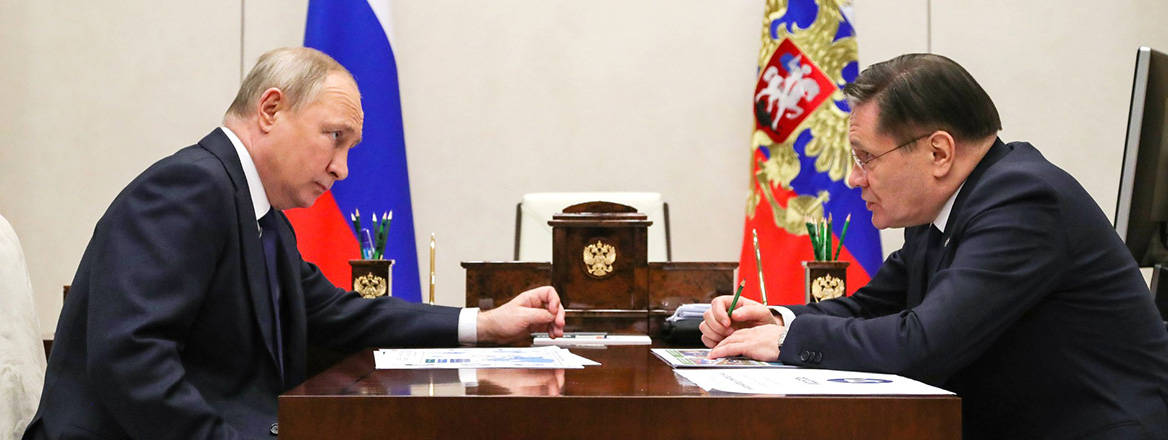
Despite its involvement in Russia’s nuclear and conventional weapons production, Rosatom continues to maintain access to European markets.
In early July, NATO Allies gathered in Ankara for the 36th NATO Summit. They reiterated the ‘long-term threat’ that Russia poses to Euro-Atlantic security and stability, restated their ‘unwavering support for Ukraine’ and announced a suite of new commitments on defence industrial cooperation and investment. Yet, an hour’s flight south of where the heads of the Alliance states were meeting, a different industrial cooperation project is making steady progress. On Turkey’s Mediterranean coast, Russia is putting the finishing touches on the first of four nuclear reactors at the Akkuyu Nuclear Power Plant (NPP), ahead of its anticipated operational launch later this year. The NPP – expected to ultimately supply 10% of Turkey’s energy – is being constructed, and will be owned and operated, by subsidiaries of Russia’s State Atomic Energy Corporation Rosatom.
The company’s role as a broker of soft power and strategic leverage for Moscow – across Europe, the US and further afield – has been widely documented. But Rosatom is not just a supplier of civil nuclear infrastructure. The company is one of the key stewards of Russia’s nuclear weapons complex and is increasingly involved in developing and supplying conventional weapons to the Russian military, including systems being deployed in Ukraine. Yet Russia’s nuclear sector remains largely unsanctioned, allowing Rosatom to continue generating revenue, including from business in Europe. Just as Rosatom’s activities have shifted to position it as an important player in Russia’s military industrial complex, so too should Europe’s approach to doing business with the state nuclear enterprise.
Not Your Grandma’s Civil Nuclear Supplier
Besides its activities in the civil nuclear sector and on issues of nuclear and radiological safety, Rosatom is responsible for the development and production of Russia’s nuclear munitions. According to the Stokholm International Peace Research Institute, as of 2016, enterprises in Rosatom’s nuclear weapons complex employed about 38% out of the company’s 250,000 employees. Facilities include, inter alia: the All-Russia Scientific Research Institute of Experimental Physics (RFNC-VNIIEF) in the closed city of Sarov; the Zababakhin All-Russia Research Institute of Technical Physics (RFNC-VNIITF) in the closed city of Snezhinsk; the Dukhov Automatics Research Institute (FSUE-VNIIA) in Moscow; the Mayak Production Association in the closed city of Ozyorsk; and the Elektrokhimpribor Combine (EHP) in the closed town of Lesnoy (previously, Sverdlovsk-45). These Rosatom subsidiaries conduct nuclear weapons research, assembly and related material production, and several have come under US and/or EU sanctions.
Rosatom and its subsidiaries are clearly proud of their support for Russia’s war in Ukraine
But Rosatom’s contribution to Russian military capabilities goes well beyond its traditional role within Russia’s nuclear weapons complex. According to analysis by the Ukrainian intelligence community seen by the authors, the company also supplies conventional arms to the Russian military – weapons used on the battlefields of Ukraine. JSC Vladimir Production Association Tochmash (sanctioned by the EU) is reportedly the principal contractor for the production of 125-mm high-explosive fragmentation munitions used in Russia’s T-90M tanks. The company is owned by Rosatom fuel company TVEL – which exports nuclear reactor fuel assemblies and enriched uranium to global markets, including to Europe. In fact, just last week, the German state of Lower Saxony granted a license for the manufacture of nuclear fuel at a facility in Lingen (owned by a German subsidiary of France’s Framatome) under license and with technical support from TVEL. The cooperation will run through a joint venture between Framatome and TVEL, which was set up following the Russian full-scale invasion of Ukraine. The Chepetsk Mechanical Plant – another TVEL subsidiary, which manufactures zirconium cladding for nuclear reactor fuel – is, according to Ukrainian intelligence, also the producer of Svinets-1/2 armour-piercing rounds with depleted uranium and tungsten-alloy cores. Another member of the TVEL family of companies, Rosatom Additive Technologies, allegedly supplies mobile 3D printing units to Russian armed forces for rapid repairs of equipment on the frontlines.
A 2025 report by environmental non-profit organisation Bellona characterises Rosatom as ‘one of Russia’s primary manufacturers and suppliers of non-nuclear weaponry, second only to Rostec, despite having had little involvement in such tasks before the war’. Rosatom and its subsidiaries are clearly proud of their support for Russia’s war in Ukraine. In April of this year, in an interview with the state-owned news channel Rossiya-24, the head of RFNC-VNIIEF Valentin Kostyukov noted that the enterprise produces over 100,000 UAV warheads per year. In 2024, when Rosatom’s CEO Aleksey Likhachev announced that the company had fulfilled 100% of its obligations under the state defence order (GOZ), he also noted that, in addition to its traditional nuclear GOZ, the company had seen an expansion (in some cases, manifold) in its non-nuclear defence order. In early 2026, Likhachev confirmed that Rosatom had fulfilled in full both its nuclear and non-nuclear state defence orders for 2025.
Adapt to Survive
Rosatom is no longer just a civil nuclear giant that sometimes engages in military-related activity; rather, it has become an important supplier of Russia’s conventional military technology for its war in Ukraine. This is in addition to Rosatom’s management of Ukraine’s Zaporizhzhia Nuclear Power Plant – Europe’s largest NPP, which was seized by the Russian military in the first days of the war and where staff have been subjected to both torture and broader harassment.
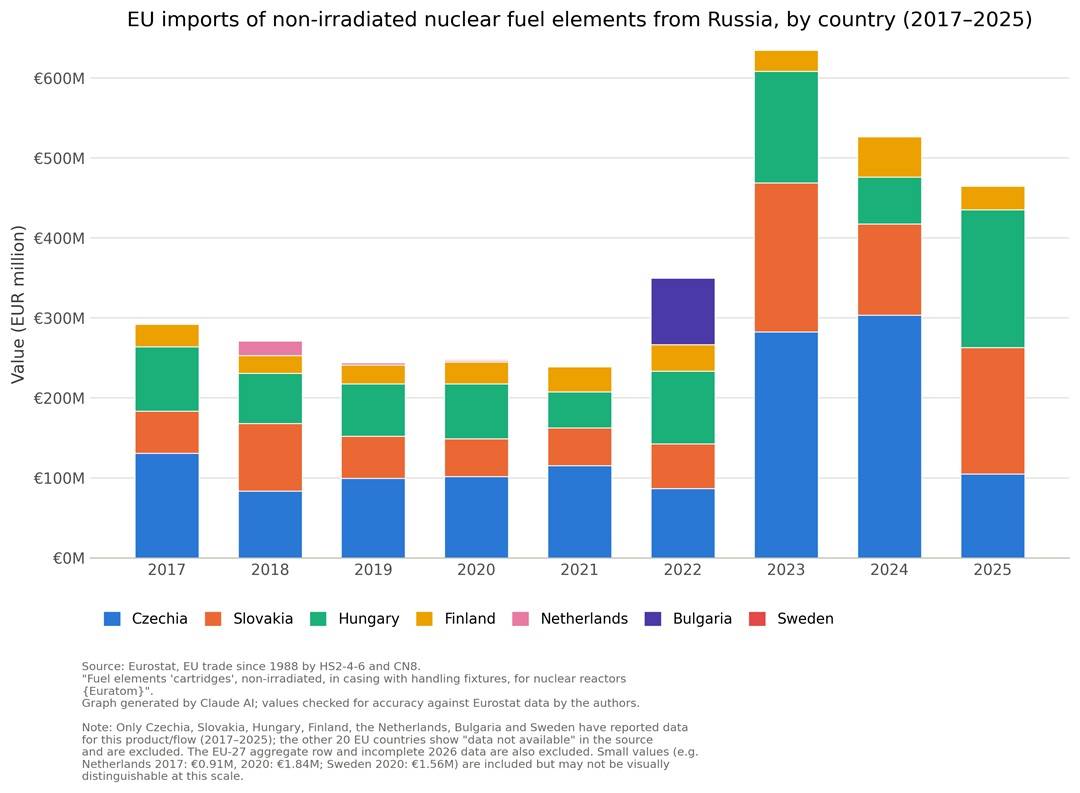
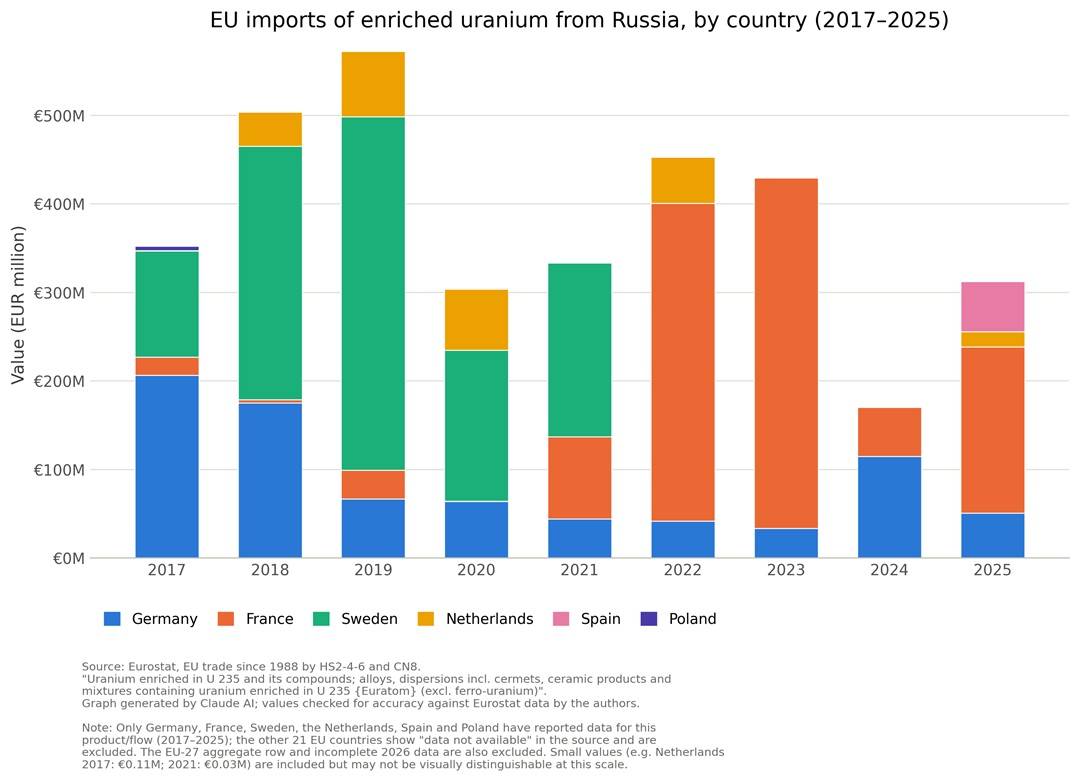
Despite this, Rosatom continues to operate in Europe. According to Eurostat data, EU countries imported over €312 million in enriched uranium, €465 million in nuclear fuel assemblies and related components and €4 million in nuclear reactor components from Russia in 2025. In 2024, those values were €170 million, €527 million, €19 million, respectively. This does not include imports of nuclear reactor components for Turkey’s Akkuyu NPP and Rosatom’s extensive business with the US and elsewhere around the world. The raw data presented here and in Tables 1–3 requires some nuancing in its interpretation, which is described at some length in an earlier RUSI report (for instance: the importing country is not necessarily the ultimate consumer of the product; or increases in imports since 2022 may have multiple explanations, including potential efforts at stockpiling ahead of expected import bans or tariffs). Yet, the fundamental reality is that Rosatom-supplied material continues to flow into and through Europe, and the company maintains access to European markets, customers and suppliers.
Efforts are underway to diversify away from Russian supplies in European states’ nuclear energy programmes, but they are not comprehensive. The REPowerEU initiative, launched in 2022, aims to ‘restrict the import of uranium, enriched uranium and other nuclear materials deriving from Russia’; though, unlike the transition away from Russian oil and gas, it does not set a timeline for doing so. While some Rosatom-related entities have come under EU sanctions, there is no outright ban on the company’s operations in Europe. Such a piece-meal approach allows Rosatom to adapt – and thereby maintain – its access and presence in the market.

For instance, in nuclear fuel production, Russia maintains a pervasive presence, despite efforts to transition away from Russian-supplied nuclear fuel to European NPPs. Operators of Soviet- and Russian-designed VVER technology in the EU – namely, Bulgaria, Czechia, Finland, Hungary and Slovakia – are at various stages of transitioning away Russian fuel assemblies for their reactors and to instead move to VVER fuel supplied by either Westinghouse (American), Framatome (French), or Enusa (Spanish, under license from Westinghouse). However, as already mentioned earlier, Framatome will be manufacturing its VVER fuel assemblies at its Lingen facility under license and with technical support from TVEL (though the Lower Saxony government has placed restrictions on Rosatom involvement in the project and has generally prohibited access to the site by Rosatom personnel). Meanwhile, continued imports of Russian enriched uranium into Europe – including to countries that manufacture VVER fuel – means that at least some non-Russian VVER fuel assemblies may still be manufactured using Russian-enriched uranium. Finally, Hungary has continued to pursue the expansion of its Paks NPP, with the construction of two new units by Rosatom. In February 2026, Rosatom’s CEO attended the ceremony marking the official start of construction. Russia has financed 80% of the project costs through a €10 billion state loan.
A New Default
The move away from reliance on Rosatom in Europe’s nuclear sector is complicated by a number of factors. First, the nuclear energy sector works on the basis of very long contracts; as such, even those countries that are actively pursuing diversification are, in many instances, still contractually obligated to import Russian material and equipment. Second, the fact that Rosatom is a state enterprise of strategic importance to Moscow, backed by Russian state coffers which can dole out massive loans to customers, as well as Rosatom’s ‘one-stop-shop’ model (that offers a full suite of services, technologies and even regulatory support to customers, as required), makes the company an attractive supplier – especially for states just getting started with nuclear energy.
Third, the process of certifying new suppliers for nuclear fuel or reactor technology – which are different from the original manufacturer – is a complicated and lengthy process, with potential implications for nuclear safety and security. It is, however, not impossible, despite Russian claims to the contrary and as evidenced by the many countries – first and foremost Ukraine – that have successfully moved away from Russian supplies. Fourth, Rosatom’s long-standing outsized presence across the civil nuclear supply chain and relatively low costs have atrophied, to an extent, alternatives in the market. But here too, European and US governments and industry have doubled down on investments and expansion of non-Russian capacity. Furthermore, the introduction of some restrictions on Rosatom have complicated the company’s ability to procure materials and, in particular, deliver its Turkish project on time.
All these factors, and others, have made it particularly difficult to weed Rosatom out of European nuclear markets. As mentioned, some meaningful progress is being made. But there is more that can be done. Further government investment into European and other friendly suppliers across the nuclear fuel cycle – including on emerging technologies like small modular reactors should remain a priority. At the same time, governments should work with nuclear suppliers, as well as utilities, to establish signals of long-term demand for the sector – offering the industry some assurance that demand will not shift with political winds.
Sanctioning Rosatom as a whole, rather than individual subsidiaries, should be a priority for the EU. Sanctions should apply not only to individual subsidiaries, but to the parent corporation, all entities under its control, its joint ventures, financial flows, senior management and international projects. In practical terms, such a regime should provide for the freezing of all assets belonging to Rosatom and companies under its control, as well as prohibitions on payments, the supply of goods and technologies, engineering and financial services, new investment, insurance and loans. Such a regime would prevent contracts from being shifted between formally separate entities within the Rosatom family or the conclusion of new contracts, and would restrict Rosatom access to credit, insurance and the European technology and components that the company may need to pursue projects outside of the EU, including in countries that are unlikely to sanction Rosatom anytime soon.
Sanctioning Rosatom as a whole, rather than individual subsidiaries, should be a priority for the EU
At the same time, licences could be made available to allow for a sustainable transition away from Russian supplies. This would help ensure that any restrictions do not have an adverse effect on nuclear safety or European energy security. However, licensing provisions would need to be narrow, time-limited and revocable. A US ban on the imports of Russian enriched uranium introduced in 2024 included broad and arguably overly-generous conditions under which companies could seek waivers, thereby likely limiting the ultimate impact on imports of Russian enriched uranium into the US, at least in the short term. Any future European licences should be issued for specific transactions directly related to the safe operation of designated reactor units, compliance with IAEA safeguards or other requirements, or the protection of clearly-defined and critical interests of Ukraine and its partners (including energy security) and only where no other alternative supplier is available (regardless of any price differences). Any extension would be possible only where the beneficiary has demonstrated that it is pursuing a meaningful diversification strategy away from Russian supplies. Any claims to contractual obligations with Rosatom as justification for a licence would have to be carefully reviewed, and force majeure claims should be sought to terminate contracts, where possible and practical. New nuclear power projects, expansion of existing facilities, technology transfers to Russia, dividend payments and financing of Rosatom’s military or dual-use activities would remain ineligible for licensing. Authorised payments would be channelled through blocked or escrow accounts, preventing Rosatom from freely accessing foreign-currency revenue.
Such an approach would reverse the existing presumption that guides European engagement with Rosatom to better reflect the shifting nature of the company’s business. Instead of the default position being the permission of business with Rosatom as an important supplier of civil nuclear energy technology to European markets, dealings with Rosatom would be prohibited by default – as they should be with an important player in Russia’s military industry – with exemptions granted where the need can be rigorously demonstrated. With the recent election in Hungary of a government that seems open to taking a harsher stance against Russia, and ahead of the presidential elections in France – which may see the election of Marine Le Pen, who has opposed sanctions on Russia – the EU has a unique and limited window in which to act. It cannot afford to lose the opportunity.
© RUSI, 2026.
The views expressed in this Commentary are the author's, and do not represent those of RUSI or any other institution.
For terms of use, see Website Terms and Conditions of Use.
Have an idea for a Commentary you'd like to write for us? Send a short pitch to commentaries@rusi.org and we'll get back to you if it fits into our research interests. View full guidelines for contributors.
WRITTEN BY
Oleksandr V Danylyuk
RUSI Associate Fellow, Military Sciences

Darya Dolzikova
Senior Research Fellow
Proliferation and Nuclear Policy

- Jim McLeanMedia Relations Manager+44 (0)7917 373 069JimMc@rusi.org