

The Renaissance of the Dissident Republican Threat

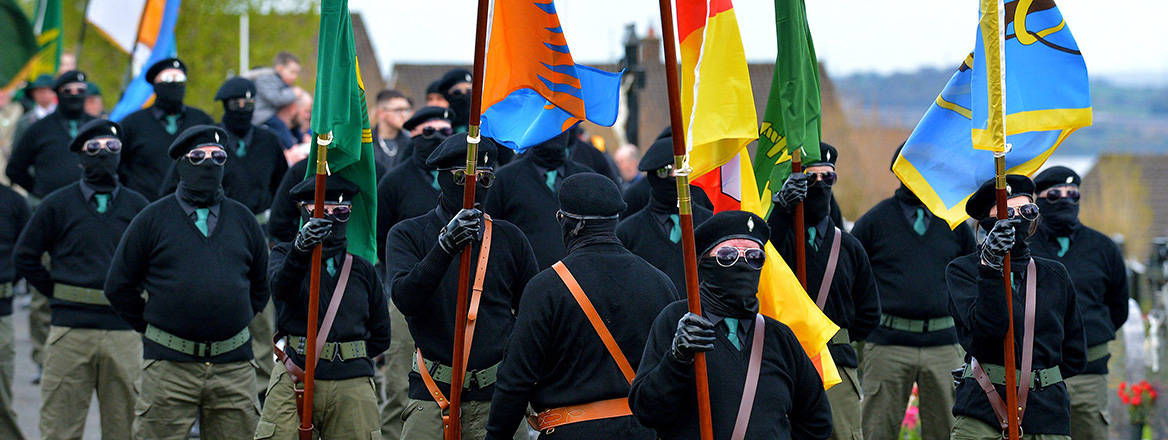
The dissident Irish republican terror group threat is changing. Counter-terrorism officials must keep pace to meet the evolving security challenge.
Around 3pm on 22 July the Special Detective Unit of the Garda Síochána, the Irish police and security service, stopped a vehicle travelling on the N2 south of Carrickmacross close to the border between Monaghan and Armagh. A search of the vehicle yielded an ‘extremely sophisticated’ device. One person, a woman in her twenties, was arrested at the scene and subsequently charged. Another man in his forties was simultaneously apprehended by Gardai in Dublin. Both were released on bail, pending court proceedings. The incident catapulted the dissident republican threat back into the spotlight. It has since been reported that the device, which contained 394 grams of Semtex high explosive, a timer, a timing switch and a viable detonator, was linked to the New IRA.
The New IRA has been responsible for a range of violent activities this year, including exploding two crude and unsophisticated car bombs outside Police Service of Northern Ireland (PSNI) stations in Lurgan, County Armagh, and in Dunmurry, on the outskirts of Belfast. Neither of these devices appeared to contain high explosives, which makes the interception of a viable Semtex-based device most concerning.
From Defeat to Containment
For much of the period of the Northern Ireland Troubles between the late 1960s and 1990s the British state’s security services believed it was possible to defeat terrorism. However, by the early 1990s the government had adopted a more pragmatic approach aimed, not at ‘defeating the IRA’ but at ‘containing its activities and limiting their effectiveness’. Regardless of whether defeat was strategically possible, by the time of the Belfast/Good Friday Agreement in 1998, British policy had shifted towards an engagement with the IRA’s political associates Sinn Féin who had by now become vocal advocates for the peace process.
With the Provisional IRA subsequently jettisoning its ‘armed struggle’ in favour of electoral politics, this left a sizable number of influential republicans irreconciled to the idea of power-sharing between nationalists and unionists. Unsurprisingly, they carried on regardless of what some commentators have called a ‘paradox’, with some dissidents maintaining their violent campaign does not require popular support. As Marisa McGlinchey argues, this particular strand of militant republicanism articulates the view that the Provisional IRA failed, not the method. To these militants, it is the means, not the ends, that is vital in their self-declared goal of unifying Ireland by force.
It is unhelpful to see the threat from violent republicans according to the logic underpinning the Northern Ireland peace process: namely that terrorism can be transformed only when those who engage in it see the merits of the ballot box rather than the bomb
For much of the past twenty-five years, law enforcement agencies on both sides of the Irish border have cooperated to contain the threat from dissident republicans. The Continuity IRA, which grew out of a split between the Provisionals and Republican Sinn Féin led by former IRA Chief of Staff Ruairí Ó Brádaigh, was responsible for major bomb attacks on mainly Protestant towns in the 1990s. In 1997 another split occurred inside the Provisionals when the Real IRA appeared, carrying out one of the worst atrocities of the Troubles when it bombed Omagh, a market town in County Tyrone, a year later. 29 people were killed, as well as two unborn children, and many hundreds more were injured.
Despite the revulsion surrounding the Omagh atrocity, dissident republican attacks continued, with several police officers, soldiers, prison officers and civilians killed. In 2012 the New IRA was formed following the amalgamation of several dissident groups, which included the Real IRA and the Republican Action Against Drugs.
The CIRA was dealt a major blow in 2014 when seven men were arrested and charged with a range of terror-related offences following a major MI5 eavesdropping operation in Newry, County Down. At their subsequent trial held in 2020, all the defendants pled guilty, with a range of sentences totally 33 years handed down. Later that year MI5 launched another major surveillance operation, codenamed Arbacia, which targeted suspected leaders of the New IRA. The trials of up to ten people charged are still pending after a judge rejected legal applications to have the case dismissed.
Neither of these high-profile operations have deterred others from becoming involved in similar terrorist activity, with the New IRA blamed for the attempted murder of a PSNI officer, Detective Chief Inspector John Caldwell, on 22 February 2023. In the wake of the shooting of DCI Caldwell, MI5 promptly raised the Northern Ireland Related Terrorism (NIRT) threat level from ‘substantial’ to ‘severe’ on 23 March 2023. The threat level was subsequently returned to ‘substantial’ again on 6 March 2024. Despite the Director General of MI5 reassuring the public in October 2025 that his service would continue to ‘bear down on residual threats and degrade terrorist capabilities’ with respect to NIRT, the New IRA has remained unbowed.

From Containment to Suppression
Irrespective of the New IRA’s resilience in the face of covert intelligence operations, senior police officers remain optimistic about the threat being greatly diminished. In evidence given to the Northern Ireland Affairs Committee in March, PSNI Assistant Chief Constable Davy Beck told MPs his officers ‘continue to work day and night to suppress the dissident republican threat that still exists’. He nevertheless acknowledged they ‘retain that lethal intent, material, munitions and resources’ and are ‘capable of mounting lethal and reckless attacks across Northern Ireland’. ACC Beck remained upbeat in his assessment that the wider nationalist community would reject the ‘narrative around dissident republican threats, and indeed paramilitarism.’ Yet, there remains plenty of evidence to the contrary. Those in the nationalist community where militant republicans hold sway are consistently reluctant to inform on those involved in armed activities.
It is unhelpful to see the threat from violent republicans according to the logic underpinning the Northern Ireland peace process: namely that terrorism can be transformed only when those who engage in it see the merits of the ballot box rather than the bomb. Harbouring such a one-dimensional view greatly underestimates the impact of covert intelligence operations in ensuring the IRA remained on the path mapped out by their political associates in Sinn Féin. Furthermore, the threat posed by violent republicans has adapted over time, with the number of bomb-related incidents doubling in the year to the end of July 2026, compared to the same period the year before.
Rethinking the Security Threat
The perseverance of the authorities on both sides of the Irish border to contain or suppress the New IRA threat is not in doubt. What is questionable is the conceptual framing of terrorism in this context. If we accept that other forms of terrorism can be at once fragmented, complex and less predictable, then it stands to reason the same can be said of republican violence. Scholarly work on ‘Dark Networks’ has greatly aided our understanding of the interplay between organisational attributes and environmental factors in illegal groups that take a network form. One of the key hypotheses in research is that dark networks that survive demonstrate an ‘ability to stay flexible and adapt quickly to changing pressures and circumstances’.

If we accept the proposition that the Semtex-based device is the by-product of the return of technical expertise within the ecosystem of violent republicanism, then this might point towards a renaissance in the New IRA’s campaign not seen since 2016. This would enable us to draw several conclusions. The first is perhaps the most obvious. The attacks in Lurgan and Dunmurry in the Spring of 2026 were relatively unsophisticated and relied on crude IED construction, thereby indicating a capability gap. A second conclusion, based on the interdiction of the Semtex device, reportedly on its way to the north-west city of Derry/Londonderry, is an indication of the New IRA in the city seeking to acquire new means of bolstering its flagging violent campaign. A third conclusion is that dissident republicans are now in the business of collaborating for survival. That means at certain times they may coagulate into a clotted whole, thereby posing a greater networked threat as they did in 2016. The only way to determine whether this is indeed the case is for greater analysis of the Semtex device seized on the Irish border in July. Although it is unlikely the public will be privy to such details until court proceedings are underway, it is likely to drive the law enforcement responses we will continue to see unfold. It might also help us explain why the chair of the Police Federation for Northern Ireland has now called on MI5 to increase in the threat level.
Whatever the true rationale behind the resurgence of violent republican activity, it nonetheless raises serious questions at a time when the British and Irish governments are awaiting the conclusions of a scoping exercise on the prospects of ‘paramilitary group transition towards disbandment’. Leading this scoping exercise is an Independent Expert, Fleur Ravensbergen, who was appointed in September 2025 to engage with all paramilitary groups, including dissident republicans. By their recent actions, militant republicans are clearly determined to derail the process towards greater political normalisation on the island of Ireland. Perhaps they are also seeking to drive a wedge between those seeking less turbulence in the geo-political relationship between Britain and Ireland a decade on from the Brexit referendum? As this article has made clear, to meet this evolving challenge, we require better analytical tools to inform the decision-making process of all those involved in the business of Counter-Terrorism.
© Aaron Edwards, 2026, published by RUSI with permission of the author.
The views expressed in this Commentary are the author's, and do not represent those of RUSI or any other institution.
For terms of use, see Website Terms and Conditions of Use.
Have an idea for a Commentary you'd like to write for us? Send a short pitch to commentaries@rusi.org and we'll get back to you if it fits into our research interests. View full guidelines for contributors.
WRITTEN BY
Dr Aaron Edwards
Guest Contributor


- Jim McLeanMedia Relations Manager+44 (0)7917 373 069JimMc@rusi.org