

Pakistan. Caught Between President Trump and a Lethal Nuclear Dilemma

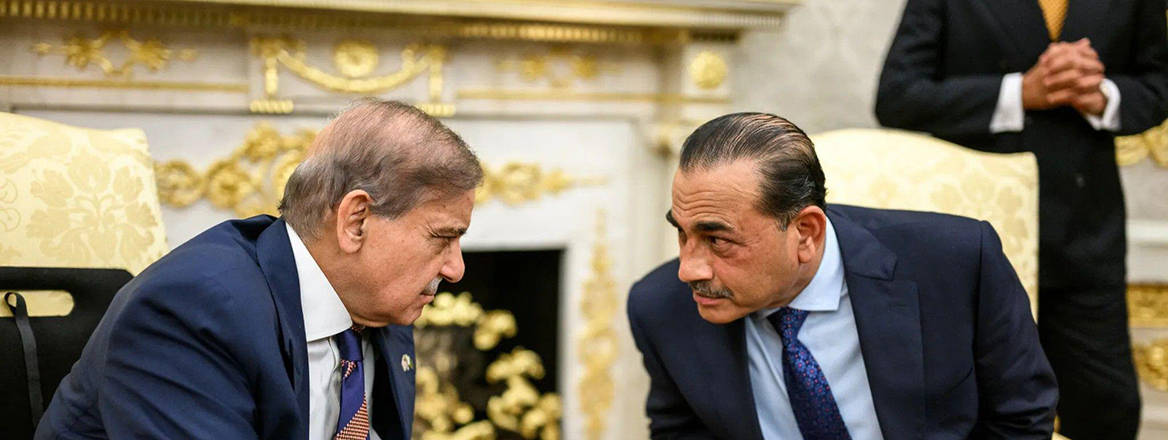
Pakistan, as mediator between the US and Iran, but with nuclear obligations to Saudi Arabia, will need all its agility to avoid abundant pitfalls.
Pakistan has a long history of nimble opportunistic diplomacy. It facilitated Henry Kissinger’s covert trip to China in 1971 and was quick to exploit the Soviet invasion of Afghanistan in 1979. More recently it made a huge mistake in supporting the Taliban takeover in Kabul.
Pakistan’s international standing has been transformed since the terrorist attack at Pahalgam in April 2025. At the time the Pakistan Army was widely despised for having locked up the popular former prime minister, Imran Khan, in advance of a flawed election process. Food prices were rising. Economic prospects were dire. Terrorism out of Afghanistan was increasing. Relations with the United States were in the freezer. Joe Biden had eschewed contact with a country which he suspected of having aided the Taliban in its humiliation of the US (and NATO). The new president Trump was in mid bromance with Indian Prime Minster Narendra Modi.
The Pakistan Army Popular Again
Modi understandably wanted to send a warning signal to Pakistan to stop further terror attacks but his carefully modulated response (Operation Sindoor) exposed the Indian air force to peril, losing three or more advanced fighter aircraft including at least one Dassault Rafale. The conflict and Pakistan’s early successes transformed opinion in Pakistan. The army was popular again and Imran Khan all but forgotten. But on 10 May Modi lost patience with his unruly neighbour and fired eleven cruise missiles at Pakistani airbases. The shock in Islamabad was palpable. The missiles had evaded all Pakistani defences, and the country was at its most vulnerable since its defeat by India in 1971. Washington intervened to prevent escalation and Prime Minister Shehbaz Sharif grabbed the ensuing ceasefire with both hands.
Pakistan’s diplomatic response was brilliantly opportunistic. It gave credit to Trump for his peace efforts (assisting his mythical claim to have stopped eight wars) and nominated him for the Nobel Peace Prize. In return Trump invited the Pakistan army chief, the newly promoted Field Marshal Asim Munir, to the White House for lunch. The Pakistanis offered the US access to rare earth minerals which are presumed to exist in its largely unexplored Balochistan province. At the same time Trump also made reference to ‘massive’ reserves of unexploited Pakistani oil resources (a claim which mystified Pakistani observers).
Pakistan also has an incentive to see Iran’s nuclear ambitions dismantled. But the risk of compromising its improved relations with Iran . . . and by extension with its own large Shia minority is something Islamabad will wish to avoid.
Meanwhile India refused to acknowledge Trump’s role in ending the conflict (which India regards as merely suspended not concluded) and Modi’s relations with Trump went downhill until February 2026 when a trade deal was concluded. Modi was even blamed for importing Russian oil (a rare occasion of the US president revealing an intention to punish Russia’s President Putin for his invasion of Ukraine).
Pakistan continued to surf the wave of its newfound popularity in Washington (although the plight of its economy and threat from terrorism remains undiminished). Sharif (a skilled negotiator who has lived long in the shadow of his brother Nawaz) became involved in the Gaza negotiations and agreed to join Trump’s Board of Peace. He also signed a Mutual Defence Agreement with Saudi Arabia. The terms of the deal are secret but are probably a version of an informal deal which Nawaz Sharif is believed to have made with the late Prince Sultan in the 1990s. In extremis Pakistan could be expected to provide Saudi Arabia access to one or more of its nuclear weapons and the means of delivery. This has been dressed up for public consumption as a measure intended against the Israeli nuclear threat but the Saudis’ primary concern has always been Iran.
A Not-So-Subtle Reminder
And herein lies the dilemma. President Trump is relying on Pakistan’s diplomacy to extract him from the global economic quagmire of his own creation. Both Israel and Saudi Arabia are concerned that this could leave Iran with its nuclear facilities partially intact and with its stock of enriched uranium (believed to amount to 440kg at 60% enrichment). If that is the outcome, Saudi Arabia is likely to demand that Pakistan honour the terms of its mutual security pact. Thus, Pakistan also has an incentive to see Iran’s nuclear ambitions dismantled. But the risk of compromising its improved relations with Iran (with which it had a brief conflict in 2024) and by extension with its own large Shia minority is something Islamabad will wish to avoid.

Help your search results show more from RUSI. Adding RUSI as a preferred source on Google means our analysis appears more prominently.
Saudi Arabia recognises Pakistan’s dilemma and sent a not-so-subtle reminder to Islamabad of its obligations. At the end of April the UAE is demanding a loan repayment of $3.5 billion and the Saudis have stepped in with an additional $3 billion on top of its rolled-over loan of $5 billion. Little wonder that Pakistan deployed fighter jets and ‘support aircraft’ to Saudi Arabia last week. Islamabad might have preferred the deployment to be kept secret but Riyadh very deliberately issued a statement that it was ‘as part of the joint strategic defence agreement signed between the two brotherly countries’. The Indian media is alleging that 13,000 Pakistani troops have also been sent.
At the same time Pakistan’s own economy is suffering from the closure of the Strait of Hormuz. Iran had previously let some tankers destined for Karachi pass through but the new US-administered blockade will (ironically) place increased strain on the Pakistani economy. China, its ‘all weather ally’ will also be pressing for Pakistan to negotiate a reopening of the Strait. China has large reserves of oil, estimated to provide resilience for seven months but will be acutely aware of how quickly they will deplete if the blockade continues. By contrast China is less worried than the US, Saudi Arabia and Israel about Iran’s nuclear ambitions.
Trump’s option of deploying the US Marine Expeditionary Units (MEU) on the ground in Iran seems to have faded in recent days but not disappeared entirely. The 31st MEU aboard USS Tripoli is still in the region and may soon be joined by the USS Boxer (with 11th MEU embarked). If their objective is, as suggested by the BBC and Wired, to destroy what remains of Iran’s deeply-buried nuclear infrastructure and capture its stock of enriched uranium it could (if successful) reduce the Saudis’ stranglehold on Pakistan. On the other hand, such an enormously risky venture against hardened Iranian forces could both escalate and prolong the war with inevitably harmful effects for Pakistan’s (and the global) economy.
Europe, having wisely kept out of Trump’s war, is just wishing the conflict to end and the Strait of Hormuz to reopen. It views the conflict purely in terms of economic (and electoral) damage from spiralling costs. It appears to have lost interest in the danger of Iran becoming a nuclear weapons state (and one far more motivated to possess an actual weapon than before). With neither Israel nor Iran noted for military restraint there should be real concerns for a future nuclear conflict compared to which the current crisis would pale into insignificance.
Pakistan will need all its mercurial agility to navigate these multiple pressures.
© RUSI, 2026.
The views expressed in this Commentary are the author's, and do not represent those of RUSI or any other institution.
For terms of use, see Website Terms and Conditions of Use.
Have an idea for a Commentary you'd like to write for us? Send a short pitch to commentaries@rusi.org and we'll get back to you if it fits into our research interests. View full guidelines for contributors.
WRITTEN BY
Tim Willasey-Wilsey CMG
RUSI Senior Associate Fellow, RUSI International


- Jim McLeanMedia Relations Manager+44 (0)7917 373 069JimMc@rusi.org