

Old Ships, Modern Menace: How to Tackle the World’s Shadow Fleets

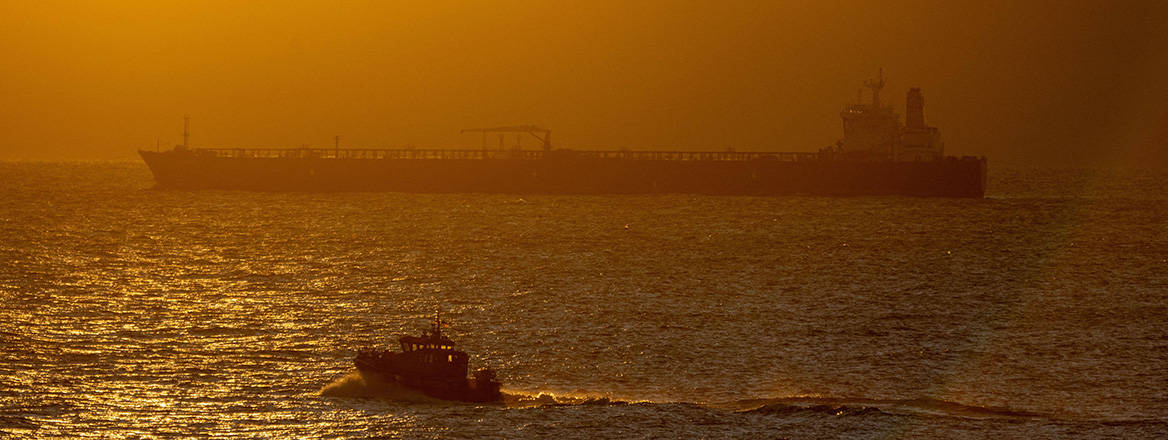
Shadow fleets sit at the centre of maritime hybrid warfare, economic security and environmental risk. Despite this growing recognition, the West lacks the coherence to confront it.
The global crackdown on shadow ships continues with the American seizure of a seventh tanker on January 21. This follows the capture of the Bella 1, which was renamed the Marinera before being captured by US and UK forces after a weeks-long pursuit despite a Russian naval escort. Separately, Europe’s battle against shadow ship cable-cutting continued, with France and Finland each separately interdicting a shadow ship in the span of 3 weeks. The surging attention paid to these ships has taken an unpredictable path, with their profile rising as they transitioned from implements of sanctions evasion to irregular warfare, as well as becoming, in one case, a potential flashpoint for conventional war.
Shadow fleets are not just an adversarial tool, but a threat in their own right. Both American actions against shadow ships leaving Venezuela and European actions against Russian shadow ships are too limited and specific in scope to have a meaningful global impact. Treating shadow fleets as an auxiliary problem has produced auxiliary results; effective policy will require a strategy designed around the specific challenges of this threat.
A Growing Menace
Shadow fleets – also known as dark or ghost fleets – operate outside the rules that govern most maritime traffic. They fly false flags, spoof tracking signals, falsify manifests and conduct ship-to-ship transfers to conceal the origins of sanctioned or illicit cargo. Their number is still growing despite countermeasures, and they will continue to empower malign actors until the West evolves from sporadic enforcement to a coherent, coordinated policy agenda.
Over 12% of global maritime commerce and at least 48% of the world’s large commercial oil tankers run on shadow fleets. This parallel maritime ecosystem is a lifeline to sanctioned petrostates and a global menace. Because the average shadow ship is at least 20 years old, their dilapidated condition also poses a serious risk of environmental catastrophe worldwide, with Russia’s shadow fleet spilling oil in the Northern Atlantic, Mediterranean, and Indian Ocean. Ramshackle shadow ships also endanger safety of navigation wherever they operate, as when the oil tanker Eventin broke down in the Baltic Sea, forcing Germany to tow it to safety.
Maritime Hybrid Warfare on the Rise
A classic grey zone threat, shadow fleet activity remains below the threshold of armed conflict, yet beyond the effective reach of law enforcement. Shadow fleets offer economic gains and plausible deniability, which has driven their expanding role in conflict. Russia, Iran, Venezuela and China have turned shadow fleets into tools of statecraft and even spy craft, with the potential for much greater harm to come.
Russia’s shadow fleet has formed a key pillar of its financial ability to withstand sanctions and sustain the war effort in Ukraine. Numbering an estimated 1,300 vessels as of 2025, the fleet has carried 65-70% of Russia’s seaborne oil exports since the beginning of the war. Proof that these ships served a dual purpose came in the series of subsea cable sabotages in the Baltic Sea. This campaign was likely responsible for 11 confirmed damages in 15 months, plaguing the region until the beginning of NATO’s Operation Baltic Sentry. Russia may have adopted new tactics, re-tasking the shadow ships from physical infrastructure damage to espionage, with potential uses as a launch platform for drones or for GPS jamming.
Beyond cutting shadow fleets out of Western shipping and maritime insurance markets, a global effort to interdict shadow ships must replace isolated seizures
This issue is not limited to Russia: not only has China been a key partner in the Baltic Sea sabotage campaign, it has also used shadow ships to damage subsea cables around Taiwan. China has a long history of covert maritime practices, having maintained a large illegal fishing fleet before diversifying toward illicit oil transportation in collaboration with Russia. This partnership serves a double purpose, with China simultaneously importing discounted Russian oil and undermining Western security.
Similarly, Iran’s shadow fleet has been central to funding the Islamic Revolutionary Guard Corps (IRGC) and its foreign terrorist affiliates. Iran’s strategic position astride chokepoints such as the Strait of Hormuz heightens the risk that these vessels could be tasked with broader coercive or disruptive missions.
Roadblocks All the Way Down
Although shadow fleets are a major security risk, any serious attempt to curtail them could shock the fragile web of global trade. As shadow ships grew from a nuisance into a pressing security threat, the absence of a coherent response from Western actors can be explained by economic concerns and the operational difficulties associated with shadow ships.
The first challenge is finding the ships. Automatic Identification System (AIS) transponders are routinely switched off or spoofed, registries are fragmented and dispersed, and beneficial ownership is obscured by offshore shell structures outside NATO jurisdiction. OSINT investigators and maritime-tracking platforms have stepped in where governments lag, mapping illicit transfers by cross-referencing publicly available information, but this ad-hoc architecture is neither comprehensive nor authoritative. By allowing shadow ships to fall between the cracks of military and civilian security architectures, NATO has stumbled into a situation in which a serious paradigm shift and the development of new capabilities would be required to confront the threat.
The next question is who takes the initiative to board and detain the ships. When an incident occurs, it is often unclear whether it constitutes an accident, criminal negligence, or state-sponsored aggression – which would determine the responsible authority. The EU has no coast guard and NATO has no legal authority to board commercial vessels. Individual states act inconsistently, bound by domestic law, divergent risk appetites and limited naval resources. The end result is that these ships are almost never searched or detained.
Finally: Which entity prosecutes the crime, under which law, and in which court? The crew is hardly the most dangerous or culpable party and a court in Finland recently dismissed the case against a shadow ship’s crew with no further action planned, highlighting the complete inadequacy of the current legal architectures even in clear cases of sabotage. To date, there has not been a single successful shadow ship prosecution.
Together, these gaps define a governance vacuum in the domain that once symbolised the expansion of the rules-based global order. Until the West acts to change this broken system, the world’s oceans will remain the largest ungoverned space on earth – and rusting tankers, the most dangerous symptom of that neglect.
Beyond Sanctions and Seizure
The US and EU have employed both regulatory and kinetic tactics against shadow fleets, but neither has proven to be a panacea; while regulation alone has clearly failed, the violation of Estonian airspace by the Russian military over the Jaguar showed the added risks faced by European states interdicting Russian shadow ships. In their current formulation, regulatory efforts are doomed to be circumvented, while kinetic efforts are doomed to be outmatched by the scope of the threat.

Take the Skipper: before being seized by the US off the Venezuelan coast, it was sanctioned in 2022 for smuggling Iranian oil under the name Adisa. It took three years for US forces to stop the outlaw ship, and it likely never would have happened if not for Trump’s showdown with Maduro. Likewise, while subsea infrastructure sabotage has dropped significantly under NATO’s Operation Baltic Sentry, Russian shadow ships have not ceased to cut cables, move Russian oil or conduct espionage.
Sanctions and isolated seizures are partial remedies. Each sanction imposed on an individual ship drives further opacity – new flags, new shell companies, new routes – perpetuating a cycle in which regulation is always one step behind. Even blockades leave the corporate, financial and legal networks of shadow fleets intact. Beyond enforcement challenges and escalation risks, seizures also pose a resource problem: the hunt for the Marinera/Bella 1 demonstrated the scope of the operation required to capture a ship which refuses to be boarded.
As the greatest dual-use challenge to Western allies, shadow ships necessitate a multi-pronged approach targeting both the fleets themselves and the networks that facilitate their existence. First, NATO states must address Western enablers. While Greece’s tankers are now playing a diminished role in the Russian oil trade, the Greek shipping sector still facilitated the growth of Russia’s shadow fleet in spite of EU sanctions. Greece is not the only known enabler of the world’s shadow fleets; contrary to previous reporting, most shadow ships have started providing evidence of insurance when challenged. Some of this documentation comes from Western companies such as Maritime Mutual, which was raided by New Zealand police after allegedly providing cover for dark vessels carrying Iranian and Russian oil. Shadow ships necessitate a broad campaign of lawfare, far beyond the remit of overwhelmed and underperforming sanctions offices.
Beyond cutting shadow fleets out of Western shipping and maritime insurance markets, a global effort to interdict shadow ships must replace isolated seizures. While initiatives like the G7 Shadow Fleet Task Force are a positive step, they overlook the key role of non-G7 countries in enabling or combating shadow fleets. A more meaningful step would involve countries in the South China Sea, the world’s busiest waterway, where shadow ships already imperil maritime traffic.
The West now faces the consequences of deferred decisions. Until the gaps exploited by shadow fleets are closed, the seas will remain the least-governed, most-contested domain.
© Anna Matilde Bassoli and Emma Isabella Sage, 2026, published by RUSI with permission of the authors.
The views expressed in this Commentary are the authors', and do not represent those of RUSI or any other institution.
For terms of use, see Website Terms and Conditions of Use.
Have an idea for a Commentary you'd like to write for us? Send a short pitch to commentaries@rusi.org and we'll get back to you if it fits into our research interests. View full guidelines for contributors.
WRITTEN BY
Anna Matilde Bassoli
Guest Contributor


Emma Isabella Sage
Guest Contributor

- Jim McLeanMedia Relations Manager+44 (0)7917 373 069JimMc@rusi.org