

From Sanctions to the Scrapyard: Confronting a Growing Environmental Threat

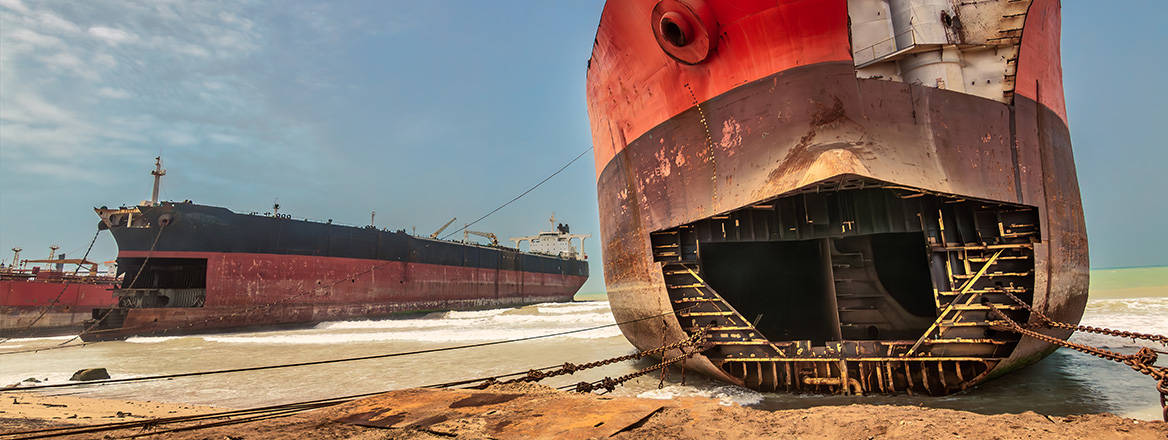
Sanctions are blocking end-of-life vessels from being scrapped thus creating an environmental time bomb – but there is a simple fix.
The global sanctions landscape has driven the emergence of an extensive shadow fleet of tankers used to move sanctioned oil. Despite the spotlight on Russia’s use of the shadow fleet, the likes of Iran, North Korea and Venezuela abuse this methodology too. These fleets consist largely of very old vessels, typically far beyond the age at which reputable operators retire their tankers. Many are poorly maintained, operate with obsolete equipment and are either underinsured or, in a growing number of cases, not insured at all. In the normal course of business, they would have been scrapped long ago.
Shadow fleets often use opaque structures to conceal ownership and operational control, relying on flag states with weak due diligence standards, poor enforcement capacity, or no meaningful regulatory oversight. Others operate with no recognised flag at all with the rising practice of false flagging and fraudulent registration, where tankers claim the nationality of a state that has no record of them, thereby leaving them entirely outside the supervision that maritime governance relies on.
As sanctions on the shadow fleet expand, the incentives for secrecy grow and the intersection of old age, weak oversight, poor maintenance and minimal insurance exacerbates the risk of major environmental incidents.
Once a vessel becomes sanctioned, legitimate service providers withdraw. Banks refuse to clear payments, insurers cancel their cover, classification societies withdraw certification and port access becomes limited or unavailable. These factors make sanctioned vessels toxic assets that prevent even the possibility of scrapping those that are no longer seaworthy. This heightens the risk of owners simply abandoning sanctioned vessels at sea, a trend that raises the possibility of serious ecological harm.
Shipbreaking and Recycling Tankers
Shipbreaking, or ship recycling, is the final phase in the life of a vessel. Despite its low visibility to the wider maritime sector, it is essential to the functioning of global shipping. As around 80 percent of world trade moves by sea, the safe dismantling of vessels enables the replacement of ageing ships and provides the steel and reusable components that help sustain the maritime economy.
South Asia is the centre of the global shipbreaking industry, with India, Bangladesh and Pakistan accounting for most activity. India’s Alang yard is the largest shipbreaking site in the world, known for its extensive beaches where ships are dismantled manually by workers who break down hulls, remove machinery and strip metal for resale. Careful control of this process is paramount as safety and environmental concerns are significant, as scrapping has historically involved the release of toxic chemicals, contamination of coastal zones and improper disposal of hazardous waste.
Without a workable pathway for scrapping, sanctioned decrepit tankers will continue operating without insurance or oversight, or they will be left drifting in environmentally sensitive waters.
The international community has attempted to address these challenges. The Hong Kong International Convention for the Safe and Environmentally Sound Recycling of Ships entered into force in June 2025 – sixteen years after it was adopted. It establishes technical standards for ship recycling and places responsibility on the vessel’s flag state and recycling country. Still, the Convention has met criticisms for insufficient measures. The EU has also adopted its own Ship Recycling Regulation, which entered into force in 2013. The Regulation requires EU flagged ships to be recycled only in approved facilities and it restricts the use and disposal of hazardous materials.
Even outside the sanctions context, the shipbreaking sector is marked by flag hopping and webs of shell companies during their final voyages to obscure beneficial ownership or avoid domestic environmental regulations such as those imposed by the EU.
Yet, scrapyards have started to invest heavily in upgrading facilities to meet the new Hong Kong Convention standards. Large numbers of yards, including Alang, have undergone costly renovations to improve labour protections and environmental controls. These investments have come at a time when business has declined, making the financial pressure on operators considerable.
Compounding Problems
Sanctions on shadow fleet vessels have produced a steep and poorly managed decline in scrapping activity since 2022. Sanctions are effective at restricting transactions but as an unintended consequence they also restrict the very transactions needed for scrapping. Cash buyers, recyclers and financial institutions that fund purchases risk breaching sanctions if they engage with designated owners or vessels. Letters of credit, which are commonplace for the purchase of ships for scrapping, are increasingly refused by banks. Even when buyers are willing to take on the risks associated with sanctioned tonnage, the lack of access to financial services makes it almost impossible to complete the transaction.
Recent shipbreaking cases highlight how sanctions have paralysed even the basic financial flows needed for scrapping.
The Comoros flagged tanker Conico Atlas is an illustrative example of the inadvertent risks created by sanctions. The vessel, part of Russia’s shadow fleet, was sold for scrap at the start of 2025 after being arrested in India. A commercial dispute then emerged when the buyer, Global Maritime, discovered the vessel was sanctioned after attempting to make final payment. The payment was blocked by Mashreq Bank, and the buyer sought to void the contracts. The ship remains in limbo, unable to be recycled, moved or sold. This case demonstrates how even a single sanction designation can freeze an entire shipbreaking chain involving shipowners, cash buyers, recyclers, customs authorities and financial institutions.
The Vietnamese owned tanker Zenith was sanctioned by the US in March 2025 and has been idle for months in the Gulf of Oman. The vessel’s owner has reportedly attempted to sell it for recycling at a 40% discount to scrap value, yet no recycler will purchase it, reflecting the high compliance risk and the difficulty of arranging payment through a financial system that screens for sanctioned entities. The inability to dispose of these old tankers raises the risk that they will deteriorate unattended, increasing the likelihood of a major incident.
Tough Choices, Tough Solutions
Without a workable pathway for scrapping, sanctioned decrepit tankers will continue operating without insurance or oversight, or they will be left drifting in environmentally sensitive waters. Policymakers therefore face a practical challenge: how to ensure that sanctions remain effective without inadvertently trapping old and unsafe ships in legal limbo.
To reduce the environmental and safety risks associated with scrapping sanctioned vessels, governments should introduce licensing mechanisms that allow reputable insurers to provide cover for voyages to scrapping beaches. Under current legal restrictions in the US, UK, EU and other G7+ jurisdictions, insurers are prohibited from engaging with designated vessels or their owners. This forces scrapping voyages to take place either uninsured or under dubious coverage issued by lightly regulated providers. A dedicated licence, tightly framed and limited to end-of-life voyages, would enable high-quality insurers to offer cover solely for transit to an approved recycling facility. Such a mechanism would not weaken sanctions, since no operational trade or financial benefit would flow to the sanctioned owner, but it would reduce the risk of abandonment or other incidents that can occur when old vessels travel uninsured and unregulated.
A second measure should be the creation of a controlled payment mechanism that allows funds linked to sanctioned vessels to be transferred into frozen accounts exclusively for the purpose of scrapping. At present, recyclers cannot complete purchases because banks refuse to issue letters of credit for transactions involving designated owners or vessels. A bespoke financial channel, supervised by national competent authorities, would permit payments to be made into a blocked account where the funds remain inaccessible to the sanctioned party. The recycler would be able to demonstrate compliance, banks could process the transaction without facilitating sanctions evasion and regulators would retain full control of the financial flows. This would remove the current bottleneck that leaves ships stranded offshore, often deteriorating rapidly.

Yet these two measures alone do not resolve the most fundamental problem: the owner of a sanctioned vessel has little incentive to cooperate. If proceeds from scrapping are frozen indefinitely and only released if a designation is lifted, owners may choose to keep vessels idle, continue illicit operations, or simply abandon them. This creates a risky outcome in which sanctions are maintained, but the environmental and safety risks intensify. Policymakers therefore face a hard choice.
One option would be to introduce an exemption allowing the proceeds of scrapping to be released for the sole purpose of incentivising disposal. This would acknowledge the uncomfortable reality that scrapping cannot occur without the owner’s consent but would provide sanctioned parties with access to funds.
The alternative, more forceful approach would be to develop legal powers to seize and dispose of vessels that are demonstrably beyond their safe operational lifespan, pose grave environmental risks and engage in deceptive shipping practices identified by the International Maritime Organization (IMO). International maritime law provides a defensible basis for stronger intervention against high-risk shadow fleet vessels.
Under the UN Convention on the Law of the Sea (UNCLOS), states have an obligation to protect and preserve the marine environment and to take measures where activities under their jurisdiction pose a serious pollution risk. The International Convention for the Prevention of Pollution from Ships (MARPOL) requires vessels to hold valid certification demonstrating compliance with pollution prevention and seaworthiness standards and empowers port states to inspect and detain ships that present an unreasonable threat of harm to the marine environment. Vessels that are unable to meet these standards should not lawfully obtain or retain a flag, and in practice often resort to false flagging, fraudulent registration or the adoption dead IMO numbers, becoming stateless as a result.
Where non-compliance and deceptive practices are established, prolonged detention, denial of departure and escalation under domestic law may be legally justified, including, where relevant, in coordination with the flag state. This measure, however, would be particularly impactful against stateless vessels, which lack flag state protection and fall more readily within the enforcement authority of port and coastal states.
These mechanisms would support the safe dismantling of sanctioned vessels while fully preserving the integrity of sanctions regimes. They would reduce the likelihood that decrepit tankers are abandoned at sea, help prevent environmental disasters caused by unmanaged hull failures and ensure that scrapping takes place in facilities capable of meeting international standards.
The shadow fleet will not disappear through sanctions alone. As governments intensify enforcement and operators lose the ability to keep these vessels in service, the need for a safe and lawful disposal pathway becomes increasingly urgent.
© RUSI, 2026.
The views expressed in this Commentary are the author's, and do not represent those of RUSI or any other institution.
For terms of use, see Website Terms and Conditions of Use.
Have an idea for a Commentary you'd like to write for us? Send a short pitch to commentaries@rusi.org and we'll get back to you if it fits into our research interests. View full guidelines for contributors.
WRITTEN BY
Gonzalo Saiz Erausquin
Research Fellow
Centre for Finance and Security


- Jim McLeanMedia Relations Manager+44 (0)7917 373 069JimMc@rusi.org