

No Matter How Bizarre it May Sound Europe May Cooperate with China Against Russia

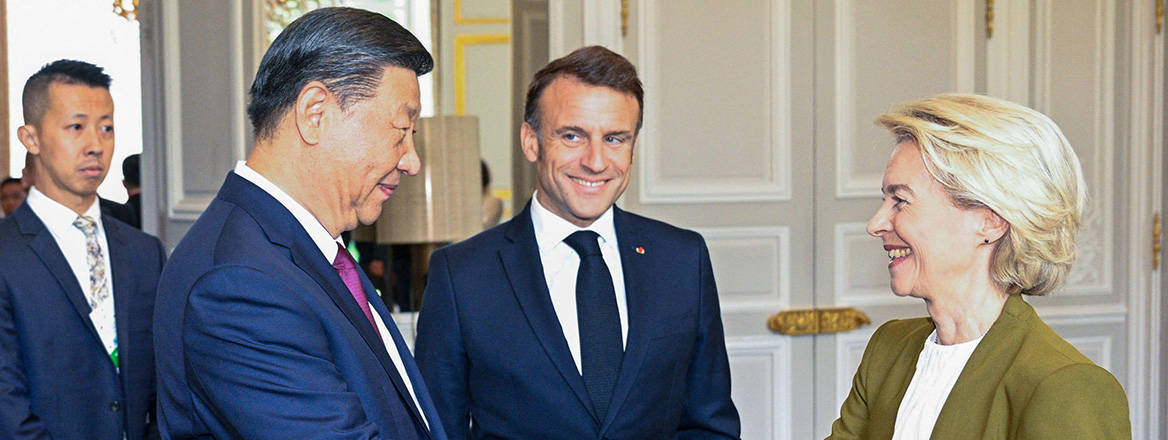
In at least three areas Europe and China’s interests align that harm Russia: preventing Putin from war with NATO, Russian de-industrialisation, and safeguarding NATO.
With the fifth year of the war in Ukraine now underway, it is clear that the conclusion of the war is still a long way off. Russia's continued involvement in the war is undoubtedly due to multifaceted support from China. In other words, and oversimplifying a bit, China has the power to end the war by simply cutting off its aid to Russia. However, this will not happen, as both countries are united by a shared fear that their authoritarian systems will be overthrown by the West, particularly the US. No matter how ridiculous it may sound, this is how both Moscow and Beijing think. Trump’s capture of Maduro and the killing of Ayatollah Khamenei could be seen as examples that support this premise and deepen the alignment between China and Russia. An alliance based on fear that is seen as imminent is stronger than we realise. Therefore, the hope of detaching China from Russia, signalled by the US a few months ago, seems to have been extinguished once and for all, at least in Europe.
Time for a Different Approach
Since February 2022, the EU has taken a principled and sharp approach in talks with China regarding the war in Ukraine. With a particular focus on China’s support for Putin, the EU has urged Beijing to adhere to the UN Charter. However, this has not prompted China to alter its position. As European pressure on China has so far been ineffective, it is time to think outside the box – in ways that may initially seem provocative and unimaginable. Could Europe cooperate with China to weaken Russia, or at least prevent the strengthening of the China-Russia alliance? As driving a wedge between the two is impossible, Europe's priority should be to prevent this alignment from growing stronger, while also looking for ways to weaken it. From this perspective, Europe should try to identify issues that align with the interests of both the EU and China but are unfavourable for Russia. Bearing in mind that China provides significant material support to Russia and plays a negative role as a hard security enabler in Europe, this will not be easy. Nevertheless, there are at least three areas in which Europe could cooperate with China against Russia, or at the very least recognise that China's position is not as detrimental to Europe as it seems.
Russia-NATO War Would Be Catastrophic For China
First of all, there is the supposed war between Russia and NATO. As for China, Ukraine is not considered to be strategically important, as it is seen as falling within Russia’s sphere of influence. The war is also perceived as a proxy conflict. However, the kinetic conflict between Moscow and NATO is definitely something China would like to avoid due to at least three reasons.
Xi does not think that Putin is crazy enough to attack NATO. Therefore, it is in Europe's best interests to convince China that Putin is indeed considering this option
Firstly, Russia’s war with NATO means China loses access to the European market, which it needs due to its economic model in fact being based on constructing domestic supply chains. This is China’s own de-risking process, but due to almost non-existent domestic consumption, overcapacity and overproduction must be exported.
The recent increase in the number of Chinese products entering Europe, including electric vehicles, as well as the growth of the Chinese e-commerce sector, demonstrate that China still relies on the European market. Secondly, the war between Russia and NATO will not be confined to a single region, but could escalate into a third world war, which would consequently spread to the Asia-Pacific. Thirdly, the probability of nuclear weapons being used in the event of war between NATO and Russia is increasing. This would seriously undermine China’s ability to achieve its so-called 'core interests', such as the reunification of Taiwan and control of the South China Sea, through the strengthening of its nuclear deterrent.
However, Europe's problem with this issue is that Beijing does not seem to believe that this war is feasible. In other words, Xi does not think that Putin is crazy enough to attack NATO. Therefore, it is in Europe's best interests to convince China that Putin is indeed considering this option. The best way to achieve this would be to provide consistent evidence of escalating Russian provocations against NATO, such as drone incursions and sabotage of critical infrastructure, to show that Putin is seriously exacerbating the situation. As there is considerable consensus that Xi Jinping plays a mitigating role when Russia threatens to use nuclear weapons, it is in Europe's interest to make him aware that Putin may cross this red line. It is therefore high time for China to mitigate Russia and prevent a third world war.

China is Playing Hardball with Russia by Undermining its Economy
A second potential issue for cooperation is the state of the Russian economy. Although China has been providing economic support to Russia, this assistance is largely motivated by self-interest, as it helps China sustain its export-oriented economy. In other words, Beijing has been flooding the Russian market with finished goods, thereby alleviating some of its overcapacity issues. Furthermore, China is reluctant to invest in Russia, instead taking advantage of the country's position under international pressure to import cheap raw materials. Ultimately, and paradoxically, China’s economic approach to Russia is seriously undermining its economy. Put bluntly, China is weakening the Russian economy through deindustrialisation, which is undoubtedly in the EU’s interest. At the very least, Europe must acknowledge this reality and try to exploit it.
NATO’s Disintegration Will Not Play in China’s Favour
The third potential area of cooperation concerns the further existence of NATO as well as the presence of US troops in Europe. This is an issue on which Chinese and Russian interests definitely conflict. Recent disputes between Trump and Denmark over Greenland have sparked discussions about the potential disintegration of NATO. Despite China's long-standing anti-NATO stance – the country argues that the alliance is a remnant of the Cold War that should have been consigned to history – Beijing, unlike Russia, has no interest in seeing the alliance collapse. The current state of NATO favours China for two reasons. Firstly, unlike the US, other NATO members are not keen to view China as a significant threat to the Alliance. This is the reason why NATO does not see China as a threat but rather a challenge. In this sense, these countries have mitigated the US's efforts to prioritise China on the NATO agenda. Secondly, NATO has been effectively deterring Russia from going to war with European NATO countries.

There are also different perceptions of Russia and China when it comes to the presence of US troops in Europe. While China wants them to remain in Europe, Russia wants them relocated to the Asia-Pacific region or elsewhere. Consequently, Europe should focus more on the advantages for Beijing of a significant US military presence in Europe when engaging with Chinese leaders and also show Beijing that NATO existence in fact plays in China’s favour.
Let’s Play a Smarter Game with China
The turbulent times we are living in require new, non-standard ideas. Europe recognises that China is a significant systemic rival, but it is time to start playing a smarter game with Beijing. This will not be easy, particularly given the issue of European unity. Nevertheless, the growing risk of major conflict in Europe gives the continent the leverage to employ measures that might initially seem unattainable.
Rather than attempting the currently unfeasible task of separating China from Russia, the focus should be on persuading China to shift its attention slightly towards cooperating with Europe. This shift should be subtle enough that Russia barely notices it, yet it should be significant enough to undermine Russia. This approach might convince China that by cooperating more closely with Europe on the aforementioned three topics, Russia would be unable to start a war with NATO — a scenario that would be in Beijing's interests. Furthermore, Putin's inability to initiate a war with the Alliance — indeed, the Third World War — would limit Russia's ability to rebuild its status as a great political power. This would also benefit China, bearing in mind Beijing’s long-term goal of regaining its lost superpower status. Focusing on slight shifts in China's policy towards Russia could rebuild a minimum level of trust with Europe while enabling Beijing to maintain its alignment with Moscow. However, this would require Europe to negotiate skilfully with Beijing and demonstrate its diplomatic prowess.
© Justyna Szczudlik, 2026, published by RUSI with permission of the author.
The views expressed in this Commentary are the author's, and do not represent those of RUSI or any other institution.
For terms of use, see Website Terms and Conditions of Use.
Have an idea for a Commentary you'd like to write for us? Send a short pitch to commentaries@rusi.org and we'll get back to you if it fits into our research interests. View full guidelines for contributors.
WRITTEN BY
Dr Justyna Szczudlik
Guest Contributor


- Jim McLeanMedia Relations Manager+44 (0)7917 373 069JimMc@rusi.org