

Israel's ‘Roaring Lion’: Military Target to Political Decision in Iran

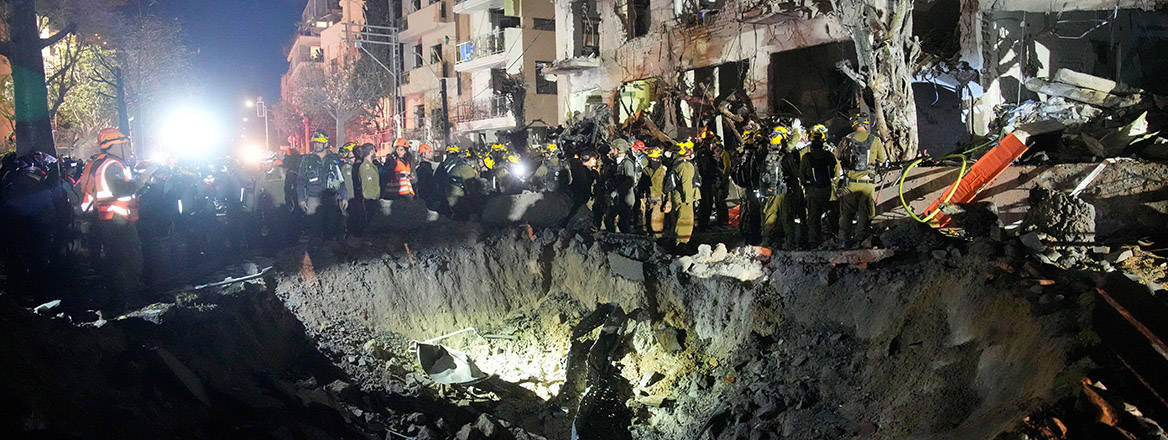
The military operations against Iran have killed Supreme Leader Ali Khamenei and begun a war that threatens to engulf the region, marking Roaring Lion and Epic Fury as significant violent events.
For weeks, the focus was on diplomacy, with the foreign ministers of Iran and Oman making positive signals about the talks with the US. An interim understanding to slow Iran's nuclear activities and avoid confrontation seemed possible. In Israel, however, the focus was different. While monitoring diplomatic efforts, Israeli security highlighted concerns about the gap between potential nuclear agreements and the ongoing threats from Iran, which extend to ballistic missiles and proxy networks. For Israel, a nuclear slowdown that does not address these broader issues will not significantly shift the regional balance, underscoring the rationale behind Operation Roaring Lion.
This is not Israel’s first round against Iran. On 24 June 2025, following the ceasefire that ended the so-called ‘Twelve-Day War’, Prime Minister Benjamin Netanyahu declared victory. Regarding the nuclear programme, he said: ‘We sent it down the drain.’ On ballistic missiles, he declared: ‘We destroyed Iran’s missile production industry.’ Yet the previous war exposed a vulnerability that no public declaration could erase: Israel’s home front is not hermetically sealed. Even interception rates above 90% cannot prevent tragedy when a single missile penetrates. The recent strike in Beit Shemesh, which killed nine civilians, is a reminder that strategic calculations are lived daily by ordinary citizens. This is where the gamble lies.
Before the current escalation, a recent survey by INSS (The Institute for National Security Studies in Israel) indicated that 50.5% of Israelis supported an independent Israeli strike on Iran if the United States refrained, while 72.5% believed Israel’s air defence systems were sufficient in the event of an Iranian attack. Public confidence was strong, but that excitement doesn’t always translate into resilience when faced with ongoing challenges. In Israel, people are starting to wonder not just if Iran's capabilities can be weakened, but how long they can withstand the constant threat of missile attacks. It's a tough reality that weighs heavily on everyone’s minds.
Preparation, Deception and the Opening Strikes
Operation Roaring Lion appears to sit between two interlinked objectives. The first is recognisably military: systematically degrading Iran’s capacity to strike Israel and project force across the region by targeting missile infrastructure, air defences, command-and-control nodes and elements of the nuclear programme. The second is political: pressuring regime cohesion by demonstrating penetrability at the highest levels, imposing costs on decision-makers and widening elite uncertainty. As Israel Hayom, senior Israeli official, told the Israeli media, ‘There was an operational necessity to act now because of what they built in the past six months, driven by their irrational belief that Israel must be destroyed.’
Things then escalated, significantly, when reports emerged of the assassination of Supreme Leader Ali Khamenei. This was not just another military exchange; it represented a major shift in the conflict
The initial attacks showed just how much planning and deception went into them. Reports from Israel highlighted how quickly it targeted key Iranian officials in the first wave, along with carrying out hundreds of strikes across Iran. There was also talk about a leak detailing US F-22 planes at Uvda airbase, which many saw as a way to send a message.
Things then escalated, significantly, when reports emerged of the assassination of Supreme Leader Ali Khamenei. This was not just another military exchange; it represented a major shift in the conflict. Israeli Prime Minister Netanyahu even addressed the Iranian public directly in Persian, promising to create conditions that would allow them to challenge their government, adding a new layer of messaging to the campaign. However, taking out a single symbolic leader does not necessarily mean that the entire regime’s influence will crumble.
Gap Between US and Israeli Risk Appetite and End Goals?
Israel and the United States originally set a goal for the operation to last around 72 hours, hoping to prevent a lengthy conflict that could cause turmoil throughout the region. However, experience in the region shows that wars in this part of the world often do not stick to their predicted timelines. The key issue is not just how long the fighting lasts but whether they achieve clear and meaningful goals. It is also crucial that both Washington and Jerusalem share a common vision of what those goals are.
For Washington, limited degradation and restoration of deterrence may be enough, guided by lessons from Iraq to avoid regime-change entanglements and ground occupations. A rapid air campaign aligns with this strategy. In contrast, Israel may see partial degradation of Iran's capabilities as inadequate if Tehran can quickly rebuild, viewing it as a deferred risk rather than a solution. This presents a potential divergence in their approaches.

If President Trump concludes that objectives have been sufficiently achieved and opts to return to negotiation, Israel would face a strategic dilemma. During the Gaza war the Trump administration allegedly pressured Israel to conclude operations, with one message to Israel reportedly reading: ‘We will abandon you if you do not end the war.’ Whether similar pressure would be applied here remains uncertain. But the precedent matters.
The presence of American F-22 aircraft at Uvda serves both military and political purposes. Israel values strategic autonomy, aiming to defend itself independently. While US military integration enhances Israel's defence, it also limits its unilateral decision-making when the US chooses to shift its focus. This delicate balance between cooperation and sovereignty is central to Israel's defence strategy.
Meanwhile, domestic questioning is beginning to surface. Israeli MK Naama Lazimi stated in Maariv: ‘Alongside wishing success to our security forces . . . we must ask: how, less than a year after being told the threat was removed and the war was a complete victory, are we again at war without any political leader explaining this gap?’ Such voices do not reject the necessity of confronting Iran. They question the clarity of end goals and political transparency.
The Perils of Conflict Contagion
Hezbollah’s entry into the conflict adds a second layer of strain. Northern communities along the Lebanese border fear renewed evacuation; memories of previous displacement remain vivid. For civilians in Kiryat Shmona or Metula, geopolitical escalation translates into the possibility of leaving homes yet again. At the same time, some within Israel’s security establishment may see escalation as an opportunity to degrade Hezbollah more decisively than in past rounds. That opportunity, however, risks multi-front overstretch.
Iran’s broader network remains calibrated but adaptive. Houthi activity in the Red Sea has intensified but has not yet escalated into a comprehensive regional conflict.

Tehran has intensified its pressure in the Gulf, aiming to test the patience and loyalties of its Arab Gulf Cooperation Council (GCC) neighbours. It has targeted US installations and signalled the potential for disruptions in the Strait of Hormuz. Gulf states that host American bases, now face a dilemma. Reports indicate that Saudi Arabia may have encouraged Washington to adopt a confrontational stance, but Gulf states have also incurred costs due to this alignment. They must consider whether deeper security cooperation will enhance their protection or rather increase their vulnerabilities.
For Israel, deeper integration with Abraham Accords partners could reshape the regional balance. But Gulf states are acutely aware that they will live geographically adjacent to Iran indefinitely. Energy stability and economic continuity may ultimately outweigh strategic alignment if escalation continues.
Is Israel Overstretching?
The question of overstretch is no longer abstract. Economically, the costs are measurable. According to Meitav’s chief economist Alex Zabezhinsky, each day of the previous June campaign cost approximately 2.5 billion shekels, 1.7 billion in direct military expenditure and 0.8 billion in lost output, amounting to roughly 30 billion shekels over 12 days. The current campaign has already required billions in additional allocations beyond an already expanded defence budget. Economic strain accumulates quietly before it becomes politically visible.
Public support remains strong, but Israeli political history shows that support is sensitive to duration, civilian casualties and perceived progress. In an election year, political incentives intersect with strategic ones. A decisive blow that reshapes Iran’s posture would strengthen Netanyahu. A prolonged conflict without visible strategic gain could introduce vulnerability.
Strategically, Iran is unlikely to collapse overnight. Regimes of this type are built precisely to absorb leadership losses, replace figures, radicalise narratives and frame attacks as validation of internal consolidation. Reports indicate contingency planning anticipated leadership targeting. Confusing the elimination of a figurehead with systemic collapse would risk analytical error. If the confrontation evolves into a longer cycle of controlled escalation, the central question will not be whether Israel can impose further damage, but whether the cumulative effects of duration alter the strategic environment in ways that diminish the net gains of the operation. Extended conflict carries indirect consequences that go beyond battlefield outcomes.
The next few days will be pivotal, but so will the coming months and years. The broader landscape of regional dynamics and the regional order as we know it will undergo profound shifts.
© Richard Drake, 2026, published by RUSI with permission of the author.
The views expressed in this Commentary are the author's, and do not represent those of RUSI or any other institution.
For terms of use, see Website Terms and Conditions of Use.
Have an idea for a Commentary you'd like to write for us? Send a short pitch to commentaries@rusi.org and we'll get back to you if it fits into our research interests. View full guidelines for contributors.
WRITTEN BY
Alaa Zoubi
Research Assistant, Middle East Security
International Security


- Jim McLeanMedia Relations Manager+44 (0)7917 373 069JimMc@rusi.org