

China’s Grey-Zone and Geoeconomic Coercion Below the Threshold of Conflict

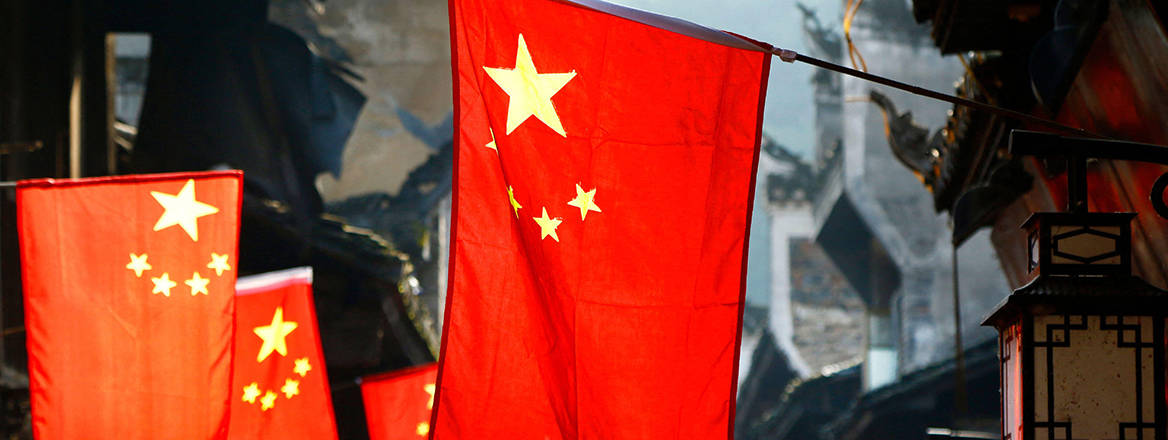
China’s ‘war by other means’ is there to see, if Europe looks past isolated incidents.
For decades, Western planning towards China has been organised around a single dramatic contingency: a cross-Strait invasion, a formal blockade, or an explicit act of war that would trigger an equally explicit response. That contingency still matters, and nothing here argues for complacency about it. But it is increasingly the wrong place to focus all our attention.
Beijing has found something more economical which, with deniability, supports its narratives of being a stable and peaceful superpower. Below the threshold of explicit war, it can alter strategic realities incrementally: ship by ship, licence by licence, narrative by narrative, without ever crossing the threshold that would justify a decisive reaction.
An asymmetric inching strategy that never declares itself as war can nonetheless deliver much of what a war is fought to achieve: eroded sovereignty, dependent adversaries, fractured coalitions and a slow redrawing of who decides what, in contested policy areas and even geographical spaces.
China’s most consequential foreign-policy innovation is the integration of grey-zone coercion and geoeconomic leverage into a single strategy designed to change rivals' behaviour without requiring overt conflict. Each instrument is modest and deniable individually. A coast guard patrol, a withheld export licence, elite capture and a viral rumour: none is a casus belli. Applied together and patiently over a longer timeline, they shift the facts on the ground while making retaliation politically awkward or economically painful for everyone but Beijing.
If the threat is a kinetic war, the answer is deterrence by denial: enough force, positioned far enough forward, to make invasion look unwinnable. If the threat is a continuous campaign of coercion, deterrence by denial remains necessary but falls far short of sufficient
The framing is important because it dictates the response. If the threat is a kinetic war, the answer is deterrence by denial: enough force, positioned far enough forward, to make invasion look unwinnable. If the threat is a continuous campaign of coercion, deterrence by denial remains necessary but falls far short of sufficient. Recently, Chinese coast guard ships operating around Taiwan have been broadcasting messaging to commercial ships claiming jurisdiction of Taiwanese waters. A carrier strike group cannot deter a coast guard cutter, but such recurring incidents are met with condemnation and, at best, similar counteractions. A rare-earth licensing regime, China’s ultimate leverage tool, is not deterred by a mutual defence treaty; and even economic security alliances, apart from Pax Silica, if that can be labelled as such, are non-existent. When China implemented restrictive licensing controls on rare earth elements and permanent magnets in 2025 it triggered severe supply chain bottlenecks for European industries. To secure the necessary approvals to export these critical materials, individual EU embassies and national governments engaged in competitive lobbying with Beijing, often leveraging bilateral ties to secure ‘general licenses’ for their tech sectors. The instruments Beijing now favours are calibrated precisely to fall into the gaps between our red lines: too small to fight over and often targeted to a single party that alone is too weak to fight back. Cumulatively, however, these actions are large enough to reshape the strategic landscape as per Beijing’s design. The temptation is indeed to treat each as an isolated nuisance. That is exactly the misreading the strategy is designed to encourage.
The Maritime Grey Zone: Presence as a Weapon
The clearest example of Beijing’s grey-zone actions is occurring around Taiwan. In early June 2026, Taiwan’s coast guard reported what it described as the first coordinated operation by a Chinese coast guard vessel and an oceanographic survey ship to pressure the Taiwan-controlled Pratas Islands, in the northern South China Sea. The Chinese cutter broadcast that ‘Taiwan’s future lies in national reunification’ and that it was conducting law-enforcement operations. Taipei accused Beijing of manufacturing a ‘false illusion’ of jurisdiction, and the stand-off ran for some 34 hours. Days later, China dispatched its largest patrol vessel to waters east of Taiwan, citing maritime boundary talks between Japan and the Philippines as the pretext – the first time it had used those talks to assert coast guard jurisdiction in a theatre where its enforcement presence had historically been thin.

Overall, China has engaged in sustained grey-zone pressure against Taiwan for roughly a decade, utilising thousands of near-daily non-war military, maritime and cyber incursions. Operations include routine Air Defence Identification Zone flights, China Coast Guard patrols, and civilian drone penetrations aimed at wearing down Taiwan's defences without sparking outright conflict but normalising Chinese presence.
Read these individually; they look like minor episodes: no shots, no casualties, a ship expelled, a stand-off ended. Read them as a series, they are something else. The Pratas Islands sit more than 400 km from Taiwan proper and are lightly defended; by mid-2025 Chinese official vessels had already intruded into their restricted waters on multiple occasions that year, often with their automatic identification systems switched off to frustrate tracking. Each incursion does three things at once. They build operational familiarity for Chinese crews in waters they may one day need to control. They generate a documentary record: patrols, broadcasts, ‘law-enforcement’ actions that can later be cited as evidence of effective jurisdiction. And they normalise a Chinese presence so that the extraordinary becomes routine. The objective is to accumulate a pattern.
The same logic extends beneath the surface. In February 2025, Taiwan detained a Chinese-crewed vessel suspected of severing an undersea communications cable, an act it could not definitively prove was deliberate and therefore could not straightforwardly punish. The Chinese foreign ministry spokesperson told a regular Foreign Ministry briefing that it was not a ‘foreign affairs issue’, indicating that Taiwan is part of China – another step in reinforcing the pattern that Taiwan ‘issues’ are internal.
Ambiguity and deniability are at the core of these operations. A tactic that cannot be cleanly attributed cannot be cleanly answered, and an adversary is forced to choose between over-reaction and compliance.

There is also a rehearsal logic at work. Coast guard ‘law-enforcement’ around an outlying island is the building block of a quarantine, an inspection-and-interdiction regime that could one day be imposed on Taiwan without the legal trigger of a declared blockade. Framing each action as routine policing rather than military coercion is a deliberate exercise in what Chinese strategists call legal warfare: establishing, through repetition, a vocabulary and a body of ‘precedent’ that recasts coercion as administration. The more often Beijing acts as though it already holds jurisdiction, the more it manufactures the appearance of having jurisdiction, and the harder it becomes for others to insist otherwise without appearing to escalate.
Geoeconomic Coercion: The Supply Chain as a Chokehold
What the Coast Guard does at sea, the Ministry of Commerce does in the global economy. Beijing has repeatedly demonstrated its understanding of the value of this position. In two waves in 2025, in April and October, it imposed export controls on rare earths and related critical materials. The second wave was triggered in part by the Dutch government’s intervention in the Chinese-owned chipmaker Nexperia, which it suspended. The mechanism is useful. The controls were temporary and reversible by design: enough to inflict pain and extract concessions, but not so severe as to force Western economies into costly, permanent diversification that would erode China’s leverage for good. This is the geoeconomic equivalent of the grey-zone patrol: pressure applied below the threshold of an outright trade war, calibrated, deniable in intent, and reversible at will. As the EU’s trade commissioner, Maroš Šefčovič, put it after the Nexperia episode, the lesson is that almost anything can be weaponised today.
The risks increasingly exist in the products themselves as well. Modern Chinese electric vehicles are rolling sensor platforms; they include cameras, microphones, continuous connectivity, and software that can be updated from afar, and Western security establishments have begun to treat them accordingly. In the United Kingdom, the Ministry of Defence has restricted vehicles reliant on Chinese technology from sensitive military sites, and major defence contractors have warned staff against pairing personal devices with such cars. The United States moved in January 2025 to restrict Chinese vehicle hardware and software outright on national-security grounds. A dependency built in peacetime becomes a coercive Trojan Horse instrument in a possible confrontation.
The instrument that looks like ordinary foreign investment can, in a crisis, double as a point of leverage, and it is far less visible than a missile battery or a naval flotilla.
The connected-vehicle problem also points to a harder version of the geoeconomic challenge, one that conventional trade defence handles poorly. As Chinese firms respond to tariffs by building plants inside European economies, the competition moves onshore: into local jobs, local supply chains, businesses, and local political constituencies that then acquire a stake in the relationship. A tariff can keep a finished car out; it cannot easily address a factory, a charging network, or a software ecosystem already embedded in the host country. The instrument that looks like ordinary foreign investment can, in a crisis, double as a point of leverage, and it is far less visible than a missile battery or a naval flotilla. This is coercion that arrives wearing the clothes of commerce, which is precisely why it has taken Western capitals so long to name it.
The Cognitive and Diplomatic Front: Shaping the Will to Respond
The maritime and economic instruments work best against a target whose confidence and cohesion have already been softened, and this is the purpose of the third front. Taiwan’s National Security Bureau reported that in 2025 it identified more than 45,000 fake online accounts and over two million pieces of disinformation directed at the island, with content engineered to sow doubt about the United States as a reliable partner, Taiwan’s own military, and its leadership.
The high numbers are partly explained by Chinese cognitive warfare tactics becoming increasingly automated yet also personalised, enabling targeting of certain individuals: leaked documents in 2025 exposed a China-based ‘influence-for-hire’ operation using AI-driven systems to map and target foreign political figures and electorates, including those in Taiwan. The technique need not be sophisticated to be effective; during Taiwan’s 2024 election cycle, a mundane domestic egg shortage was amplified into a referendum on government competence, demonstrating how China’s consistent influence operations can erode trust in institutions, alliance networks and the value of resistance itself.
In the diplomatic arena, the same instinct shows up as ‘coalition management’. Beijing benefits from every inconsistency in American signalling, every division within Taiwanese politics, and every fracture among European capitals over how hard to push back. The aim is to lower the cost of coercion in advance by weakening the target’s will and unity, so that when physical or economic pressure arrives, it meets a society already arguing among itself about whether the pressure is real or fearing economic pain in the form of retaliation. An opponent convinced that resistance is pointless or that their allies cannot be trusted can be demoralised or harmed without direct confrontation.
Policy Implications: Countering Cumulative Coercion
The central task for policymakers is to stop measuring the China challenge solely against the yardstick of invasion and to start measuring it against cumulative coercion.
Cumulative coercion is hard to see precisely because it is spread across domains: a cable cut here, a withheld licence there, a cyber-attack or a disinformation surge elsewhere, rarely assembled into a single picture by any one department
To do this, three priorities follow:
The first priority is resilience and diversification, pursued with more urgency than has been shown so far. Brussels has begun to move: in June 2026, the EU’s Trade Chief Šefčovič called for a dedicated ‘diversification instrument’, modelled on the Energy Union that broke Europe’s dependence on Russian gas, to oblige firms in critical sectors to maintain at least three sources of supply. The bloc has paired this with a critical-minerals understanding with Washington. The pace, however, is still too slow. Diversifying rare-earth processing is a decade-long task, and Beijing’s reversible controls are calculated precisely to deter the sustained investment it would require. Resilience that is loudly talked about but not adequately funded or enforced is not resilience.
The second is matching grey zone with grey zone at sea. Carrier groups do not deter coast guard cutters; persistent presence, adequate coast guard capacity and the systematic documentation and publication of Chinese activity do. Every incursion that is recorded, attributed and made public contributes far less to Beijing’s jurisdictional narrative than one that passes in silence. This approach has been fairly successful in the Baltic Sea, where Russian operations, together with suspected Chinese operations, fell again below the threshold of deniability, but have since considerably decreased after NATO member states increased their presence and surveillance at sea.
The third and decisive variable is the speed and cohesion of the collective response. Cumulative coercion succeeds through hesitation, on the days and weeks when capitals deliberate over whether a given act crosses a line and, if so, what it means. Pre-agreed thresholds, rehearsed joint responses, and a shared willingness to name a strategic campaign as a systematic operation rather than a sequence of accidents would do more to raise the cost of coercion than any single capability. China’s greatest ally is the reflex response that treats each move in isolation.
Underpinning all three is an intelligence task that Western governments have only begun to organise. Cumulative coercion is hard to see precisely because it is spread across domains: a cable cut here, a withheld licence there, a cyber-attack or a disinformation surge elsewhere, rarely assembled into a single picture by any one department. The standing capacity to fuse maritime, economic and information-domain reporting into a continuous assessment, and to publish enough of it to inform allies and the public, is itself a deterrent. What is named can be contested; what is left as background noise is conceded by default.
The European Commission has declared the trade relationship with China unsustainable, the diversification instrument is under active debate and European states increasingly frame Chinese economic dominance as a security matter rather than a commercial one
The most consequential open question is whether Europe will follow analysis with action. The signs are more promising than at any point in a decade: the European Commission has declared the trade relationship with China unsustainable, the diversification instrument is under active debate and European states increasingly frame Chinese economic dominance as a security matter rather than a commercial one. But hardening invites retaliation, and China retains a deep toolkit of export controls, regulatory harassment, and the threat of dumping overcapacity into open markets. European resolve has a history of fading once the immediate crisis passes.
For the United Kingdom, its position and choices are equally pressing. Britain is a destination for Chinese electric vehicles and connected technology, dependent on the same critical-mineral supply chains as its neighbours, and outside the EU’s collective bargaining weight at precisely the moment that weight is being mobilised. The sensible course is to align closely with European hardening where interests converge: on supply-chain diversification, connected-vehicle security standards, and shared attribution of grey-zone activity, while moving faster than Brussels on security measures that fall squarely within national competence.
Summarising all of this reveals a single recognition. What Beijing is conducting is, in effect, war behind the scenes: a campaign whose individual acts remain carefully below the threshold of armed conflict, yet whose intended cumulative effect is the strategic outcome a war would deliver. The absence of a declared conflict is not the absence of conflict. The first task of policy is simply to see the campaign whole – and to respond to its sum, not its parts.
© RUSI, 2026.
The views expressed in this Commentary are the author's, and do not represent those of RUSI or any other institution.
For terms of use, see Website Terms and Conditions of Use.
Have an idea for a Commentary you'd like to write for us? Send a short pitch to commentaries@rusi.org and we'll get back to you if it fits into our research interests. View full guidelines for contributors.
WRITTEN BY
Dr Sari Arho Havrén
RUSI Associate Fellow, RUSI International


- Jim McLeanMedia Relations Manager+44 (0)7917 373 069JimMc@rusi.org