

25 Years After 9/11. The Next Global Shock Could be Infinitely Worse

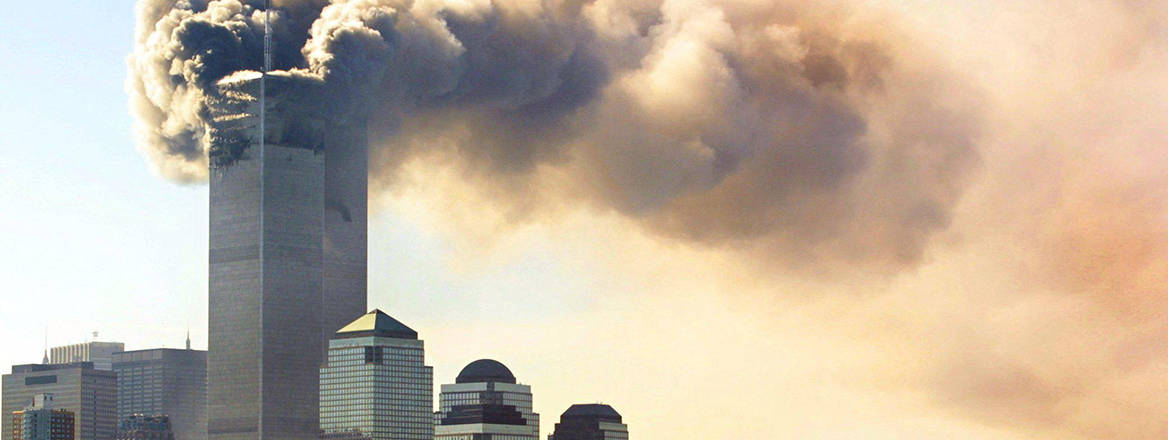
The next global shock may be the use of nuclear weapons assisted by the more casual attitudes of less responsible world leaders and the lack of popular understanding and fear.
Journalists around the world are already working on their articles for the 25th anniversary of 9/11 this autumn. Most assume that the focus should be on Afghanistan and the renewed threat there from ISIS-K (the Khorasan province of the Islamic State terrorist group) and from the remaining elements of Al Qaida (AQ). A United Nations report alleges that both groups are surviving if not prospering in Afghanistan. But history tends not to repeat itself and, although President Biden’s evacuation of Afghanistan following President Trump’s disastrous Doha Agreement with the Taliban was a costly error, there are no signs that either group could carry out an attack of the magnitude of that terrible day in New York and Washington.
The Scourge of Terrorism is Much Closer to Home
The scourge of terrorism will, of course, continue, and nowadays it is much closer to home, both in West Africa and inside our own countries where isolated young men self-radicalise in their bedrooms and then take a kitchen knife or the family car and attempt to do their worst.
In the 1990s Western governments worried a great deal about chemical and biological (CB) terrorism, particularly after the Aun Shinrikyo attack on the Tokyo subway. In London there was concern about a mass casualty attack on the Underground. But a CB attack is extremely hard to undertake and that very complexity means that security services should become aware of planning.
Since 9/11 security services have become much more skilled at monitoring terrorist preparations. No agency on earth can expect to surveil every disgruntled loner (nor should that be the expectation) but Artificial Intelligence (AI) will greatly assist services around the world, flagging, for example, unusual travel patterns and the purchase of precursor materials.
Indeed, AI would surely have ‘joined the dots’ prior to 9/11 after the British had warned of attacks in New York involving the hijacking of airliners by AQ and the Americans had other evidence including unusual flying school requests.
So, if not terrorism, then what is going to provide the next global shock to rival Pearl Harbour and 9/11? In the mid-2000s the assumption was that it would be a cyber-attack. Richard Clarke, a special advisor on cyber security at the White House, wrote Cyber War (Harper Collins, 2010) which evoked an image of modern cities reduced to quasi stone age existence with air traffic control and hospitals paralysed, banks and financial transactions frozen, heating and air conditioning no longer functioning and fuel quickly running out. Cyber defences are now much stronger although AI will provide a boost to the capabilities of both attacker and defender. This is at the heart of the current debate about Anthropic’s Mythos.
It is only a matter of time before we see drones used in a domestic context, perhaps against critical infrastructure such as nuclear reactors
Covid 19 could be viewed as the successor to 9/11 in terms of global shock. It was, of course, a tragic event and there is a danger of seeming callous when observing that the World Health Organisation estimated that 0.09% of the global population died (although the real figure may be slightly higher). By contrast the Black Death between 1347 and 1352 is estimated to have killed 40% of Europe’s population. However, the impressive and fast development of vaccines during Covid and the value of AI in shortening timelines for vaccine development and testing suggests that another pandemic might be shorter and therefore less devastating. On the flip side, malign actors could use AI to develop more virulent diseases.
The extraordinary developments in warfare in Ukraine since 2022 should make governments and populations worry about the use of drones closer to home. They will surely become the routine tools of rogue states, terrorists and assassins. It is remarkable that the first (and so-far only) drone assassination attempt took place back in 2018 against President Maduro of Venezuela, since when Ukrainian development of drone technology has been exponential. It is only a matter of time before we see them used in a domestic context, perhaps against critical infrastructure such as nuclear reactors. All countries need to prioritise counter drone systems, and some (particularly UK) require an emergency programme to develop a coherent missile defence capability.
A Willingness to Play Nuclear Roulette
However, by far the greatest danger of a massive global shock would come from the use of a nuclear weapon in anger for the first time since 1945. From 1945 to 1990 the world lived in dread of nuclear war. Films like The War Game (1966), Fail Safe (1964) and even the darkly comedic Dr Strangelove (1964) achieved genuine popular traction. Hot lines and fail-safe mechanisms were devised to minimise the danger of accidental war. Politicians liked to believe that the non-use of these weapons was due to effective mutual deterrence but, in truth, there were too many near-misses (between 9 and 22 according to a scan of reputable think tanks) for that to be a convincing argument. 45 years of nuclear non-use may sound impressive but barely moves the needle when thinking of the future of the planet and humanity.

Since the Cold War, that fear of nuclear weapons seems (for no good reason) to have largely evaporated at a popular level, and world leaders now make threats in a relatively casual manner. One must aim off for deterrence, requiring leaders to assert their willingness to use such weapons in extremis, but President Trump, President Putin, India’s Prime Minister Modi and Pakistani Field Marshal Asim Munir have all been quoted indicating a willingness to use nuclear weapons in less than extreme circumstances.
Furthermore, there has been a willingness to play nuclear roulette by firing missiles and drones near nuclear facilities. The Russian did this before seizing the Zaporizhzhia power plant and have subsequently fired missiles near Chernobyl. Iran appears to have targeted sites in the vicinity of the Dimona nuclear facility and the Indians, on 10 May 2025, deliberately hit Pakistani bases (such as Sargodha) where nuclear capable aircraft are known to be based.
In the 2000s, much thought was given to preventing nuclear weapons falling into the hands of terrorists, with a particular worry about Pakistan’s nuclear arsenal being accessed by AQ or other regional groups. Both Presidents Bush (junior) and Obama believed this to be a top global threat, Obama famously insisted that ‘The single biggest threat to U.S. security, both short term, medium term and long term, would be the possibility of a terrorist organization obtaining a nuclear weapon.’ Fortunately the dual concerns about Pakistan ‘descending into chaos’ and its army becoming Islamist have since receded.
Populist Leaders Cannot be Trusted with Weapons of Such Power
Concerns about rogue Islamists have been replaced by a wider concern that increasingly populist world leaders cannot be trusted with weapons of such devastating power. Since the Millennium, there has been a tangible decline in the standards of global governance. Just compare the key leaders of at the time of the 1962 Cuban Missile crisis (Kennedy, Khrushchev, MacMillan and De Gaulle) with some of those controlling nuclear arsenals today (Trump, Putin, Netanyahu, Modi, Asim Munir, Xi Jinping and Kim Jong-un). The former four had witnessed world wars at close quarters.

In academic circles there is much debate about the dangers of AI being used inside nuclear decision-making with a particular insistence that there must always be a ‘human in the loop’. Faster missiles lead to shorter decision times, making serious and informed human consultation virtually impossible. A retired senior Pakistani officer told the author that Pakistan had 25 seconds to consider the implications of the eleven Indian cruise missiles launched against its air bases on 10 May 2025. (A quick check of AI gives a figure of 29.77 seconds). At the time Prime Minister Shehbaz Sharif was asleep. The temptation to delegate decision-making to AI could be hard to resist. However, the AI debate is of secondary importance. AI might eventually mitigate human fallibility, and anyway it hardly matters if the world is destroyed by a bad decision taken by AI or an error-prone human.
The use of even one nuclear weapon might be enough to shake the world out of its astonishing apathy about the nuclear threat. Rutgers University demonstrated that a war between India and Pakistan involving 150 nuclear warheads would lead to over a hundred million deaths and a climatic and environmental disaster leading to mass global starvation. A report submitted to the 10th Review Conference of the Nuclear Non-Proliferation Treaty in 2021 reiterated these risks and then, bizarrely, called for more research into the effects of such weapons (as if there was not enough evidence) and questioned their legality under International Humanitarian Law (IHL) – as if any user is going to summon their legal advisers.
One thing is for sure. The use of modern nuclear weapons would relegate 9/11, Pearl Harbour and Covid 19 (and even Hiroshima and Nagasaki) to such a distant category of global shock that the very comparison would seem absurd.
Remember March 2020 when nobody could believe that the world was locking down due to a pandemic. A nuclear war will not be about an inability to join dots but another massive failure of human imagination.
© RUSI, 2026.
The views expressed in this Commentary are the author's, and do not represent those of RUSI or any other institution.
For terms of use, see Website Terms and Conditions of Use.
Have an idea for a Commentary you'd like to write for us? Send a short pitch to commentaries@rusi.org and we'll get back to you if it fits into our research interests. View full guidelines for contributors.
WRITTEN BY
Tim Willasey-Wilsey CMG
RUSI Senior Associate Fellow, RUSI International


- Jim McLeanMedia Relations Manager+44 (0)7917 373 069JimMc@rusi.org