

Russia's Nuclear Deterrent and Its Weapons Procurement

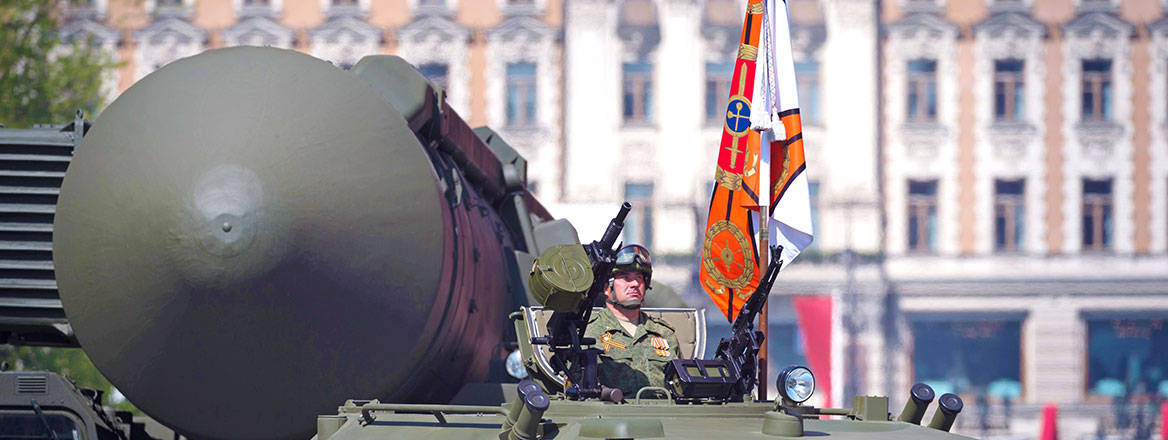
This paper analyses how Russia's nuclear arsenal and doctrine are evolving, focusing on qualitative improvements and offensive capabilities amid strategic constraints.
Overview
This paper provides a decisive analysis of how Russia's nuclear deterrent and weapons procurement strategy are set to evolve, shaping the future of global security and strategic stability.
Drawing on Russian doctrinal preferences, material constraints and evolving threat perceptions, the study finds that Russia will prioritise qualitative improvements and offensive capabilities over expanding the size of its nuclear arsenal. The research highlights a likely shift towards an offence-dominated posture, with a focus on early-strike options and advanced counterspace operations, while the relative importance of mobile and submarine-based systems will diminish.
Key Findings
- Qualitative modernisation: Russia will concentrate on enhancing the accuracy, penetration and survivability of silo-based ICBMs (such as the RS-28 Sarmat), rather than increasing overall arsenal numbers.
- Offensive and early-strike capabilities: Expect greater emphasis on systems that enable prompt response and breakthrough operations, including hypersonic glide vehicles and multi-vector attack options.
- Counterspace operations: Russia is likely to invest in advanced counterspace tools – such as directed-energy weapons and space-based electronic warfare – to degrade adversary ISR and missile defence systems.
- Reduced role for mobile and submarine-based systems: Mobile transporter erector launchers and ballistic missile submarines will become less central, serving mainly as a retaliatory or withhold capability rather than the core of deterrence.
- Resource-driven choices: Material and industrial constraints will limit large-scale expansion, driving Russia to prioritise multifunctional systems that support both nuclear and conventional roles.
This analysis equips defence and security professionals with actionable insights into Russia's strategic priorities, procurement constraints and the anticipated trajectory of its nuclear forces.
Register or log in to continue reading
Account creation is quick, free and gives access to all RUSI research and more
- FREE account
- One-time set-up
- Easy to manage
Available Downloads
WRITTEN BY
Dr Sidharth Kaushal
Senior Research Fellow, Sea Power
Military Sciences


- Jim McLeanMedia Relations Manager+44 (0)7917 373 069JimMc@rusi.org