

Prototype Warfare in the Maritime Domain: Opportunities and Approaches

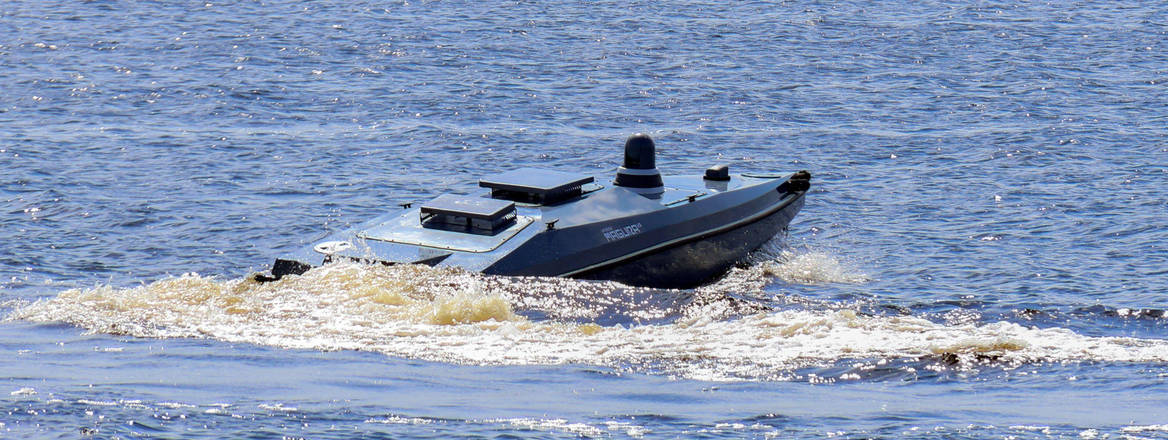
This research paper explores the transformative concept of prototype warfare in the maritime domain.
Overview
This research paper discusses the concept of maritime prototype warfare, emphasising its potential to address the Royal Navy’s strategic challenge of managing increasing demands with limited resources. By advocating for operational and commercial innovation, a shift in defence capability development is proposed, where militaries act as active partners in the iterative refinement of immature systems rather than passive consumers of finished products.
Key Recommendations
- Adopt prototype warfare: Field early-stage prototypes in operationally realistic tests to enable rapid adaptation, iterative refinement and value generation through operational use and feedback.
- Embrace a new approach to financing prototyping: A number of private sector sources, including family wealth offices, can fund low Technology Readiness Level technologies. Rather than acting as a financial backer of technology development, defence should act as a coproducer of intellectual property which can only be generated through operator use.
- Enhance state involvement in scaling: Consider partial state ownership of production infrastructure to accelerate scaling and ensure mass production of mature prototypes.
- Embrace heterogeneity: Develop a diverse mix of modular, off-board and adaptable capabilities to manage uncertainty and counter adversary measures effectively.
- Reform procurement processes: Prioritise learning, speed and iteration over traditional risk minimisation and efficiency-focused approaches.
The paper concludes that maintaining maritime advantage in an era of rapid technological change requires a fundamental shift in defence capability generation. By fostering a synergy between private innovation and state-supported scaling, the Royal Navy can build a future-ready, adaptable and resilient maritime force.
This publication is essential reading for policymakers, defence professionals and industry leaders seeking to understand and implement innovative approaches to capability development in the maritime domain
Register or log in to continue reading
Account creation is quick, free and gives access to all RUSI research and more
- FREE account
- One-time set-up
- Easy to manage
Available Downloads
WRITTEN BY
Dr Sidharth Kaushal
Senior Research Fellow, Sea Power
Military Sciences


Professor John Louth
Guest Contributor
- Jim McLeanMedia Relations Manager+44 (0)7917 373 069JimMc@rusi.org