

Air Manoeuvre Forces in European Large-Scale Combat Operations

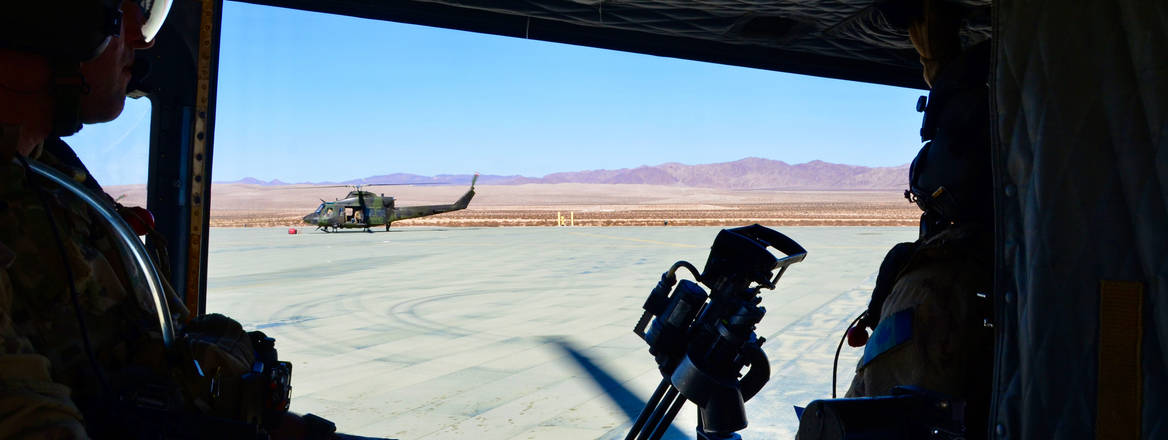
Exploring the evolving role of air manoeuvre forces in European combat, this paper examines their utility, challenges and adaptation to modern threats.
Overview
The density and complexity of the emerging battlefield is making it harder for military units to manoeuvre. Air Manoeuvre - the movement of troops by air for advantage - offers a means of rapidly crossing contested terrain. But the threats to air manoeuvre troops are increasing. This paper examines how European armies can best prepare air manoeuvre forces to maximise their effectiveness and mitigate emerging risks to a high cost but high pay-off component of the force.
Key Recommendations
- Air manoeuvre forces should be commanded at the corps echelon to be best able to integrate their plans with air operations and joint fires, enabling insertion.
- Air manoeuvre forces should have organic UAV capabilities to both suppress threats during insertion and subsequently to resupply inserted troops.
- Air manoeuvre forces should increase their ability to carry out precise indirect fire engagements to be able to deny objectives without having to physically occupy them.
- Air manoeuvre force will need deployable counter-UAV systems and resilient communications with the main body in a contested electromagnetic environment.
- Air manoeuvre forces need to be able to operate at battalion scale and above and retain excellence at infantry drills. Deploying too few infantry is a common cause of failure in air manoeuvre operations.
The paper argues that air manoeuvre forces offer commanders an almost unique ability to race the enemy to seize vital ground, reposition forces to counter enemy success, assist ground manoeuvre forces in crossing complex terrain, and shaping enemy calculations. There are, however, trade-offs between these offers and NATO states will need to decide whether these troops are deployed early to maximise deterrence - fixing them in place - or held in reserve.
Register or log in to continue reading
Account creation is quick, free and gives access to all RUSI research and more
- FREE account
- One-time set-up
- Easy to manage
Available Downloads
WRITTEN BY
Dr Jack Watling
Senior Research Fellow for Applied Military Sciences
Military Sciences


Robert Tollast
Research Fellow, Land Warfare
Military Sciences

Nick Reynolds
Research Fellow, Land Warfare
Military Sciences

- Jim McLeanMedia Relations Manager+44 (0)7917 373 069JimMc@rusi.org