

Illicit Timber Flows from Miombo Woodlands: The Tanzania Nexus

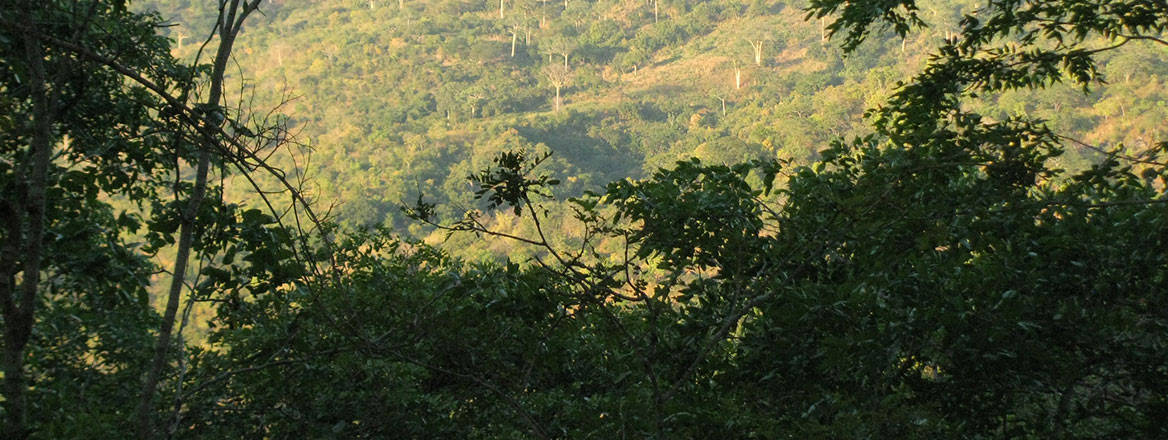
This paper examines Tanzania's role in illicit miombo timber flows, associated risks and policy responses, highlighting gaps and opportunities for effective action.
Overview
Illicit timber flows linked to Tanzania are a security, governance and economic threat that fuel organised crime, weaken state revenue and place the miombo woodlands under mounting pressure.
This paper examines Tanzania's role as both a source and transit hub for high-value miombo hardwoods moving through regional and global supply chains. It finds that corruption, document fraud, weak traceability at the point of harvest and inconsistent cross-border controls allow illegally sourced timber to be laundered into legitimate trade. These flows can converge with wildlife trafficking, minerals crime and, in some contexts, arms, drugs and conflict financing.
Tanzania has strengthened its response through tougher economic-crime and anti-money laundering provisions, alongside the Timber Tracker system for domestic transport monitoring. Yet enforcement often remains focused on low-level harvesters and drivers rather than the transnational networks, facilitators and financial flows that enable large-scale timber crime. The paper argues that treating illicit timber as a serious organised economic crime is essential to protecting forests, public revenues and regional security.
Key Recommendations
- Follow the money: Conduct joint, intelligence-led financial investigations into timber cases to identify illicit traders, facilitators, assets and illicit proceeds.
- Close legal loopholes: Remove the Forest Act's compounding provision, which can prevent cases from progressing into full criminal and financial investigations.
- Improve traceability: Strengthen oversight at harvesting sites and expand the use of digital tracking, species identification, geospatial tools and other monitoring technology.
- Target cross-border risks: Deepen information sharing and harmonise customs and forestry controls with neighbouring states and Zanzibar.
- Strengthen community incentives: Simplify and decentralise permits for small-scale harvesters and expand community-based forest management so local communities benefit from legal, sustainable forestry.
- Increase market accountability: Require stronger import due diligence in destination markets and publish species-specific trade data to expose irregularities and trade discrepancies.
The paper highlights that effective action against illicit timber trade in Tanzania can deliver both conservation gains and wider defence and security benefits by disrupting the criminal networks that profit from natural-resource exploitation.
Acknowledgements
This paper was funded by a grant from the United States Department of State Bureau of International Narcotics and Law Enforcement Affairs. The opinions, findings, and conclusions stated herein are those of the author and do not necessarily reflect those of the United States Department of State.
The author would like to thank Anne-Marie Weeden for conducting much of the background research that informed this paper, as well as Mark Williams and Irene Dagradi for their support with the research. The author is also grateful to TRAFFIC's team in Tanzania for their help convening the workshop, and to the workshop and interview participants in Tanzania for their valuable contributions and insights.

Register or log in to continue reading
Account creation is quick, free and gives access to all RUSI research and more
- FREE account
- One-time set-up
- Easy to manage
Introduction
The miombo woodlands are a vast forest ecosystem spanning nearly 2 million km² across Southern Africa, including parts of Angola, the Democratic Republic of Congo (DRC), Malawi, Mozambique, Tanzania, Zambia and Zimbabwe. They are rich in biodiversity, housing species including iconic megafauna and about 8,500 plants, of which 54% are endemic. The woodlands support the livelihoods of an estimated 100 million rural and 50 million urban people, supplying wood fuel and charcoal, food, medicine and grazing resources. By storing significant quantities of above-ground biomass, they also play an important role in carbon sequestration, making their protection and restoration essential for meeting global emission reduction targets.
Within the woodlands, miombo hardwoods are increasingly occupying a significant role in global timber markets, particularly in China, where a surge in demand for 'low end class' African rosewood species to supply Chinese hongmu furniture markets1 has led to significant pressure for illegal logging in large swathes of miombo woodlands. This has resulted in recent global interventions to enhance the protections and trade controls for relevant miombo hardwoods under Appendix II of the Convention on International Trade in Endangered Species of Wild Fauna and Flora (CITES).2
As an important source and transit country for international flows of miombo hardwoods, Tanzania has the potential to benefit from sustainable trade, which offers opportunities for economic growth and job creation. However, criminal infiltration and exploitation of the timber sector threaten to undermine this potential in various ways: by driving unsustainable extraction; by diverting financial benefits away from communities and towards corrupt facilitators, foreign beneficiaries and threat actors; and by intersecting with other illicit activities. Despite this, there has been limited systematic research into the nature of the threat which illicit timber flows pose to Tanzania. Existing studies are either outdated or focus on other miombo hardwood producer countries.
This paper fills that gap by reviewing existing evidence of Tanzania's role in regional and international illicit timber flows and interrelated governance and security risks, as well as Tanzania's progress to date in countering the threat. The paper identifies areas that require further research and policy attention.
The first section explores Tanzania's position in international flows of miombo hardwoods. The second section examines risks of corruption and fraud, illicit finance and other converging criminal economies linked to illicit timber flows in Tanzania, such as illegal wildlife trade, minerals crime, arms and drug trafficking and labour abuses. The third section considers Tanzania's legal and enforcement response to timber offences to date and identifies opportunities for a strengthened response. The conclusion offers policy recommendations for Tanzanian policymakers, management authorities and law enforcement and justice agencies, as well as international trade and development partners.
Timber Flows In and Out of Tanzania
Tanzania as a Source Country of Hardwood
The miombo woodlands cover much of Tanzania's central, western and southern plateau, comprising about 90% of its forested area, or 44.6 million hectares (see Figure 1). When timber industry revenues and ecosystem services are considered (such as carbon storage, water regulation, soil quality and pollination), the country's forests are estimated to comprise 20% of Tanzania's GDP, underpinning other key sectors such as energy, agriculture and tourism.
WRITTEN BY
Jennifer Scotland
Research Fellow
Organised Crime and Policing


- Jim McLeanMedia Relations Manager+44 (0)7917 373 069JimMc@rusi.org
Footnotes
Hongmu literally means 'red wood' and refers to luxury furniture in China made from high-quality tropical hardwoods. See Environmental Investigation Agency, 'The Hongmu Challenge', 11 January 2026, https://eia-international.org/report/the-hongmu-challenge/, accessed 3 September 2026.
CITES (Convention on International Trade in Endangered Species) is a global treaty that regulates international trade of endangered animals and plants. A CITES Appendix II listing obliges signatory governments to only permit commercial trade if it is assessed to not pose a threat of extinction to the species and is accompanied with proof of legal provenance.
Interviews with subject matter experts in Tanzania, in person, 10 June 2026.
Ibid.
Interviews with subject matter experts in Tanzania, in person, 10 June 2026.
Validation workshop, Dodoma, Tanzania, 8 June 2026.
Interviews with subject matter experts, online, 8 and 20 May 2026.
Ibid.
Validation workshop, Dodoma, Tanzania, 8 June 2026.
Interview with subject matter expert, Tanzania, in person, 10 June 2026.
Ibid.
Interview with subject matter expert, online, 23 June 2026.
Ibid.
Interview with subject matter expert, online, 20 May 2026.
Ibid.
Validation workshop, Dodoma, Tanzania, 8 June 2026; interview with subject matter expert, Tanzania, in person, 10 June 2026.
Interview with subject matter expert, Tanzania, in person, 10 June 2026.
Interview with subject matter expert, online, 8 May 2026.
Interview with subject matter expert, online, 23 June 2026.
Validation workshop, Dodoma, Tanzania, 8 June 2026.
Interviews with subject matter experts, online, 22 May and 23 June 2026.
Interview with subject matter expert, online, 6 May 2026.
Validation workshop, Dodoma, 8 June 2026.
Interview with subject matter expert, online, 22 May 2026.
Interviews with subject matter experts, online, 6 May, 20 May and 22 May 2026.
Interview with subject matter expert, Tanzania, in person, 10 June 2026.
Interview with subject matter expert, online, 22 May 2026.
Interviews with subject matter experts, online, 20 May and 22 May 2026; validation workshop, Dodoma, Tanzania, 8 June 2026.
Interviews with subject matter experts, online, 20 May and 23 June 2026; interview with subject matter expert, Tanzania, in person 10 June 2026.
Interview with subject matter expert, online, 20 May 2026.
Validation workshop, Dodoma, Tanzania, 8 June 2026.
The Proceeds of Crime Act (Cap. 256) defines a serious offence as any offence incurring a punishment of either death or over 12 months' imprisonment and 'any other offence in which property has been used or proceeds generated or benefit derived'.
Validation workshop, Dodoma, Tanzania, 8 June 2026.
Interviews with subject matter experts, online, 6 May, 20 May and 22 May 2026.
Interview with subject matter expert, online, 20 May 2026; validation workshop, Dodoma, Tanzania, 8 June 2026.
Validation workshop, Dodoma, Tanzania, 8 June 2026.
Ibid.
Interview with subject matter expert, online, 23 June 2026.
Validation workshop, Dodoma, Tanzania, 8 June 2026.
Interviews with subject matter experts, online, 20 May and 23 June 2026.
Interview with subject matter expert, online, 23 June 2026.