

The Colombia–Ecuador Organised Crime and Security Nexus

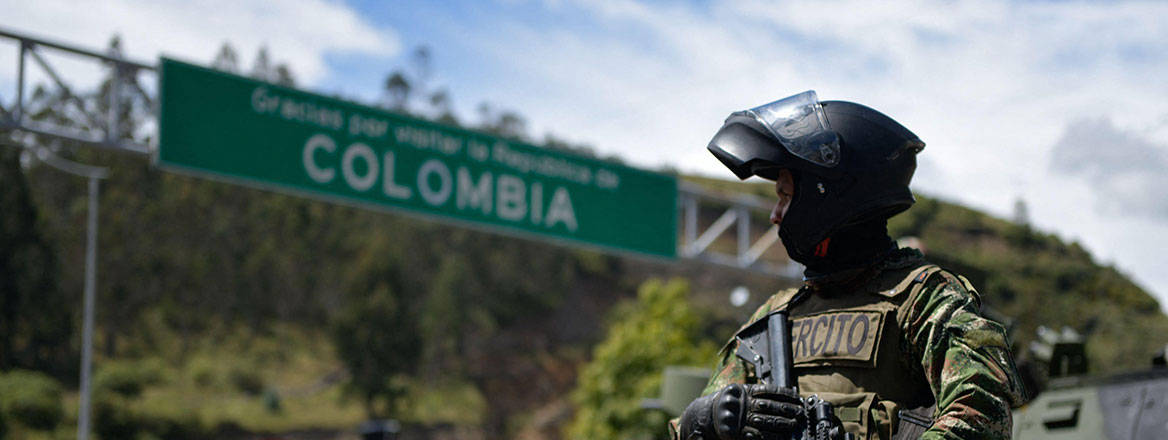
Colombia's changing criminal landscape has turned Ecuador into a global drug trafficking hub, driving violence and demanding urgent, coordinated security solutions.
Overview
This paper provides a critical analysis of how Colombia's evolving criminal landscape has transformed Ecuador into a central hub for global drug trafficking, driving unprecedented violence and challenging regional security and governance.
Drawing on expert workshops and extensive research, the authors detail how the fragmentation of Colombian armed groups and the resulting spillover have exposed deep institutional vulnerabilities in Ecuador. The study highlights the failure of militarised enforcement alone and underscores the urgent need for a coordinated, long-term strategy to address the intertwined security threats facing both countries.
Key Recommendations
- Establish a Joint Intelligence and Operations Centre for the border region to enable real-time data sharing and coordinated field operations across maritime, air and land domains.
- Formalise a structured capacity-building programme for security forces, promoting two-way knowledge exchange on counterinsurgency, counternarcotics, cyber intelligence and port security.
- Expand bilateral cooperation to include civilian institutions, think tanks and universities for knowledge generation, policy development and public accountability, potentially through trilateral partnerships with international organisations.
- Invest in building trust and social legitimacy of security forces by engaging youth and underrepresented communities, strengthening anti-corruption measures and implementing transparent internal controls.
- Embed security cooperation agreements within long-term strategic frameworks with bipartisan support to ensure continuity beyond short-term political shifts.
This paper is essential reading for defence and security professionals seeking actionable insights into the Colombia–Ecuador organised crime nexus and practical pathways to restore state legitimacy and disrupt transnational criminal networks.
Register or log in to continue reading
Account creation is quick, free and gives access to all RUSI research and more
- FREE account
- One-time set-up
- Easy to manage
Introduction
The expansion of organised crime in Ecuador over the past decade is intrinsically linked to Colombia’s decades-long struggle against illicit economies and armed conflict. The porous border connecting the two countries has long allowed Colombia’s insecurity to spill into Ecuador, with Colombian insurgent groups taking refuge in Ecuador's border regions. Yet, significant developments in Colombia resulting from the demobilisation of the Fuerzas Armadas Revolucionarias de Colombia (the FARC, or the Revolutionary Armed Forces of Colombia) in 2017 have reconfigured the regional criminal landscape, turning Ecuador from a peripheral actor in the drug trade into a central node in global trafficking routes. As local groups have grown in influence, they have adopted strategies of territorial consolidation, criminal governance and state capture previously seen in Colombia and other parts of the region.
This evolution and entrenchment of Ecuador's organised crime groups – and the unprecedented violence that has accompanied them – has exposed deep structural weaknesses in Ecuador. As a result, Ecuador currently faces a complex set of challenges to governance, security and social cohesion that mirror aspects of the experience of its neighbour. Both countries have resorted to use of the military to counter these threats, without lasting success. The failure of militarised domestic enforcement approaches, combined with limited bilateral coordination, demonstrates the urgent need for a regional, integrated response to organised crime that goes beyond interdiction and tackles the structural drivers of organised crime across the two countries. This paper argues that addressing the resulting violence and instability demands a coordinated bilateral approach between Colombia and Ecuador aimed at rebuilding state legitimacy, disrupting illicit financial flows and providing viable economic alternatives for vulnerable populations at the shared border.
The first section of this paper explores the interlinked nature of the criminal and security challenges experienced in Colombia and Ecuador and shared challenges such as the fragmentation, evolution and diversification of criminal groups. The third section outlines the state of bilateral security coordination between the two countries and the constraints that prevent more meaningful cooperation. The report concludes by proposing avenues towards a more integrated, holistic and long-term security strategy that fosters cross-border knowledge sharing and contributes to more informed, evidence-based policy decisions and more effective security governance in Ecuador and Colombia.
Organised Crime Spillover from Colombia into Ecuador
Colombia is the largest producer of cocaine hydrochloride globally, accounting for more than two-thirds of global coca cultivation and between half and two-thirds of global cocaine production. Ecuador's shared 600 km land border with Colombia, combined with its Pacific coastline, makes the country a natural extension of Colombian cocaine trafficking routes. As such, Ecuador has long served as a transit route for international cocaine flows. However, workshop participants for this study observed that since the turn of this decade, spillover effects from shifts in Colombia's organised crime dynamics have transformed Ecuador from a peripheral player into a central export hub in global cocaine supply chains.
From 2019 to 2024, there was a 4,817% increase in cocaine seizures at Ecuador’s ports, from 6 tonnes to 295 tonnes, reflecting improved capacity to detect drugs but also potentially greater flows. A World Customs Organization report found that 30% of cocaine detected in shipping containers globally in 2023 and 2024 (approximately 385 tonnes) originated from an Ecuadorian port of departure, demonstrating the country's dominance in international cocaine supply chains. In Europe, this proportion is even higher, with up to 80% of its cocaine reportedly transiting through Ecuador. Figure 1 illustrates that the share of cocaine seized in European seaports arriving from Ecuador far exceeds that arriving from other departure hubs in the region.
WRITTEN BY
Jennifer Scotland
Research Fellow
Organised Crime and Policing


Dr Carlos Solar
Former Senior Research Fellow, Latin American Security

Elijah Glantz
Research Fellow
Organised Crime and Policing

- Jim McLeanMedia Relations Manager+44 (0)7917 373 069JimMc@rusi.org
Footnotes
'Eudaemonic legitimation' is a political concept whereby governments or non-state actors justify their right to rule based on their tangible performance, and the material benefits provided for their populations.