

Aid Cuts, Fragility and the Costs to UK Security

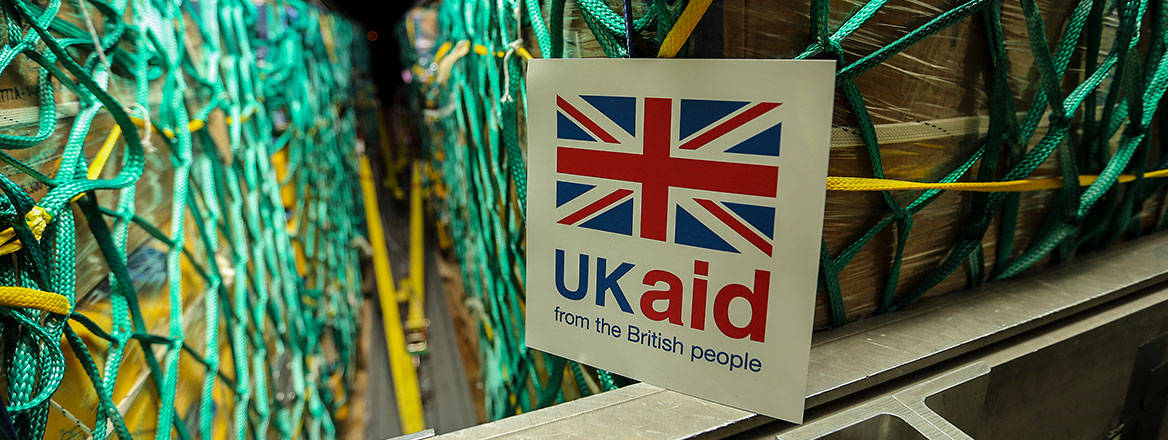
UK aid cuts risk deepening instability in fragile and conflict-affected African states creating growing security, economic and influence costs for Britain.
Overview
UK aid cuts risk deepening instability in fragile and conflict-affected African states, with growing costs for British security, trade and international influence. The paper finds that abrupt reductions in humanitarian, health, peacebuilding and governance support can compound conflict, displacement and economic shocks, while weakening the local networks and partnerships on which effective UK engagement depends.
This is a false economy: prevention is cheaper and more effective than responding after crises escalate. Restoring resources matters, but so do a coherent long-term strategy, reliable partnerships and locally led delivery.
Key Recommendations
- Protect preventive funding for peacebuilding, conflict prevention, governance, health and humanitarian resilience.
- Align development, diplomatic and security priorities in a clear UK strategy for fragile states.
- Provide predictable, flexible finance for local partners and crisis response.
- Strengthen grassroots civil society and local leadership, particularly in marginalised and hard-to-reach communities.
- Improve cross-government capacity and coherence, retaining expertise and reducing policy uncertainty.
- Support debt relief, multilateral reform and sustainable financing for fragile states.
The paper's central message is clear: a more strategic, reliable and locally grounded UK aid approach is essential not only for human security in fragile states, but also for protecting Britain's long-term security, prosperity and international influence.
Register or log in to continue reading
Account creation is quick, free and gives access to all RUSI research and more
- FREE account
- One-time set-up
- Easy to manage
Introduction
The gutting of the US Agency for International Development (USAID), and concurrent cuts to UK and European development budgets, have precipitated what some consider a 'generational collapse' in foreign aid. Official Development Assistance (ODA) fell by 23.1% (or $50 billion) in 2025, depriving 64 million people of emergency relief, while longer-running interventions – from poverty reduction to peacebuilding and healthcare – have been disrupted, scrapped or shrunk. At the same time, conflict, climate shocks, mass displacement, economic pressures and disease are placing exponential strain on residual systems, posing a 'threat to collective action and human solidarity'.
Understanding the effect and implications of such dynamics is essential, not only for recipient states, but for donors like the UK. Officials have often described international aid as integral to national security, with successive experts, politicians and military personnel casting development as 'Britain's first line of defence'. Previous studies substantiate these claims, explaining how a contraction in support for conflict prevention, peacebuilding and humanitarian work may affect security and migratory patterns in ways liable to 'rebound on the UK', whether in the form of direct threats, diminished geopolitical influence or the loss or degradation of global public goods.
The scope, scale, configuration and repositioning of UK aid is becoming clearer, the initial consequences are maturing, and additional variables are emerging. This paper builds on past assessments to interrogate the developing impact of ODA cuts and their ramifications for British strategic and security interests. Fragile and conflict-affected states (FCAS) in sub-Saharan Africa (SSA) offer a useful prism in this respect, as they are pitched as a cross-cutting priority for UK development efforts (past and present) and exist at the forefront of contemporary crisis management. Understanding the reality of reduced spending across these contexts not only helps to map the cascading risks of budgetary decisions but also exposes the contradictions and constraints afflicting UK strategy more broadly.
Accordingly, the analysis focuses on the following questions:
- How have changes in UK aid spending and/or coverage affected the stability of FCAS across SSA?
- What are the implications of these aid cuts for UK strategic and security interests?
Although this assessment offers a snapshot of trends within a specific geography, not an exhaustive appraisal of ODA cuts and their impact across SSA, the findings are relevant to wider UK policy considerations. Additionally, attention on the security implications of aid should not be conflated with a securitisation of development: these are overlapping but distinct spaces, featuring different logics, functions and assumptions.
The paper argues that rapid contractions of foreign aid exacerbate instability in FCAS contexts across SSA, with both direct and indirect implications for UK strategic interests that may compound over time. These conclusions supplement wider analysis produced by RUSI's UK Security in a Post-Aid World project, underpinning recommendations in an accompanying Commentary to strengthen British policymaking. The first section supplies an overview of UK aid cuts in SSA, explaining how these shifts fit within a 'new' development approach and coincide with structural changes at the domestic and international level. The second unpacks the incipient impact of (aggregate) ODA reductions on the stability of FCAS settings, focusing on prominent dynamics identified by interviewees, while the third section reflects on what these issues mean for UK security.
Cuts and Consolidation
In February 2025, the UK government announced a reduction in foreign aid from 0.5% to 0.3% of gross national income (GNI) over three years. Accounting for 'in-donor refugee costs' (the share of ODA consumed by domestic asylum processes), funds for development work abroad may fall further, with reports suggesting a drop to 0.24% – the lowest level (as a proportion of GNI) since 1999. Expenditure will at least shrink to roughly £8.8 billion by 2027/28 – a 42% or £6.5 billion decrease since 2023. Amid 'hard choices and unavoidable trade-offs', much of the money has been reallocated to defence, with ministers committing to restore ODA's statutory 0.7% target 'when fiscal circumstances allow'.
In March 2026, then-foreign secretary Yvette Cooper introduced a revised 'development approach' emphasising commitments to FCAS contexts, humanitarian assistance, healthcare and economic growth alongside efforts to mitigate climate change and violence against women and girls. Crucially, these priorities were accompanied by 'four essential shifts' in UK coverage, with the aim of helping modernise the performance of the Foreign, Commonwealth & Development Office (FCDO), maximise impact and ensure value for money:
- 'from donor to investor';
- 'from grants to expertise';
- 'from service delivery to system support';
- 'from international investment to local leadership'.
In reality, such shifts are not new; the rubrics of modernity, efficiency, localisation, investment and crisis management all resemble those floated in the 2022 International Development Strategy, and there has been a steady tack towards humanitarian responses for over a decade. Conflict prevention – already a small proportion of ODA's outlay – fell by 75% between 2016 and 2024, accompanied by a deprioritisation of governance and democratisation programming.1 The decrease from 0.7% to 0.5% in 2020/21 – a 'temporary' response to the Covid-19 pandemic – was also nested in wider structural and strategic reconfigurations. Both the 2020 merger of the Department for International Development (DFID) and the Foreign and Commonwealth Office to form the FCDO, and reorientation towards the Indo-Pacific region and later Ukraine, marked a transition from conventional development paradigms to more immediate geopolitical priorities.2 Subsequent cuts should therefore be understood as a continuation of long-running (if fluctuating) patterns of retrenchment, and a slow attenuation of aid's 'consensus politics'.3
Tracking the material implications of these decisions is nevertheless difficult, due in part to the piecemeal release of data and bureaucratic opacity. Regional ODA allocations were only disclosed in March 2026, and FCDO country budgets followed in June 2026, shortly before Parliament rose for summer recess. Additional disparities between planned and actual funds, the decoupling of ODA from GNI forecasts and 'slippage' between calendar and financial year spending in 2025/26 have all fed into concerns over transparency and 'stealth cuts'. But even if available figures are considered a rough baseline, the scale, nature and distribution of the 'reset' alludes to the steepest reduction of any G7 country for 2026/27.
The brunt of this cost saving exercise relies on a 43% decrease in bilateral assistance, with Africa facing the largest drop in absolute terms (56%) and the sharpest decline in year-on-year financing. Allocations for Sudan may be explicitly ring-fenced, and FCAS contexts are due to absorb 70% of UK geographic support by 2028/29, but most countries – including conflict-affected states – will still see considerable contractions in direct aid, as shown in Figure 1.
WRITTEN BY
Michael Jones
Senior Research Fellow
Conflict, Security and Resilience


Chris Goodenough
Programme Manager
Conflict, Security and Resilience

- Jim McLeanMedia Relations Manager+44 (0)7917 373 069JimMc@rusi.org
Footnotes
Interview with P24, July 2026.
Interview with P21, July 2026.
Interview with P08, June 2026.
$50 billion in US aid funding was later approved by Congress for 2026 (40% less than in 2024).
Interview with P05, July 2026.
Interview with P09, July 2026.
For instance, studies have tabulated around 18 million additional malaria cases per year, with the majority concentrated in Africa.
Interview with P24, July 2026.
Estimates based on interview with P21, July 2026. UNICEF has reported that 205 local health and nutrition clinics had already closed prior to August 2026, while humanitarian groups document that roughly 500 primary healthcare facilities risk closure due to funding shortfalls.
Interview with P23, July 2026.
Interview with P23, July 2026.
Interview with P23, July 2026.
Interview with P25, August 2026.
Interview with P04, July 2026.
Interview with P11, July 2026.
Interview with P26, August 2026.
Interview with P14, July 2026.
Interview with P18, July 2026.
Interview with P10, July 2026.
Citing a recent example, an interviewee said: 'they [a women’s organisation] do not [brand] themselves as humanitarians or peacebuilders [but] … do a range of different things depending on what the community needs'. Interview with P10, July 2026.
Interview with P10, July 2026.
Interview with P24, July 2026.
Interview with P24, July 2026.
Interview with P24, July 2026.
Interview with P19, July 2026.
Similar claims were made in interviews with P09, P13 and P21 all in July 2026.
Interview with P25, August 2026.
Interview with P19, July 2026.
Interview with P06, July 2026.
Interview with P02, July 2026.
Interview with P11, July 2026.
Interview with P09, July 2026.
Interview with P24, July 2026.
This does not necessarily translate into diminished public support. Recent surveys among African youth suggest the UK has maintained a comparatively high level of influence (63%), although these studies did not poll local sentiment in much of the 'Coup Belt'.
Interview with P12, July 2026.
Interview with P24, July 2026.
Interview with P12, July 2026.
Interview with P24, July 2026.
Interview with P24, July 2026.
Interview with P10, July 2026.
Interview with P12, July 2026.
Anecdotal accounts describe practitioners across Nigeria, Côte d'Ivoire, Burkina Faso and Ghana initially celebrating the suspension of USAID projects, casting these interventions as a neo-colonial imposition.
In Borno, satellite industries tied to humanitarian programming have been hit, damaging local markets and diminishing state income.
Interview with P11, July 2026.
Interview with P19, July 2026.
Interview with P19, July 2026.
Interview with P05, July 2026.
Interview with P19, July 2026.
Interview with P18, July 2026.
Interview with P19, July 2026.
Interview with P18, July 2026.
Interview with P22, July 2026.
Interview with P22, July 2026.