

Why Rasputitsa Shapes Operational and Strategic Considerations in Ukraine

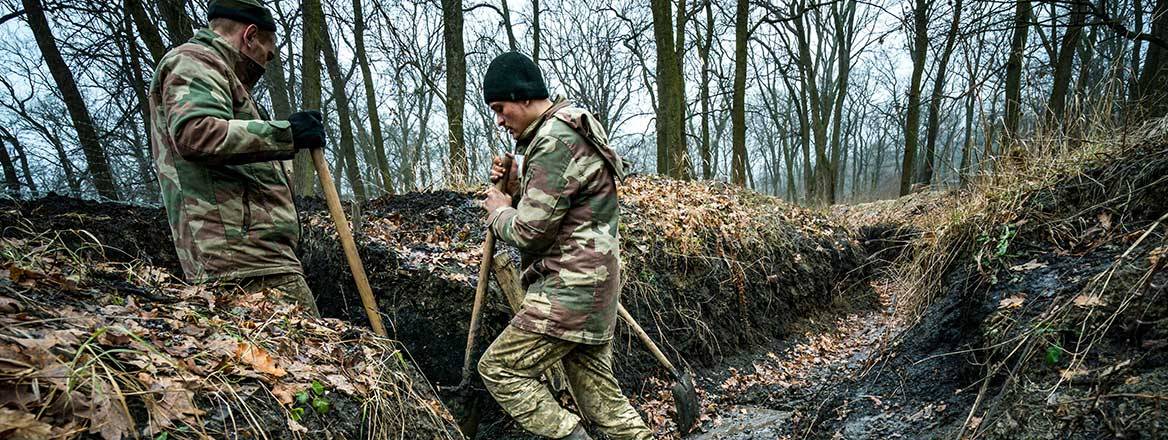
As autumn sets in, Ukraine's rasputitsa mud season will constrain Russian manoeuvre on the battlefield and strain the railways supplying Moscow's forces in occupied territory.
Geography and terrain have long shaped operational battle situations, particularly in Russia, but their significance shifts with the seasons and the climate. The initial stage of Russia's war in Ukraine in February–March 2022 was marked by stark images of Russian tank convoys mired in mud and ground to a halt just outside Kyiv. At the time, this prompted commentary about the capabilities of the Russian armed forces and the logistical resupply problems this bottleneck created. But almost five years on, it encapsulates how geography and weather are inescapable features of war theatres.
As the autumn and winter begin to set in on the battlefield in Ukraine, the coming of rasputitsa – the mud season – will once again shape battle conditions. While ultimate operational success or failure comes down to Russian military planning and structure, weather conditions will play a significant role in the coming months, and could contribute to Russia's readiness – or otherwise – to engage with any diplomatic negotiations.
Importance of Mud
First, it is worth unpacking some of the operational difficulties that rasputitsa causes on the battlefield. The coming autumn rasputitsa differs from the spring, and presents different challenges. Autumn, with its intermittent spells of cold followed by rainfall and a resultant thaw, reduces ground strength, making it difficult for tracked and wheeled vehicles to advance. In the spring, as snow melts,the upper soil layer thaws and becomes saturated with water, this reduces the load-bearing capacity of the ground, making movement across open terrain or unpaved roads a challenge.
The winter presents additional problems – short daylight hours, deep snow, low visibility or tree cover for infantry. Although frozen marshes and rivers might become suddenly accessible, this shifts with seasons; by the spring, flooding becomes the key issue, which can last for months. All of this has an impact on troop mobility, the deployment of weaponry, observations on the field, and unit coordination.
Ukraine's soil is fertile but can become highly saturated, which turns into thick mud, stalling convoys and ensuring that artillery must stick to roads. This problem of logistical overextension accompanied by difficult weather conditions has long been a feature of campaigns in eastern Europe and was a particular issue that the Wehrmacht encountered in 1941 during Operation Typhoon in their attempt to take Moscow, resulting in a battle for the roads. Any mechanised forces operating under these conditions end up consuming more fuel, tend to break down more quickly, and are vulnerable to aerial attack as a result. All of this affects military manoeuvre and ability to press forward.
Rasputitsa is not only a problem for battlefield mobility, but for railway rear support
Russia's advance on Kyiv in February–March 2022 was particularly constrained by rasputitsa because of the deleterious impact it had on fuel and food supply chains, anticipating a short campaign that would not require over-extended supplies. That northern offensive was vulnerable partly because the Russian military is constrained in its operations far from its own railheads, which Russian military planners are well aware of. This means that Russian forces were channelled onto roads, creating bottlenecks, but its tracked vehicles could not move through the waterlogged fields. The Russian Ground Forces' dependency after dismounting from rail onto road transport and trucks exacerbates this issue and puts its resupply systems under greater pressure if muddy conditions persist.
Russia has long fought land wars in this manner, under these weather conditions, with a variety of failures and successes, but on this occasion miscalculated, banking on a lightning war and no such demand to consistently resupply the front.
A Recurring Seasonal Pattern
Throughout the last four years of the war, there has been a relatively consistent rasputitsa-battlefield pattern, with both Ukrainian and Russian forces attempting to reorganise ground offensives before the mud set in, stalling as the season began, and being forced into slower advances due to unstable ground. Naturally, Ukraine's seasons vary throughout the country; northern Ukraine is colder, the east has greater freeze-thaw periods, and the south around Crimea is milder, with more rain and longer, wetter conditions.

The current predicted outlook for Ukraine's upcoming winter suggests increased rainfall and saturated ground – extremely challenging for mechanised operations. While the ultimate success or failure of many of Russia's military operations has not always been solely attributable to climate, it is often an important contributory factor.
Rasputitsa on the Rails
Rasputitsa is not only a problem for battlefield mobility, but for railway rear support, as connected to Russia proper.
Operating far from railheads puts Russian mechanised forces at a disadvantage, and so they must confine themselves to captured areas of the Ukrainian railways. Although data on the precise details is limited, Russia is thought to control 20% of Ukraine's track – which uses the same gauge system as Russia – but since the war began around 10,000 km of the network and storage sites formerly belonging to Ukrzaliznytsia (Ukrainian Railways) have been damaged or completely destroyed.
To try to ameliorate this, as well as cement physical control over the territories it has seized, since 2023, the Kremlin has invested around $425 million in new arterial railways along the Sea of Azov, connecting Rostov-on-Don with the occupied ports of Mariupol and Berdiansk. This has multiple aims – as well as establishing safer overland supply routes for the frontline, it avoids the vulnerable chokepoint at the Kerch Bridge, and facilitates the exploitation and export of occupied Ukraine's natural resources.
A Strained Network
But Russia's rapid wartime railway construction in the occupied territories has hit a snag. While more general problems for Russia's railway system abound – not limited to corruption, a lack of foreign investment and sanctions that have restricted both hardware and software – rasputitsa is playing an important role here too.
The upcoming rasputitsa season is likely to have an impact on both operational battlefield tactics and Russia's rear support
Part of the issue is that this new railway system was constructed quickly under wartime conditions. Rostransnadzor, the official transport inspection authority in Russia, published a highly critical report of the Novorossiya Railways in April 2024, in which it identified numerous violations of mandatory safety and operational requirements. This can carry more serious risks. In the Donbas, the freeze-thaw cycle can have an impact on concrete and disrupt electrical signals that the trains require to keep moving safely, and track beds can shift under moving soil conditions, potentially derailing trains. Seasonal rains and melting snow, as well as damaged drainage systems due to aerial attacks, all erode the ballast that supports rail tracks, which can compromise track electrical systems.
Before the war, this had long been a problem in interior Russia – low soil drainage, and heavy axle loads on Russian trains ferrying supplies to the front have caused track fatigue. Further critical enforcement reports from Rostransnadzor, most recently from March 2026, indicate poor railway track maintenance standards are a feature across Russia. The burden of resupplying the frontline therefore puts an additional burden on an already strained network. An additional issue is that Russia lacks the resources, especially in the territories of Ukraine it has seized, to remediate this quickly; according to the Novorossiya Railways website, staffing is an issue – entrance exams to qualify for the (occupied) Donetsk Institute of Railway Transport are relatively high, and attracting younger people with the right qualifications has proven a challenge.
This seems to be borne out in the figures. A glance at Novorossiya Railways' financial statements indicates that by December 2025 most activities along this rail system reported a significant discrepancy between planned and actual activities – most notably a 42.3% decline in revenue from the sale of goods and services, and a 28.5% decline in freight transport. Later on, the document clarifies that the serious loss of revenue from sales of goods and services is directly a result of lower-than-expected volumes of freight operations and declining industrial output in the occupied territories.
All of this indicates that the upcoming rasputitsa season is likely to have an impact on both operational battlefield tactics and Russia's rear support, which its military planners have probably accounted for. Constrained battlefield advancements will probably force a greater reliance on aerial drone and missile attacks, with President Putin cognisant that Ukraine's interceptor supplies are dwindling. With this in mind, there is little to suggest that talk of potential negotiations in a variety of trilateral formats could prompt a satisfactory settlement for either side.
© RUSI, 2026.
The views expressed in this Commentary are the author's, and do not represent those of RUSI or any other institution.
For terms of use, see Website Terms and Conditions of Use.
Have an idea for a Commentary you'd like to write for us? Send a short pitch to commentaries@rusi.org and we'll get back to you if it fits into our research interests. View full guidelines for contributors.
WRITTEN BY
Emily Ferris
RUSI Senior Associate Fellow, International Security


- Jim McLeanMedia Relations Manager+44 (0)7917 373 069JimMc@rusi.org