

As US Scales Back Forces Earmarked for NATO, Opportunity Opens for Europe

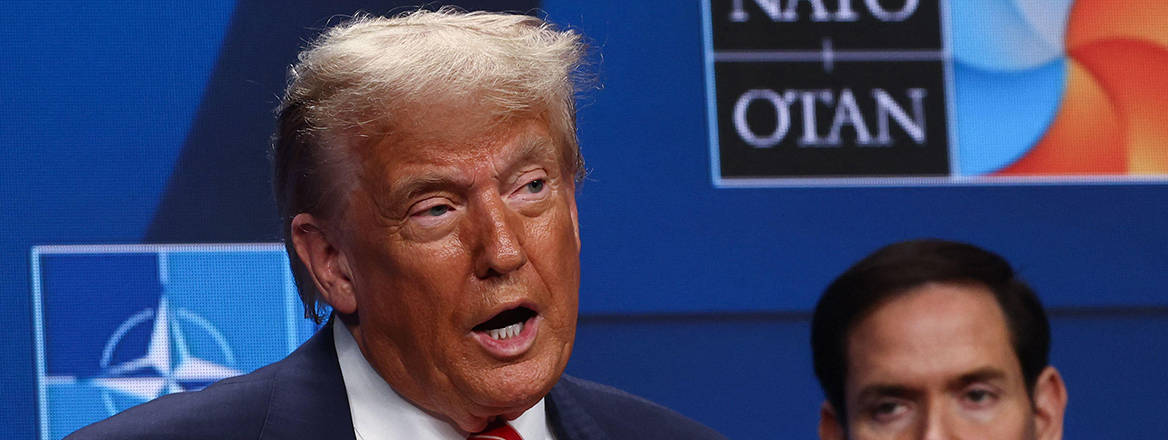
For NATO, this year has seen one battle after another, all started by the U.S. The latest is a plan to allocate fewer forces to Europe. Europeans should treat it as an opportunity.
From Greenland to Iran, President Trump’s hostility and unpredictability have brought transatlantic trust to a new low. In May, Trump announced he would pull out 5,000 of the 35,000 American troops in Germany and cancel the planned deployment of Tomahawks and other long-range missiles. The decision was made in a fit of pique after Chancellor Merz criticised the US handling of the Iran war, saying Tehran had humiliated Washington.
Then the Pentagon cancelled at the last minute the rotation of 4,000 troops to Poland, even though Trump had described the country as a ‘model ally.’ Days later, in an abrupt U-turn, he announced that the US would deploy ‘an additional’ 5,000 troops to Poland, based on his personal relationship with Poland’s president Nawrocki. It is unclear where the US troops will come from and whether – as Trump has threatened – other troops may be pulled out of Spain or Italy.
Not Thrilled
At a meeting of NATO foreign ministers in Sweden, the alliance’s Secretary General Mark Rutte welcomed Trump’s announcement. But he stressed that it would not change NATO’s longer-term push for ‘Europe to be stronger,’ so that ‘over time, step by step,’ Europeans would become less dependent ‘on a single ally, the United States.’
In an attempt to ease tensions, US Secretary of State Marco Rubio called the NATO meeting ‘productive,’ and stated that ‘the goal is to have a NATO that is strong.’ It was no surprise that the US troop presence in Europe was ‘going to be adjusted’ due to commitments in the Indo-Pacific, the Middle East and the Western Hemisphere, said Rubio, adding that work was being done ‘in coordination’ with allies. ‘I’m not saying they’re going to be thrilled about it,’ said Rubio, ‘but they certainly are aware of it.’
On the same day, defence policy directors from NATO countries met at Alliance HQ in Brussels for an announcement that, unlike those made by Trump, was not a surprise. In the grand scheme of things, it was also much more significant.
The NATO Force Model
The Pentagon was represented by Alex Velez-Green, senior adviser to the Under Secretary of War for Policy, Elbridge Colby. He told defence policy directors that the US intended to shrink significantly the pool of military assets and capabilities that Washington would make available to NATO in a crisis or conflict.
A US military official acknowledged there were risks for the NATO Force Model but stressed that Europeans can step up if they want to
Officials who took part in the meeting confirmed that the cuts would primarily concern air and maritime assets, which the US would need in the Indo-Pacific. According to Der Spiegel, the number of US jet fighters assigned to NATO would fall by a third, and the number of strategic bombers by half. Other military capabilities affected would be air-to-air refuelling tankers, destroyers and submarines.
The announcement concerns the American contribution to the NATO Force Model, which specifies the forces and assets that every ally would provide during the first 10 days, 30 days and 180 days of a conflict or a crisis in order to implement NATO’s defence plans.
Pentagon spokesman Sean Parnell did not confirm details. But, he said, ‘these changes represent an opportunity for allies to demonstrate that they have heard President Trump’s call for them to step up and take primary responsibility for Europe’s conventional defence.’
Earlier this year, Velez-Green’s boss Colby called for a ‘NATO 3.0,’ where Europeans would assume primary responsibility for the conventional defence of Europe, as the US prioritises the Western Hemisphere and the Indo-Pacific. He warned about the possibility that ‘potential opponents will act simultaneously across multiple theatres, whether in coordinated fashion or opportunistically.’
For some time now, Secretary General Rutte has also spoken about the risk of two simultaneous wars in the coming years – China going to war over Taiwan, while coordinating with Russia to ‘keep them busy in Europe by attacking NATO territory.’ That would overstretch the US military, already under strain due to the war in the Middle East and planning to pivot to Asia since the Obama administration in 2011.
Risk or Opportunity?
The US did not provide any timeline, and the precise cutbacks remain to be defined. Importantly, this is about the future rather than the present and changes will not be made overnight. Many of the capabilities are not even currently in Europe. Moreover, the US did not put into question its commitment to the defence of Europe or that it would maintain the nuclear umbrella over the continent.
Still, the announcement is widely seen as yet another sign of America’s disengagement from its allies, and risks emboldening President Putin to test NATO defences sooner rather than later.

But it also presents an opportunity which Europeans should embrace. Many have talked up strategic autonomy or even a European army. Others were concerned that even by talking about how to fill the gaps left by the US, they would set in train a self-fulfilling prophecy and push the Americans to cut back faster.
Now, the US has kicked off the discussion inside NATO, providing greater clarity about shortfalls in the medium- to long-term. This must inject greater urgency into the efforts of NATO European allies to transform their growing defence spending into the capabilities required to defend Europe, while keeping America engaged. It is an opportunity for ‘a stronger Europe in a stronger NATO,’ as Rutte likes to call it.
‘Europeans were very receptive at the meeting,’ a NATO official said, adding that there is a growing realisation that ‘the more capabilities Europeans put on the table, the more say they have in the conversation, and the more freedom for sovereign decision.’
A US military official acknowledged there were risks for the NATO Force Model but stressed that Europeans can step up if they want to. For instance, ‘Eastern Sentry,’ a recent NATO initiative to strengthen the eastern flank against Russian air incursions does not include any US forces, even though many of the fighter jets deployed by Europeans are American. ‘The US will be watching what allies do to fill critical shortfalls,’ he said. ‘It’s their choice,’ he added, ‘if none of them show a clear path, that wouldn’t be very beneficial, including ahead of the Ankara summit’ in July.
Next Steps
A clearer path towards burden-shifting in NATO may emerge after a flurry of meetings in coming weeks. On 3 June, national military planners will meet at NATO’s main military headquarters (SHAPE) in Mons, Belgium for their annual force generation conference, chaired by the Deputy Supreme Allied Commander Europe Air Chief Marshal Sir Johnny Stringer. Each nation will announce what they assign to NATO’s defence plans and will assess together whether what they have is enough to make the plans a reality.

NATO defence ministers will meet on 18 June to prepare the Ankara summit, where scaling up defence capabilities will be in focus. Chiefs of defence are also expected to meet in mid-June with the Supreme Allied Commander Europe, US General Alexus Grynkewich, to zoom in on air and missile defence.
Smaller groups of NATO countries are getting together to set up capability clusters, for instance for submarines (led by Norway) or Tomahawk long-range missiles (led by the UK or Germany). The joint Dutch-German corps is setting up a new command structure to defend Estonia and Latvia, taking command of the existing NATO-led brigades in those countries.
As the US cuts back the capability pool assigned to NATO, and Europeans and Canada need time to fill those gaps, NATO should adjust its defence plans and design collective defence exercises differently. It should plan and exercise for scenarios where the Pentagon would offer only 50%, 30% or, in some cases, zero capabilities. That would focus minds on the risks, but also on the European way of war, and how to fill shortfalls with equipment that do not replicate gold-plated US kit but can achieve the same effects in a more innovative way, allowing for faster delivery times and greater operational control.
In doing this, there are unintended consequences for the US. As their NATO allies push back on President Trump’s threats and learn to rely less on Washington for their defence, they are also reducing their reliance on American defence companies. This year, Canada has announced plans to buy early warning planes from Sweden’s Saab rather than from Boeing, and Denmark signed a contract for the Franco-Italian SAMP/T air defence system, not the Patriot.
That trend could be accelerated by moves to insert a ‘European preference’ in EU defence procurement rules, due out in the coming months. So, when they think about transatlantic defence, both Europeans and Americans should be careful about what they wish for.
© RUSI, 2026.
The views expressed in this Commentary are the author's, and do not represent those of RUSI or any other institution.
For terms of use, see Website Terms and Conditions of Use.
Have an idea for a Commentary you'd like to write for us? Send a short pitch to commentaries@rusi.org and we'll get back to you if it fits into our research interests. View full guidelines for contributors.
WRITTEN BY
Oana Lungescu
RUSI Distinguished Fellow; RUSI Europe Advisory Board Member


- Jim McLeanMedia Relations Manager+44 (0)7917 373 069JimMc@rusi.org