

Ukraine’s ‘Kinetic Sanctions’ Change the Game

Kyiv’s unprecedented attack campaign on Russian shadow fleet tankers ups the pressure on sanctions-busting shippers and insurers at a time when Russian oil exports are already under strain.
Frustration appears to have boiled over in Kyiv when it comes to international sanctions enforcement, or lack thereof, on Russian oil exports. Since late November, at least seven tankers that regularly transport Russian crude and are considered part of its shadow fleet have incurred critical damage after being attacked by drones or suffering unspecified ‘external explosions’. Ukrainian intelligence services have claimed responsibility for four of these attacks while being conspicuously non-committal on the others; and in subsequent media comments they have made clear that their intent is to substantially damage Russian seaborne crude oil export revenues.
The chief of the Security Service of Ukraine (SBU), Vasyl Malyuk, calls such attacks ‘kinetic sanctions’ and it is hard to argue with their immediate results. Insurance markets have reacted strongly, with rates for ships trading in the Black Sea increasing by as much as 300% in early December and doubling again in January. Russian seaborne crude exports via the Black Sea plunged 30%. One of Turkey’s largest tanker operators, which manages several vessels sanctioned by Ukraine, announced that it will no longer transport Russian cargos after one of its tankers suffered explosions off the coast of Senegal on 27 November, citing untenable risks.
These strikes likely signify a new expanded phase of Kyiv’s justified campaign to degrade Russia’s energy production and export infrastructure – and thereby deprive it of funding for its war against Ukraine. If so, ship owners, insurers, ports and financial institutions that engage in Russian oil trade in violation of the newly lowered price cap, even unwittingly, may be significantly underestimating the enhanced risk now that the shadow fleet is a direct target in the conflict. Ukraine is at the forefront of drone technology, does not feel bound by geographic restraints, and is likely unafraid of facing any legal consequences in national or international courts.
Unprecedented
2025 was a banner year for attacks on tankers linked to Russian shadow fleet activity. In the first seven months of the year, six tankers, all of which had made frequent Russian port calls, also suffered unexplained (and underreported) explosions. The damage to these vessels was clearly intentional, with many security experts believing the explosions were caused by naval limpet mines.
Combined, this brings the number of shadow tankers likely felled or significantly damaged by Ukraine in 2025 up to at least 11, including eight crude oil tankers
Four of the tankers hit between January and July were transiting the Mediterranean Sea off the coasts of Libya, Turkey and Italy. Apart from a 2021 detonation aboard an Iranian cargo ship off the coast of Israel, these mark the first known attacks on non-military commercial vessels in the Mediterranean since the Second World War. Two more tankers, including a recently built liquid petroleum gas (LPG) tanker, suffered explosions at the Russian port of Ust-Luga on the Gulf of Finland in the Baltic Sea during this period. The attack on the Turkish-operated tanker off the coast of Senegal in November brings the total number of mysterious Russian-linked tanker explosions in 2025 up to at least seven, across three different regions.
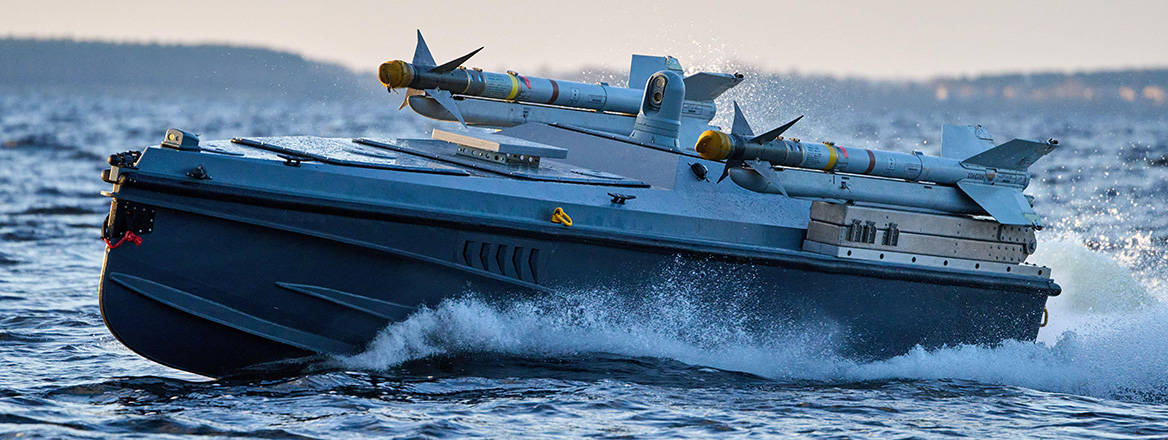
Despite no claims of responsibility for any of these strikes, the targets and nature of the attacks point to Ukrainian actors, and Kyiv has made little or no attempt at denying as much. A previous mystery explosion that sank a sanctioned Russian military cargo ship off the Spanish coast in December 2024 likely marked the start of the campaign and was deemed an act of terrorism by Russia. Now Ukraine’s SBU has openly deployed its new Sea Baby maritime drones in aid of this endeavour, damaging three shadow fleet tankers in the Black Sea in claimed attacks on 28 November and 10 December, followed by an aerial drone attack on a tanker in the Mediterranean on 19 December – the first overt deliberate strikes on commercial ships seen in this war.
Combined, this brings the number of shadow tankers likely felled or significantly damaged by Ukraine in 2025 up to at least 11, including eight crude oil tankers. While estimates on the number of tankers, and specifically crude oil tankers, in Russia’s shadow fleet vary widely depending on methodology, the tankers hit in these attacks would represent at least 1% of crude oil tankers in the shadow fleet. Based on their history, the majority of these tankers, including those taken-out since late November, also appear to be part of a much smaller group of tankers that make multiple Russian port calls a year, which the Kyiv School of Economics refers to as the ‘core of Russia’s shadow fleet’. Of this smaller ‘core’ fleet, the tankers damaged or disabled in the last year may equate to as much as 5-10%, a potentially significant economic result for Ukraine’s ‘kinetic sanctions’.
Kyiv Unlikely to be Dissuaded by Legal Risk or Retaliation in Kind
Moscow retaliated quickly after the recent SBU strikes in the Black Sea, launching attacks on Ukrainian ports with aerial drones and missiles on 12 December that damaged three Turkish-owned commercial ships in the Odesa region port of Chornomorsk. Insurance rates for calls to Ukrainian Black Sea ports have also increased, though not as much as those for calls to Russian Black Sea ports.
However, Ukraine is not nearly as dependent on export revenue as Russia and has been subject to Russian attacks on its ports throughout the war, which often cause damage to commercial vessels and in some cases appear to target them. In other words, the calculus for Kyiv, facing an existential threat, does not change significantly regardless of Moscow’s intimidations. Russia also risks irking shipowners if it increases attacks on vessels trading at Ukrainian ports, at a time when there is a global shortage of oil tankers. It is notable that the loudest complaints following the recent incidents have come from Turkey, a major shipping country who Russia cannot afford to alienate. Ankara is clearly worried about the impact on its shipowners and trade through the Bosphorus Strait. Ukraine’s Western allies meanwhile have been mostly silent and the New York Times reports that the CIA has supported some recent strikes.
Russia is also far less likely than Ukraine to attack a commercial vessel in the maritime Exclusive Economic Zones (EEZs) of any NATO country. For Moscow, even an attack intended to be deniable runs a significant risk. If it can be attributed, it could be construed as an attack on a NATO nation – and Russia’s recent track record at keeping such operations deniable is not on par with Ukraine’s. Kyiv on the other hand is unlikely to be called out for deniable attacks in public by its Western allies so long as the damage is contained. On a technological level, Ukraine has also simply outpaced Russia when it comes to maritime drone development in this war, claiming a historic naval first in December with a strike on a Russian submarine.
Even if Ukraine is called to task, it may find itself on fairly solid legal footing. Moreover, the nature of shadow fleet vessels makes it unlikely that any insurer or shipowner would pursue a successful claim in court. For example, the two tankers struck by Ukrainian maritime drones on 28 November both falsely claimed to fly the flag of Gambia. When Gambia’s maritime administration discovered this and removed them from its registry, it had the effect of legally stripping the vessels of any neutrality, leaving them flagless and stateless, and invalidating any insurance and certificates of seaworthiness.
More Pressure on Russian Seaborne Crude Exports
Ukraine’s increased ‘kinetic sanctions’ against Russian energy infrastructure and now its shadow fleet tankers come at a bad time for Russian oil exports, which funded at least 20 per cent of Russia’s federal budget in 2025 and its war effort. Moscow was already having to search for new customers after Western sanctions on oil majors Rosneft and Lukoil went into effect in November, forcing steep discounts on Russian crude and leaving its cargos stuck at sea. Those sanctions also contributed to an exodus of Greek tanker operators from the Russian crude trade that began when the EU and UK lowered the price cap from $60 per barrel to $47.6 in September.
Russia is now struggling to find enough tankers to meet its crude export needs, a not insignificant problem when it needs to export more to maintain revenue. Stronger sanctions have already led many tanker operators to exit the Russian oil market due to compliance and reputational risks. Those still servicing Russian ports and engaging in shadow fleet activities must now also consider a significantly higher physical risk to their vessels and their crews. Even non-shadow fleet tankers have suffered unattributed drone attacks at Russian ports in recent weeks, including one chartered by Chevron. Ports and nations that receive Russian shadow tankers and allow them to conduct ship-to-ship transfers in their EEZs must also reassess their risk tolerance, weighing if the liability of an explosion aboard an aging, questionably insured tanker is worth it. Ukraine makes a strong case that it is not, and that actors who aim to circumvent the sanctions should reconsider the consequences.
© Edward Wrong, 2026, published by RUSI with permission of the author.
The views expressed in this Commentary are the author's, and do not represent those of RUSI or any other institution.
For terms of use, see Website Terms and Conditions of Use.
Have an idea for a Commentary you'd like to write for us? Send a short pitch to commentaries@rusi.org and we'll get back to you if it fits into our research interests. View full guidelines for contributors.
WRITTEN BY
Edward Wrong
Guest Contributor


- Jim McLeanMedia Relations Manager+44 (0)7917 373 069JimMc@rusi.org