

Ukraine Has Imposed a Kerosene Shortage on Russia

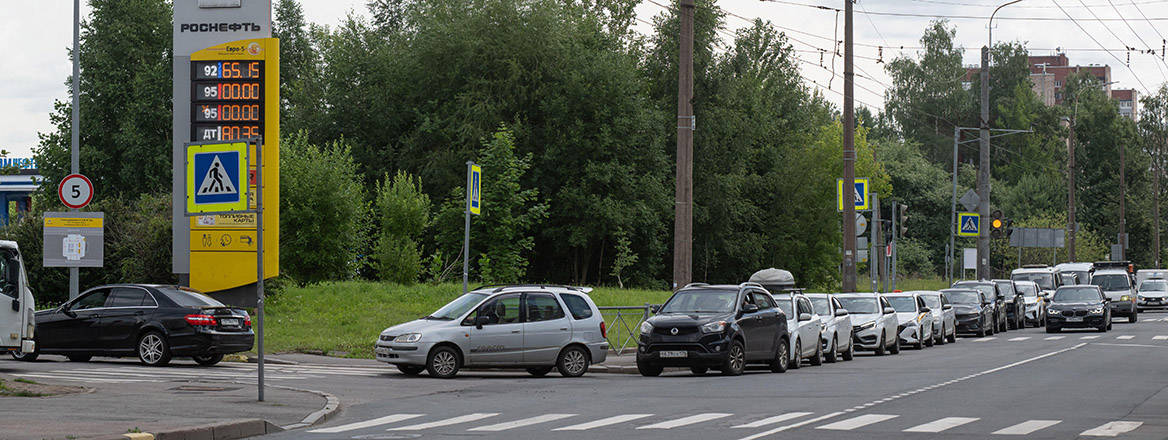
Ukrainian drone strikes on refineries have caused a Russian kerosene shortage, disrupting flights, draining the budget and pushing Central Asian partners towards other suppliers.
As Russia is gripped for the second year by queues at petrol stations, more than a third of its international airports face fuel supply issues and light aircraft are forced to use car gasoline. Moreover, it is causing past alliances in Central Asia to fracture, as long-term partners who depended on Russian fuel are forced to seek expensive and dangerous alternatives to keep their airlines in the air. Though the Kremlin has sought to dismiss this as a nuisance, the data shows it to be anything but, and refining output has dropped significantly. Revenue streams have been eaten into and long-term costs and damage have been incurred.
Russia’s Historic Place in the Global Fuel Market
Prior to 2025, Russia was one of the world's largest fuel producers. The figures for 2023 and 2024 attest to that: 88 million and 81.6 million tonnes of diesel respectively, and 43.8 and 41.1 million tonnes of gasoline production. Unlike gasoline and diesel, aviation kerosene production rose by 7.3% in 2024 to 11.6 million tonnes, a sufficient amount to cover both domestic needs and export demands. Export volumes have been classified, but are estimated at 500,000–600,000 tonnes, mainly to Kazakhstan to cover its domestic shortage. When it comes to gasoline, the surplus is much more modest, with the country consuming 90% of production, while for diesel, the country was the second-largest exporter, with domestic consumption estimated at close to half of output and exports at 35–40 million tonnes.
These surpluses were crucial for Central Asia. Putin's Russia inherited the Soviet Union's role as guarantor of social stability in the region through subsidised fuel exports. Mongolia, Kyrgyzstan and Tajikistan were over 90% dependent on Russian fuel. To a lesser degree, so were Kazakhstan and Uzbekistan. Domestically, Russia also runs a subsidy mechanism known as the ‘dempfer’, under which the government pays refineries a subsidy, calculated from prices on the St Petersburg Commodities Exchange, to keep gasoline and diesel prices lower for the public. Airlines receive a different subsidy: they are compensated for 65% of the difference between a fixed kerosene price (₽67,300 per tonne in 2026) and the export price, which serves as the market benchmark.
Expanding Russian secrecy as Ukrainian strikes on refineries intensified conceals just how deeply the shortage is affecting civilian and military operations
The fuel issues in 2025 started at the edge of the Russian fuel supply network: in remote parts of Khabarovsk Krai, Vladivostok and Crimea. This is typical of a production shortfall, where the far ends of the distribution network run dry first. Part of the problem was that Russia kept low stocks of gasoline and in early 2025 gasoline exports jumped 25% year-over-year, making the country more vulnerable to shortages. By 28 July, Ukrainian drone strikes had forced so many refineries into repairs that the country banned gasoline exports. Estimates at the time were that 10 major refineries had been damaged by Ukrainian drone attacks. Later, even diesel exports had to be partially restricted at the end of September. Companies with their own refineries could still export, but the ban for the rest of the market is in place to this day. Even with these restrictions, the Russian fuel market did not stabilise until November and December. The ban on gasoline was only partially lifted on 1 February 2026, at the urging of Russian refiners, who wanted to increase their export profits. Notably, despite all this, aviation kerosene faced no export bans during this period and was not an issue for Russian airlines.
Enter the New Normal
By mid-2026, the shortages caused by Ukrainian drone attacks had spread from Crimea to almost the whole of Russia. From 18 May to 12 July, all but two of Russia's 83 federal subjects saw local news reports of petrol stations running out of some type of fuel. The full gasoline export ban, covering both refiners and traders and introduced earlier on 2 April, did little to stem the tide. By 30 July, the gasoline export ban had been extended to 31 January 2027, signalling the Kremlin's lack of confidence that repairs would be completed by year-end. A ban on diesel exports by refineries was also introduced on the same day, and that measure has been extended month by month since. Based on the ban on diesel exports, and given that Russia consumes only half the diesel it produces, it can be assumed that refining capacity has been degraded by 30–50% through a combination of Ukrainian strikes and necessary maintenance.

By 12 August, Kommersant, citing industry sources, estimated that refining volumes could fall to 3.8–4.1 million barrels per day from 5–5.5 million barrels per day in summer 2024–25; as mentioned earlier, 2024 was already a lower-production year than 2023, and 2025 saw mass shortages. Apart from the massive queues, there were concerns that diesel deliveries to farmers would be disrupted, with reports from Krasnodar Krai suggesting only 50–60% of the fuel needed reached farmers in July. By now the measures have become so drastic that Russia has allowed the production of fuel as low-grade as Euro-2, and such fuel has already been spotted at petrol stations in Russia's regions.
Kerosene was Not Left Behind
The Russian kerosene market is faring no better. A full ban on the export of kerosene was introduced on 1 June 2026, as domestic prices reached ₽110,000 per tonne and export quotes exceeded ₽140,000 per tonne. By then, kerosene had not been traded on the St Petersburg Commodities Exchange for more than half a month. The last traded price was listed as ₽82,700 per tonne. Moreover, airline sources contacted by Kommersant reported kerosene shortages in the last week of May at the airports in St Petersburg, Yekaterinburg, Ufa and others, with the Ministry of Transport having to manually direct supplies. The kerosene dempfer payment jumped from ₽1,770 per tonne in February to ₽52,090 in March, easing slightly to ₽47,830 in April, at a cost to the Russian budget of ₽24 billion in April alone. At time of writing there are standing NOTAMs (notices to airmen) warning about refuelling issues at 32 of Russia's 227 airports and civilian airstrips, and at times the number has been higher. The picture is worse for international airports alone: 11 of Russia's 27 international airports have NOTAMs issued over fuel availability. Russian airlines operating out of the southern parts of the country raised the alarm in late June that they were adjusting their schedules due to fuel shortages; by then, aviation fuel at Makhachkala had reached ₽157,000 per tonne excluding VAT, a 64% increase in June alone, and airlines like Azimut were cutting flights. As the government increasingly redirected volumes manually and imposed price controls, trading volumes on the St Petersburg Commodities Exchange fell so sharply that the exchange began cutting staff by mid-July 2026.

The Russian kerosene shortage has also claimed victims in Central Asia, which, as established above, depends on cheap Russian fuel. Kazakhstan, which largely covers its domestic fuel needs from its own refineries, was still waiting on kerosene deliveries from Russia. Of the 300,000 tonnes it contracts annually, it had received only 186,000 tonnes in 2026 by the time Russia imposed its full export ban. Tajikistan was forced to turn to Iran, requesting, among other things, 100,000 tonnes of aviation kerosene. Mongolia, which is also deeply dependent on Russian fuel and needs aviation kerosene for its tourism industry, was forced to ask China for 3,000 tonnes. Tajikistan saw prices for fuels go up by 30% by September, threatening an inflation spike, and official sources in Kyrgyzstan said gasoline prices were up 24% and diesel 30%. In Mongolia, protests by drivers started in the capital against the fuel shortage. Within Russia, the shortage went beyond rationing: light aircraft such as the An-2 were forced to switch to lower-quality automotive gasoline.
What the Future Holds
Ukraine’s drone campaign has done real and long-lasting damage to Russian refining capacity, finances and political influence. Expanding Russian secrecy as Ukrainian strikes on refineries intensified conceals just how deeply the shortage is affecting civilian and military operations. More data is being classified as a state secret and sources face ever harsher penalties for disclosing the real extent of the damage.
In parallel, subsidies are seriously hurting Russia’s federal budget. Despite high oil prices, the revenues from oil and gas in September 2026 were among the lowest in the last few years and the highest since April 2022, as they were offset by the record ₽306 billion in subsidies paid to refineries and airlines. To offset these losses of revenue, the Russian state is forced to borrow money on the domestic market at astronomical yields of 16.63% per year. There have already been cases of planes forced to land due to a shortage of fuel because they could not make it to the designated reserve airstrip during a drone attack. Fuel is being rationed.
For Russia, a core concern will be that traditional Central Asian allies are actively looking for alternatives for fuel deliveries even if at present such options are limited with China reducing its exports. Russia’s previous power dynamic with these states is changing rapidly. Recovery of the lost capacity will also be neither cheap nor quick. Russia’s own governors have said it may take up to six months for some refineries to recover. The symbol of the Russian free-trading fuel market, the St Petersburg Commodities Exchange, is now a shadow of its former self as the state manually redirects fuel in trucks and trains, finding its free-trade principles a hurdle to its plans.
© Stanimir Dobrev, 2026, published by RUSI with permission of the author.
The views expressed in this Commentary are the author's, and do not represent those of RUSI or any other institution.
For terms of use, see Website Terms and Conditions of Use.
Have an idea for a Commentary you'd like to write for us? Send a short pitch to commentaries@rusi.org and we'll get back to you if it fits into our research interests. View full guidelines for contributors.
WRITTEN BY
Stanimir Dobrev
Guest Contributor
- Jim McLeanMedia Relations Manager+44 (0)7917 373 069JimMc@rusi.org