

Talk of Russian Regime Change Could Inspire a New European Peace Strategy

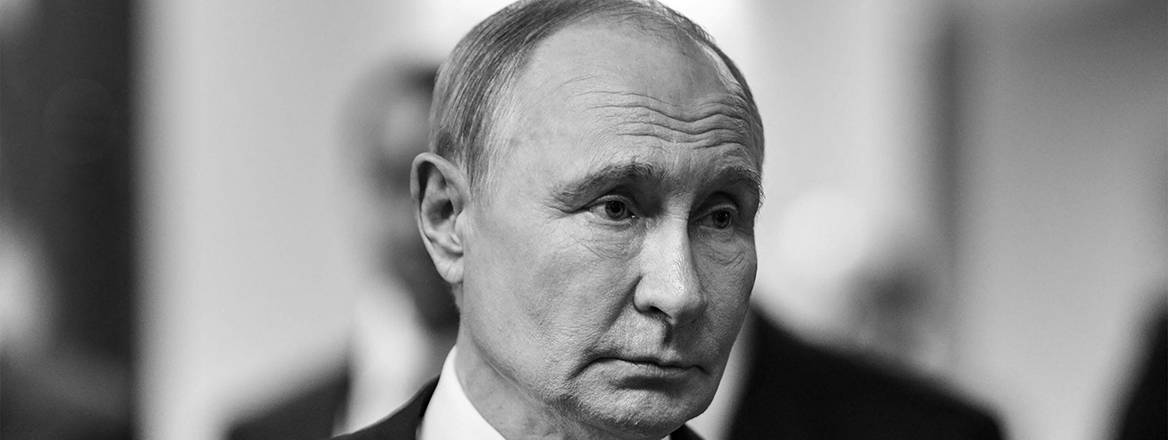
While Putin doubles down to defeat Ukraine and Trump calls for regime change in Kyiv, the NATO Allies should pitch an off-ramp to Putin’s potential successors.
A Russian-British critic of Putin now living in the UK, Vladimir Kara-Murza, said in September that as long as Putin is in power the Ukraine war is not going to stop. He added that political change in Russia is inevitable, that it may not be so far away, and that when it comes, it will be swift, sudden and unexpected. Kara-Murza is not alone in seeing the writing on the wall for Putin's presidency, and the prospect of regime change in Moscow could inspire Ukraine's European allies with an alternative strategy to Trump's Putin-leaning peace process.
The new Lindsey O. Graham Sanctioning Russia and Iran Act in the US is designed to increase sanctions on Russia, but there is no guarantee that President Trump will take advantage of it. His current preference is to coax Putin towards a Ukraine peace with the prospect of economic links with the US, and he has gone so far as to blame President Zelensky's attacks on Russian oil refineries for the global diesel shortage, and to make a deal with Putin to suspend sanctions on Russian diesel exports. When Zelensky described this as a 'gift' to Putin, Trump called 'for Ukraine to get a new President.'
Zelensky would back a ceasefire along current frontlines followed by talks about a definitive peace, but Putin insists he will not stop fighting unless Ukraine gives up territory which Ukraine still holds. Putin wants the strategically important Donbas, and he declares he will soon acquire it on the battlefield.
In the wake of the inevitable win for his United Russia party in the election to the lower chamber of the Russian parliament – an election from which Russia's only anti-war party was excluded – Putin is likely to double down to defeat Ukraine, however heavy the cost to Russia, and to his political support among the public and the elites.
European conditions for a fresh start with Russia would include a seat for Ukraine's allies in peace negotiations if Ukraine asked for it, a just outcome on Ukraine's sovereignty, and agreed Russian funding . . . for Ukraine's post-war reconstruction
The time seems right for Ukraine's allies to start talking over Putin's head to his potential successors – to let them know that a peace that respected Ukraine's sovereignty would bring Russia a major political and economic reset with Europe as well as an end to a war that is doing serious damage to Russia.
Regime Change in Russia May Not be So Far Away
Ukraine's resistance to Putin's invasion has led to deep drone and missile strikes into Russia, huge losses to Russia's military, and a burgeoning cost to Russia's economy. Commentators are saying that Putin's replacement is a real if not imminent prospect but certainly real enough for governments to start making contingency plans.
Tatiana Stanovaya, a political scientist who moved to France from Russia some years ago, wrote in July that the focus of the Russian ruling class has shifted from how to claim the spoils of the Ukraine war to 'minimizing the colossal damage being inflicted in the pursuit of even a semblance of victory'. She argues that it will soon have to choose between 'the path of escalation and radicalization, or one that leads to a process of internal restructuring and a post-Putin world'. Europe has a strong interest in nudging Russia along the latter path.
Europe Should Launch an Alternative Peace Strategy
Ukraine's European allies have so far been confined to the fringes of Trump's Putin-friendly peace process. Now Europe has the chance to launch an alternative peace strategy, in which it pitches an off-ramp from the Ukraine war, not to Putin, for whom anything less than a military victory seems off the table, but to his potential successor or successors, for whom a just peace for Ukraine might be an acceptable price to pay for ending the war and securing a reset in Russia's links with Europe. It would be in the UK's interest to launch or to join such an initiative. Canada – close to Ukraine and to Europe's NATO Allies, and now seeking a 'unique alliance' with the EU, might also join such an alternative strategy.
Messaging the Russian Elite
European leaders and EU officials could talk openly in speeches and interviews about a future when the war is over, Ukraine's sovereignty is guaranteed, and a reset of relations with Russia becomes possible. They might not come out and call for regime change, but would be clear that a reset in relations must await new policies in Moscow, and a new Russian regime representing a clean break with the leadership which had planned and executed the Ukraine war.

European conditions for a fresh start with Russia would include a seat for Ukraine's allies in peace negotiations if Ukraine asked for it, a just outcome on Ukraine's sovereignty, and agreed Russian funding – perhaps from Russia's frozen assets in the EU and the UK, if that has not in the meantime been expropriated to pay for Ukraine's war effort – for Ukraine's post-war reconstruction.
A just peace for Ukraine would mean a U-turn by a new Russian government on the denazification narrative peddled by Putin to justify his special military operation in Ukraine. Such a U-turn would need to come in a package which could be defended to ordinary Russians and enough of the ruling class to secure their backing.
The package would bear some resemblance to the partnership which Putin had been looking for in 2000 when he sought a Russian invitation to join NATO, and access to the prosperity of the West from which he thought Russia had been excluded. The partnership would need substance but appearances would matter too.

Europe could offer symbolic prominence to Russia in a post-war scheme of summits hosted alternately by Russia, NATO Allies and the EU, along with negotiations for free trade agreements with the EU and other partners, such as the UK, Norway and Canada.
How Would Trump React?
Europe's initiative might be its own project initially, but Trump, who currently seems keener to see regime change in Ukraine than in Russia, could seek to derail it or take it over. That argues for some astute Trump-handling by Ukraine's allies rather than giving in to Trump-induced paralysis. European leaders would need to include Trump's peace process in their narrative from the outset and pay tribute to it and tell Trump that a pitch to Putin's successors was more likely to push Putin into serious negotiations than to tip Russia into regime change – which might well be the case.
Europe's first priority must be support for Ukraine in a war upon which its survival depends. But a second front in the shape of unorthodox diplomacy could dispel misconceptions on the part of the Russian elite about the effects for them of a just peace for Ukraine, and nudge Russia towards a regime change that could bring that peace about.
© Derrick Wyatt, 2026, published by RUSI with permission of the author.
The views expressed in this Commentary are the author's, and do not represent those of RUSI or any other institution.
For terms of use, see Website Terms and Conditions of Use.
Have an idea for a Commentary you'd like to write for us? Send a short pitch to commentaries@rusi.org and we'll get back to you if it fits into our research interests. View full guidelines for contributors.
WRITTEN BY
Professor Derrick Wyatt, KC
Guest Contributor


- Jim McLeanMedia Relations Manager+44 (0)7917 373 069JimMc@rusi.org