

The Strait of Hormuz Problem: What ‘Securing’ the Waterway Actually Requires

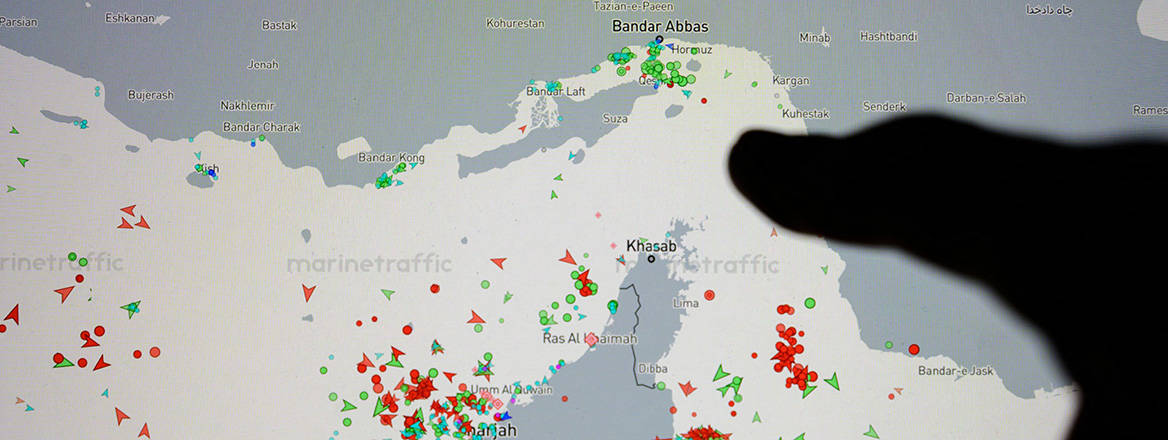
Iran has closed the Strait of Hormuz without formally closing it. The question facing Washington is not how to secure the waterway – it is whether any realistic military operation actually can.
Securing the Strait of Hormuz is an American objective in search of an American strategy. The phrase has acquired the status of received wisdom in briefings and commentary, repeated with a confidence that its operational content does not remotely justify. Before any credible path forward can be charted, the situation on the water demands clear-eyed assessment – and that situation is considerably more grave than the public conversation has so far been willing to acknowledge.
So far, Iran has not needed to mine the Strait or sustain a naval blockade. A targeted campaign of missile and drone strikes against commercial vessels – limited in number but devastating in their effect on market psychology – has been sufficient to collapse transit volumes by approximately 90%. The parallel imposition of a coastal inspection corridor, routing westbound tankers north around Larak Island under Iranian supervision, has allowed Tehran to reassert practical sovereignty over the waterway, without formally interdicting it. Of the shipping that continues to move, roughly 60% is Iranian-flagged, Iranian-owned, or tied to Iranian trade. A further fifth consists of Greek-associated vessels, whose owners have historically operated with a higher appetite for commercial risk. Nascent bilateral arrangements between Iran and states including China, India and Pakistan are facilitating some additional transit, but volumes remain marginal. Reports also indicate that Iran is earning around $2 million per ship as a tax for safe transit for friendly countries.
A Mistake of Underestimation
The central question is what American plans to do about this. The overall campaign as originally conceived was a purely aerial one – and the force posture reflects this. Had Washington genuinely anticipated that the Strait would become a theatre of active maritime contestation, it would have pre-positioned assets accordingly: Marine amphibious forces surged toward the Gulf; US Navy countermine capability returned to their home port in Bahrain (two of them were last reported in the Malacca Strait, 6000 km from the Gulf); carrier strike groups positioned within rapid response range. None of this happened.
The US is now reconfiguring under operational pressure rather than strategic foresight, and President Trump's appeal to NATO allies to join a campaign to secure the Strait is best understood as a symptom of that improvisation – a diplomatic gesture filling the space where a plan should be.
Pivoting to a maritime contest requires more than repositioning ships. The operational challenge is layered: establishing a viable escort architecture – part of a mooted plan – demands coordination across allied navies, flag states and commercial operators simultaneously, while the war risk insurance market will not reprice significantly without demonstrated and sustained threat reduction that force posture announcements alone cannot provide.
The Strait will be functionally open again when war risk underwriters are prepared to insure vessels transiting it at rates that make passage economically viable
The operational geometry of the Strait itself presents a constraint that has been insufficiently appreciated. As a recent IISS briefing noted, at approximately 30 kilometres wide, the Strait of Hormuz approximates the diameter of the drone swarm kill-zones that have characterised attritional warfare in Ukraine. Any military vessel entering this environment to escort commercial shipping would face a layered and heterogeneous threat spectrum: slow, low-altitude loitering munitions at the lower end, fast-moving anti-ship missiles and contact mines at the higher. The operational dispersion that American forces currently enjoy – conducting air strikes from extended range – is precisely what a maritime escort mission would foreclose. Bringing naval assets into the Strait creates a target-rich environment and forces a difficult calibration between the necessity of engagement and the vulnerability that proximity entails.
If Washington is genuinely committed to a military resolution of the Strait problem, the logic leads to one place: the systematic degradation of Iran's maritime forces, coastal installations and the industrial infrastructure that sustains them. Yet even this carries no guarantee of success. Iran's coastline is long, complex and deeply familiar terrain for its irregular maritime forces. Destroying every potential launch platform for missiles, drones or mine-laying vessels is not a realistic operational objective. One or two successful Iranian strikes per day may be the irreducible cost of any sustained naval operation in these waters.
Only a diplomatic settlement – one in which Iran makes a sovereign political decision to stand down – holds out the prospect of halting attacks entirely. Even then, the severe degradation of Iran's command and control architecture through the ongoing air campaign would introduce genuine uncertainty about whether tactical-level IRGC actors could or would comply with any such agreement in practice.
One option that has received insufficient analytical attention is the impending arrival of 2500 Marines from the 31st Marine Expeditionary Unit. Currently en route to the region, these forces have been deployed from Japan, leaving a sizable gap in its China-facing force structure. If the US is contemplating the seizure of key Iranian strategic islands – most obviously Hormuz and Qeshm, which the IRGC uses to store missiles and drones and to stage harassment operations against commercial shipping, and Abu Musa and the Greater and Lesser Tunbs, seized from the UAE in 1971 – then the MEU provides a credible instrument. Marines could plausibly establish a beachhead on these islands and, once ashore, deploy their bespoke counter-drone capabilities to contribute to the protection of transiting vessels. The risks are substantial: the operation would bring US forces within range of Iranian coastal artillery, and the tactical vulnerability of any island garrison to sustained fire must not be underestimated.

Help your search results show more from RUSI. Adding RUSI as a preferred source on Google means our analysis appears more prominently.

Suggestions that Trump may want to seize Kharg Island, Iran’s most important oil export terminal facility, sound sensible theoretically, but the logic dissolves under scrutiny. Taking or destroying this facility would severely dent Iran’s export capabilities, but Iran has plenty of other (albeit smaller) export terminals it could use. And Iran is a state where the collective memory is of extraordinary economic suffering during a bitter eight-year long war with Iraq in the 1980s that killed around half-a-million Iranians. Otherwise, Kharg is at the north end of the Gulf around 800 km past the Strait of Hormuz and 1000 km away from the comparatively safe open waters of the Arabian Sea. Operationally, any move against Kharg would be extraordinarily risky, placing US forces well within the Iranian ambit. If the US wants to impede Iran’s oil exports, a far simpler way would be to blockade Iranian exports in the Arabian Sea under an ‘Open For All or Closed To All’ plan, as Richard Haass outlined.
The Symbolism of Emirati Participation
The UAE dimension here deserves particular attention. The Emirati Presidential Guard demonstrated highly credible amphibious competence during operations in Yemen in 2015, and Abu Dhabi retains a legitimate and long-standing grievance over the three islands Tehran seized five decades ago. Emirati participation in an operation to reclaim them would carry considerable political symbolism – potentially rehabilitating a US-UAE relationship that has frayed perceptibly in recent years – while contributing real military capability to the mission. The longer-term consequences, however, are genuinely difficult to manage. The islands would become a permanent source of irredentist tension: Iran would be unlikely ever to relinquish its claim, and the UAE equally unlikely to return them. The geopolitical residue of such an operation would outlast any immediate tactical benefit.
Ultimately, the metric that matters is not military – it is commercial. The Strait will be functionally open again when war risk underwriters are prepared to insure vessels transiting it at rates that make passage economically viable. That moment will not arrive through force posture announcements or diplomatic communiqués alone. It will arrive when the threat is demonstrably and sustainably reduced – which requires either the destruction of Iran's maritime strike capacity at a scale and cost Washington has not publicly contemplated, or a political settlement that neither side currently appears positioned to offer. Until then, the world's most important waterway remains, in every practical sense, Iranian-controlled.
© RUSI, 2026.
The views expressed in this Commentary are the author's, and do not represent those of RUSI or any other institution.
For terms of use, see Website Terms and Conditions of Use.
Have an idea for a Commentary you'd like to write for us? Send a short pitch to commentaries@rusi.org and we'll get back to you if it fits into our research interests. View full guidelines for contributors.
WRITTEN BY
Dr David B Roberts
- Jim McLeanMedia Relations Manager+44 (0)7917 373 069JimMc@rusi.org