

Is the Shadow Fleet Rallying ‘Round the Russian Flag?

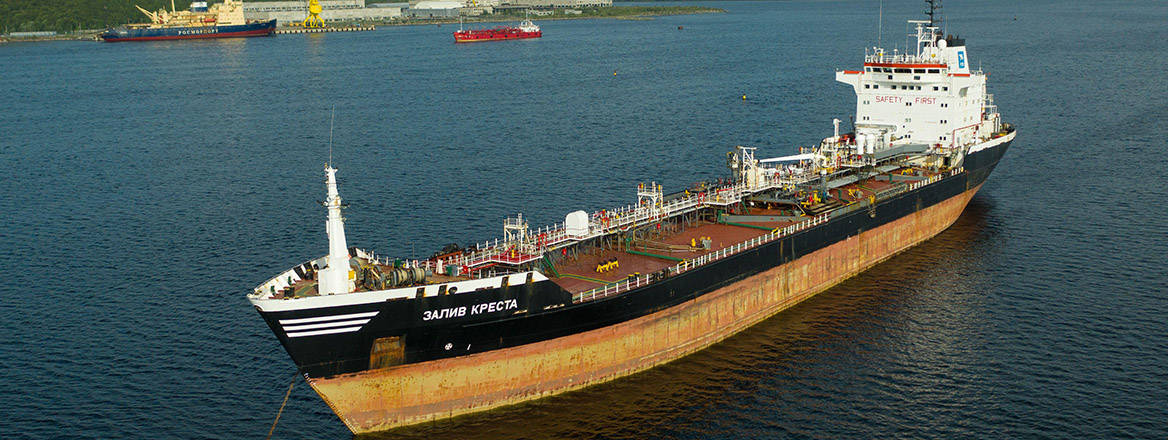
International pressure on flag registries has pushed part of Russia’s shadow fleet directly under Russian registration, potentially exposing news limits of sanctions enforcement.
Russia continues to depend on its shadow fleet to move its oil, which transports nearly 70% of Russian seaborne crude and generates an estimated $85 billion annually for the Kremlin. The fleet has become a lifeline to sustain wartime revenue and the raft of maritime sanctions adopted to degrade its operations now sit at the centre of the wider economic pressure campaign.
Russia’s strengths were waning in late 2025 and its economy was feeling the pain. In December, the price of Urals hit its lowest levels since 2022. However, recent geopolitical and related energy market developments have given Russia some relief. The crisis in the Strait of Hormuz has pushed energy security and concerns over higher oil prices back to the top of Western policymaker priorities. At the same time, divergence between the US and the EU and UK has further widened, including through the issuing of US waivers that eased access to Russian oil already loaded on tankers.
Still, despite Russia’s renewed revenues in this turbulent context, a concerning trend in Russia’s shadow fleet operations involves not its profits, but the Russian flag itself. Since late 2025, part of the dark fleet has obtained direct registration under the Russian flag, essentially stepping out of the shadowy ecosystem that Russia had painstakingly built. This shift accelerated after an intense period of boardings and detentions by the US and EU. Russia’s unprecedented willingness to register these vessels reflects the impact of these actions, but it also raised concerns regarding the limitations it would entail for further sanctions enforcement and disruption of its operations. This trend has steadily slowed after January, perhaps suggesting that Russia has little appetite for absorbing the whole fleet and the liabilities that come with it. Regardless, the worrying trend and its potential impact on sanctions policymaking requires further analysis.
Current Efforts are Working… Somewhat
The original G7 oil price cap was designed based on a relatively simple premise to reduce Russian revenue without causing a global oil price shock. Coalition countries would ban most direct imports of Russian oil while still allowing exports to third countries if service providers under coalition jurisdiction ensured that cargoes were sold below the cap. In practice, however, that model has suffered from severe implementation challenges as its effectiveness depended on Russia continuing to rely on Western insurance, finance, shipping and other maritime services. Once Russia built up a parallel fleet and developed a broader service ecosystem outside that system, implementation became significantly harder.
Detaining or seizing a falsely flagged vessel is one thing but acting against a vessel openly flying the Russian flag poses far greater risks
Over the past 18 months, the EU and UK have intensified their efforts to add new layers around the original price cap architecture. They jointly lowered the oil price cap outside the G7 framework, expanded vessel listings, lead diplomatic outreach to flag states and pushed the issue further up the diplomatic agenda. These steps have had a material impact on Russia and its enablers that keep this illicit maritime ecosystem moving. The shadow fleet reportedly cost Russia $14 billion to build and operationally faces costly efforts to flag hop to weak or false registries, extend its complex webs of intermediaries and shell companies, and increasingly faces the risk of detention during voyage. The fleet still operates and raises substantial revenue, but it has itself become harder and more expensive to sustain.
As the price cap proved ineffective and the sanctions toolkit expanded, the EU announced that the next package would introduce a full maritime services ban on Russian crude and petroleum products, yet political resistance has kept that measure on hold.
Hungary and Slovakia delayed the 20th package for months due to the Druzhba pipeline dispute with Ukraine. Greece and Malta have also resisted an immediate services ban, likely due to the interests of their domestic shipping industries and concern that the move would simply displace business to non-EU operators without reducing Russian exports enough to justify the economic cost. As a result, Europe has adopted the new 20th sanctions package that falls short of the promised full maritime services ban and puts it on ice pending ‘full coordination’ with the G7, an outcome that under the current US administration looks unrealistic.
However, international efforts against the shadow fleet extend well beyond sanctions. Some of the most impactful progress has come through diplomatic outreach and technical assistance to flag states. Weak registries have long provided the shadow fleet vessels with legal nationality and jurisdictional protection while conducting limited checks into beneficial ownership, insurance and compliance with international conventions. This diplomatic pressure has nevertheless produced tangible results. Cooperative registries, with the leading example of Panama, have de-registered hundreds of designated vessels and have forced Russia into smaller pockets to reflag to.

In consequence, false flagging and fraudulent registration rose sharply. In these cases, a vessel claims a flag without valid authorisation or uses false documentation to create the appearance of lawful registration. However, a falsely flagged vessel is stateless and thus does not enjoy any protections of innocent passage or transit under international law attached to a properly registered ship. This move by the shadow fleet reflected its quick adaptation, but it also opened the door to ship detentions, boardings and other actions against these vessels.
The US action involving the Bella 1 tanker, later renamed Marinera, drew particular attention because it tested the legal and political boundaries of boarding a vessel linked to the shadow fleet after it had moved under Russian registration. The US and the UK – who provided support for the boarding – claim that the registration to Russia could not take effect mid-pursuit. Regardless, the case shed light on Russia’s willingness to provide its flag and deploy military assets to protect a shadow fleet vessel.
Belgium, Estonia, Finland, France, Germany and Sweden have all boarded and detained at least one shadow fleet vessel. The UK has supported some partner actions and has repeatedly signalled its intention to conduct its own independent actions and interdict vessels transiting the English Channel. However, these political statements have yet to backed by an actual detention by the UK government and, in the meantime, the shadow fleet continues transiting the Channel, on occasion with military escorts.
For the past years, Russia has benefited from distancing itself from the shadow fleet. It could hide behind weak or false registries, access third-country services and avoid direct responsibility for the ageing tankers carrying its oil. But as cooperative registries closed off options and false flagging became a riskier bet as detentions increased, Russia faced a shrinking pool of viable flags. Its response seems to have been to fall back on its own registry, with Russian registration of shadow fleet vessels rising sharply in late 2025 and early 2026, as seen in the graph below.
The Danger of a More Insulated Russian fleet
As explored above, the shadow fleet undermines the Western service dominance that the price cap relied on, and direct Russian registration only sharpens that problem. Even more so than a shadow fleet vessel, a Russian-flagged ship is unlikely to seek G7 marine insurance, P&I cover, trade financing or certification. Western authorities and private operators are therefore gradually losing the last remaining touch points through which they can exercise their jurisdiction or ensure compliance. A future full maritime services ban, while still politically important, may not provide much leverage either if a large part of the trade has already shifted outside Western services into a Russian flagged parallel fleet.
The issue does not stop with sanctions compliance as it also concerns maritime safety and environmental risk. Many of these vessels are at or beyond the age at which mainstream markets would send them for scrapping, which increases the risk of poor maintenance, weak insurance, collisions and spills. Direct Russian registration places maritime safety and compliance checks squarely in Russian hands. This raises questions around the reliability of Russia as flag state to conduct credible inspections, proper maintenance and ensure adequate insurance of ageing tankers involved in its critical sanctions evasion mission.
Furthermore, detaining or seizing a falsely flagged vessel is one thing but acting against a vessel openly flying the Russian flag poses far greater risks. Once Russia provides its flag and its state protection on a vessel, any boarding or seizure carries risks further diplomatic confrontation or military escalation.
However, while registration under the Russian flag initially spiked in this context, the trend then quickly declined. Some experts claim that the flagging campaign was primarily tied to hindering the US efforts to enforce the blockade on Venezuela by protecting the shadow fleet vessels in the Caribbean with its flag. Whether motivated to protect its interests in relation to Venezuela or Ukraine, this registration slowdown may reflect a deeper reasoning.

Russia still seeks to present itself as a legitimate maritime actor internationally, including through participation in the IMO and the wider structures of the UN. Russia lobbied extensively to be re-elected to the IMO Council in November 2025, which reflects its reputational sensitivity around how it is perceived in the maritime domain. At the same time, openly becoming the flag state of a decrepit fleet built around sanctions evasion would expose Russia to greater visibility and direct liability, particularly if one of these ageing tankers were to cause a major environmental disaster after failing to uphold its international obligations as flag state. For these reasons, the likelihood of Russia continuing to pursue the registration under its flag of the bulk of the shadow fleet is unlikely.
Monitor Russian Behaviour But Keep Pressure on Flag States
If direct Russian registration remains only a partial and uneven response, governments must ensure that they do not ease pressure on other registries. Russia may be willing to shelter some shadow fleet vessels under its own flag – and indeed EU and UK designations of its maritime registry should be harmonised – yet it still benefits from keeping much of the fleet at arm’s length through weak or permissive third-country registries. Flag states thus maintain their key enabling role in the wider shadow fleet ecosystem, particularly where they provide jurisdictional cover and legitimacy to vessels involved in sanctions evasion.
A leading recommendation from RUSI’s Maritime Sanctions Taskforce is to bring flag registry oversight into Financial Action Task Force (FATF) evaluations. States that allow sanctioned or high-risk vessels onto their registers without meaningful scrutiny create sanctions enforcement gaps with wider consequences for financial integrity and counter-proliferation financing. The FATF angle is strictly tied to UN-related sanctions and therefore sits exclusively within the framework developed to counter Iranian and DPRK proliferation financing. Still, a measure designed to tighten scrutiny of shadow fleet activity in that context would also hit Russian evasion networks. FATF and FATF-style regional bodies should therefore examine more closely how flag states screen vessels before registration and whether ships linked to sanctions evasion or other illicit activity are allowed to keep their flag. An illustrative example would be Cameroon, who has emerged as a leading flag for shadow fleet vessels, while also remaining on the FATF grey list under increased monitoring. In that context, the requirement of cleaning up its registry as part of a broader effort to exit the grey list would create a far stronger incentive than diplomatic engagement alone.
However, FATF reform will take time, and governments need a faster tool they can deploy now. The most practical option is for the EU and UK to develop a formal list of high-risk flag registries, ideally with US support. Most financial institutions do not have port state control assessments such as the Paris MoU or Tokyo MoU integrated into their compliance programmes. A government-backed list, built around criteria such as inspection performance, insurance validation failures, fleet age, convention ratification and registration of sanctioned vessels, would carry far greater operational value inside financial institutions and service providers.
A bank reviewing its trade finance services or a P&I club screening a counterparty or a maritime service provider assessing voyage risk, could treat high-risk registration as a serious warning sign or even as a recusal trigger. That would hit permissive flags where pressure is felt most directly, in the commercial value of the registry itself. If financial institutions begin to decline transactions involving vessels under those flags, that value would drop sharply. Reluctance to introduce this list due to diplomatic sensitivities would be misplaced. The EU and UK already maintain similar lists for high-risk jurisdictions in relation to money laundering and terrorism financing. This list would make these efforts more coherent and effective. The Flag State Performance list maintained by the International Chamber of Shipping could serve as inspiration and combined with active monitoring of sanctions evasion enablers such as those on the graph above.
Conclusion
Pressure on the shadow fleet has done more than raise costs at the margins. It has narrowed Russia’s options, forced vessels out of cooperative registries, made false flagging riskier and, in some cases, pushed these illicit actors back towards the Russian flag. That points to growing strain in the system. At the same time, Russian registration should not be read as a settled end state. Russia still has reasons to avoid taking direct ownership of too much of this high-risk illicit activity, especially if that means assuming the visibility and liability of an ageing fleet that could trigger a major environmental or political crisis. The immediate priority is to keep closing off the foreign registries and private operators that sustain the wider shadow fleet model, while tracking closely how far Russia is willing to place its own flag behind sanctions evasion. Continued pressure in those areas will force harder choices on the Kremlin and make the fleet more difficult to keep both profitable and deniable.
© RUSI, 2026.
The views expressed in this Commentary are the author's, and do not represent those of RUSI or any other institution.
For terms of use, see Website Terms and Conditions of Use.
Have an idea for a Commentary you'd like to write for us? Send a short pitch to commentaries@rusi.org and we'll get back to you if it fits into our research interests. View full guidelines for contributors.
WRITTEN BY
Gonzalo Saiz Erausquin
Research Fellow
Centre for Finance and Security


- Jim McLeanMedia Relations Manager+44 (0)7917 373 069JimMc@rusi.org