


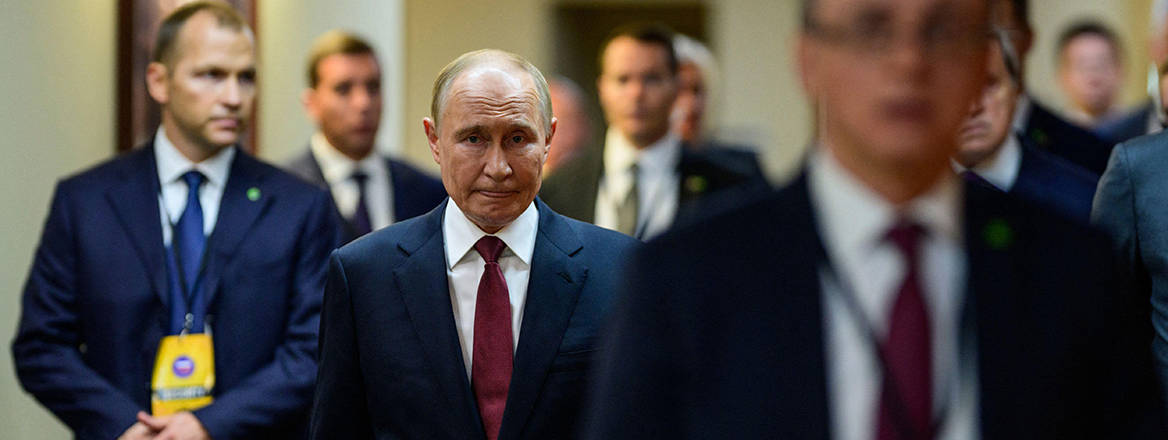
Ukraine's deep-strike campaign is putting pressure on Russia's energy infrastructure and forcing increasing political pain for Putin.
For years, the Kremlin has fought a war that most Russians could watch from a distance. Ukraine is beginning to change that. Its sustained strikes on Russia's energy infrastructure are turning the war into a daily economic burden, forcing the Kremlin to choose between export revenues and domestic stability. On 28 June 2026, after weeks of mounting evidence of fuel shortages across Russia, President Vladimir Putin publicly acknowledged for the first time that Ukrainian attacks on energy infrastructure were creating ‘problems’ and a ‘certain shortage’ of fuel. Yet he insisted the situation was ‘not critical’ and had no impact on military operations, even as shortages spread. As the costs of the war become increasingly difficult for ordinary Russians to ignore, the Kremlin will find it harder to keep the conflict insulated from everyday life.
The longer Putin pursues his maximalist aims in Ukraine, the more detached he becomes from realities at home. Many Russians have endorsed the imperial project in principle, but the fear of being directly affected by the war – through Ukrainian strikes on Russian cities or mounting economic hardship – is steadily eroding enthusiasm for rallying around the flag and sacrificing more lives. This shift owes more to Ukrainian strikes bringing the war to the doorsteps of ordinary Russians than to any moral reckoning over the Moscow‑driven bloodshed.
A Reversal of Fortunes
After a long period of battlefield stagnation and a US policy pivot that risked relegating Ukraine behind other crises, Kyiv is reclaiming momentum by hitting Russia where it is most sensitive. Since 2014, Crimea has served as a showcase for Russian victory, presented by Putin as a flourishing hub of tourism and infrastructure development; Ukrainian attacks now directly undermine that narrative and remind Russians that the cost of war keeps rising.
By turning deep-strike capability into sustained pressure on Russia's energy system, Kyiv has found a way to translate battlefield operations into economic costs
The timing is critical. The impact is now spreading well beyond occupied Crimea and increasingly affecting Russia itself. As the economy slows and Moscow struggles to replace battlefield losses, Ukraine is squeezing Russia's oil and gas revenues while fuel rationing spreads across multiple regions. Economic hardship alone rarely triggers political change in Russia, but it can narrow the Kremlin's room for manoeuvre.
Ukraine's refinery strike campaign is the clearest expression of this strategy. By turning deep-strike capability into sustained pressure on Russia's energy system, Kyiv has found a way to translate battlefield operations into economic costs. This is where the Kremlin's narrative of control collides with the structural trade-offs of a war economy: every step taken to shield consumers from shortages comes at the expense of export revenues and budget stability.
Russia's fuel shortages are becoming a budget problem. Ukraine's sustained strikes on Russian refineries are not only damaging infrastructure and squeezing Russia’s oil industry, they are forcing the Kremlin to spend more to keep fuel flowing at home while earning less from exports. That trade-off is becoming increasingly expensive.
The effects are already visible across Russia. More than two-thirds of the country’s federal entities have reported government or privately imposed restrictions on gasoline and diesel sales, while retail fuel prices have risen 3% over the past week. Since late May, intensified Ukrainian strikes have cut gasoline production by roughly a quarter, pushing jet fuel prices at Russian airports up 17% since early June. The Kremlin has already extended its jet fuel export ban through the end of November and is considering a ban on diesel. Russia is also negotiating to import around 50,000 tonnes of gasoline from Kazakhstan.

The biggest consequence of that intervention is fiscal rather than logistical. Export restrictions prevent refiners from selling into higher-priced foreign markets, reducing foreign-currency earnings while limiting companies' ability to recover costs at home. A diesel export ban would deepen that trade-off. According to International Energy Agency, Russia exported 0.72 mb/d of gasoil in May 2026, equivalent to an estimated $2.9 billion in export revenues, or roughly 14% of Russia's total oil export earnings that month. Restricting those exports would reduce export revenues but increase the supply of fuel available on the domestic market.
The federal budget subsidises refiners supplying the domestic market instead of exporting fuel through the fuel dampener. According to data from the Ministry of Finance, dampener payments rose from roughly $220 million in the first quarter of 2026 to more than $2.5 billion in May alone. Recent tax amendments allowing compensation for imported gasoline suggest the Kremlin is preparing for even greater intervention.
Running Out of Options
If Ukraine can sustain this pressure and systematically hit more strategic targets, Putin will be left with a shrinking set of choices. One option is to recognise that Ukraine’s deep‑strike campaign is affecting Russia’s domestic political situation and that these costs will only rise if the war drags on. That would mean re‑entering negotiations with fewer ultimatums and, indirectly, accepting that Russia is unable to conquer Ukraine’s eastern and southern regions. So far, however, there is no indication that Putin is prepared to abandon any of his maximalist demands.


The alternative to diplomatic settlement is an escalation that can be achieved only with a deeply unpopular decision to call for mass mobilisation. When Putin announced ‘partial mobilisation’ in September 2022, hundreds of thousands of Russians – predominantly men of military age – left the country within days, triggering queues at borders, sold‑out flights and visible anxiety in the regions most affected. A new wave of mobilisation now could prompt another outflow unless Moscow increases repressive measures and control. It would also deepen labour shortages and compound the economic hardships already generated by Russia’s war economy. On the other hand, a declaration of war and mass mobilisation could end or reduce compensation for dead or wounded soldiers and their families, which has become a major fiscal burden.
Economic pressure alone has rarely reshaped Russian politics. Ukraine’s current strategy synchronises military and economic instruments to make the war material, immediate and inescapable for those the Kremlin has tried hardest to shield. It is this interaction that will determine whether Putin can sustain his maximalist ambitions or is eventually forced into a negotiated retreat on far less favourable terms.
© RUSI, 2026.
The views expressed in this Commentary are the authors', and do not represent those of RUSI or any other institution.
For terms of use, see& Website Terms and Conditions of Use.
Have an idea for a Commentary you'd like to write for us? Send a short pitch to commentaries@rusi.org and we'll get back to you if it fits into our research interests. View full guidelines for contributors.
WRITTEN BY
Petras Katinas
Research Fellow in Climate, Energy and Defence
International Security


Natia Seskuria
Senior Research Fellow, Russia, Eurasia, and Black Sea Security
International Security

- Jim McLeanMedia Relations Manager+44 (0)7917 373 069JimMc@rusi.org