

Opening the Door: The UK’s 2027 Financial Action Task Force Evaluation

The UK is the first country to open its anti-money laundering evaluation process to research and broader civic engagement, raising the bar for a credible assessment process.
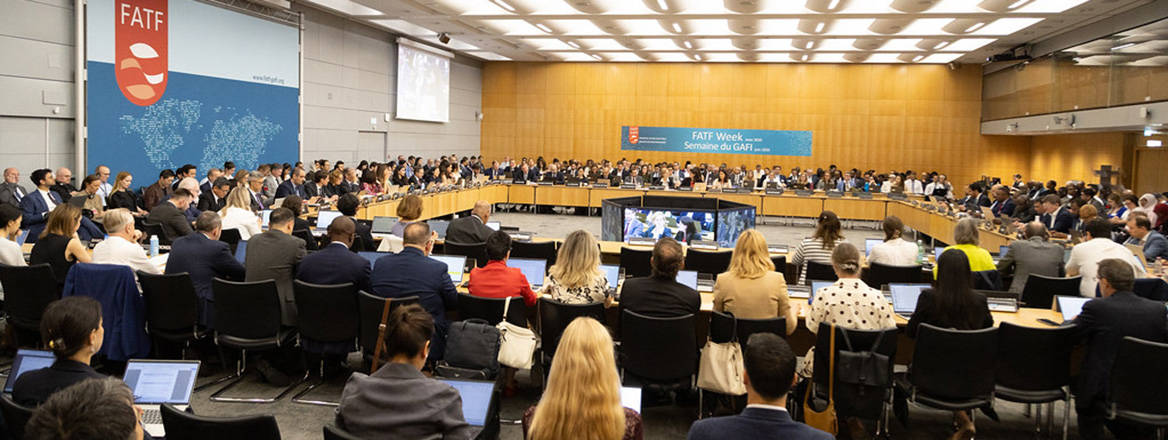
As the global standard setter for anti-money laundering (AML)/counter-terrorist financing (CFT), the Financial Action Taskforce (FATF) has long had a culture of privacy, keeping a tight hold on its business among governments and the private sector. Mutual evaluations – the process by which countries are assessed for their compliance with the FATF’s standards – are one of its most influential tools. Yet, those too are shrouded in secrecy with decision-making by consensus in closed-door plenaries.
On the other side of this door, the FATF’s engagement with external experts in the research community and wider third sector has traditionally been peripheral. In 2020 under the German Presidency, the FATF collaborated with civil society on its Illegal Wildlife Trade report. The FATF also seeks third sector inputs on public consultations when finalising new guidance or Recommendations, unintended consequences, and Recommendation 8 around Non-Profit Organisations. But these examples are few and far between.
One argument for maintaining a closed shop is that it allows for frank and candid assessments. In reality, we see no evidence that opacity has helped the FATF better achieve its objective of protecting the global financial system or do its job of evaluating countries, and there has even been some evidence to the contrary.
In a commendable move, the UK has taken a landmark step to formally invite research and wider third-sector partners into its evaluation preparations and process. So, what does the UK’s cross-sector approach mean for the road ahead?
Breaking Silos in the Era of Effectiveness
Following the final plenary meeting from 17-19 June 2026 under the Mexican Presidency of Elisa de Ananda Madrazo, leadership of the FATF passes to Giles Thomson of the UK on 1 July 2026. The UK has made the global fight against fraud, implementing the risk-based approach and information sharing its priorities, and on 1 July 2026 will launch its roadmap 26-28 on combatting fraud.
To judge how effective countries really are, FATF assessment teams review desk-based evidence and conduct an on-site visit to speak to stakeholders
While the UK steps into a leadership role, it is preparing for scrutiny of its own. The UK’s fifth round mutual evaluation is fast approaching, with an onsite visit of the assessors planned for June 2027 and the evaluation due to be adopted at the 2028 FATF plenary. Recognising the growing convergence between fraud and money laundering globally, and with fraud having surged to be the most common crime in the UK, the UK evaluation will be one test case for how the FATF meaningfully tests countries on fraud as a predicate offence to money laundering.
Crucially, this will also be the UK’s first evaluation under the FATF’s 2022 methodology, where the FATF raised the bar. While the fourth round notionally tested not only the laws, regulations and enforcement measures countries have put in place, but also how effectively these measures target a country’s major context-specific risks in practice, the fifth round goes further. For instance Singapore, currently the only other global financial centre to have a published evaluation under the fifth-round methodology, demonstrated a strong AML/CFT framework but achieved no Intermediate Outcomes as ‘High Effectiveness’; in contrast, Latvia managed to achieve five. From evaluations published so far, the fifth round appears to be significantly increasing the onus on countries to prove genuine risk-based effectiveness.
Beyond Compliance: Proving it Works
To judge how effective countries really are, FATF assessment teams review desk-based evidence and conduct an on-site visit to speak to stakeholders. Their task is to identify the country’s most significant risks, assess whether the AML/CFT regime is making a proportionate difference to those risks against eleven Immediate Outcomes, and recommend what more should be done.
This heightened focus on real-world outcomes calls for new cross-sector evidence and different judgements compared to what has come before. Yet, the FATF has long relied solely on inputs from government, regulators, financial institutions and regulated professions to tell them how things are going. Information from public and private sectors is essential to understand the design, implementation and operation of systems, but this does not tell the whole story.

Cross-sector inputs from the research community and other third-sector partners add texture to the conversation. They have independent information on risks, trends and the real-world outcomes of AML/CFT measures, which can help FATF assessors and governments build a picture and make their judgements. As the FATF's focus shifts further towards effectiveness, these voices have an increasingly important role to play.
Setting a New Precedent Through the UK’s 2027 Evaluation
In an unprecedented move and a demonstration of leadership, the UK has formally invited third-sector partners into its evaluation preparation and process. The FATF secretariat delivered the first ever assessed country training for research and other third-sector organisations at HM Treasury in London in early June 2026 – a notable evolution from the FATF’s closed-door practice. The training offered clear ways to submit credible and reliable third-party evidence and created a transparent channel for direct input to the FATF assessment team, a request that civil society and journalists have long called for.
Recognising this opportunity, the RUSI FATF Taskforce is rising to the challenge. This group of external experts is independently analysing the UK’s material risks and identifying important effectiveness questions for the FATF assessment team. The Taskforce will also consider trends from other fifth-round evaluations and areas that may warrant greater attention by the FATF.
Why this Matters Beyond the UK
Cross-sector engagement goes beyond a single training or evaluation. It is a culture of working and a question of legitimacy. The credibility of the FATF process has long been damaged by the sense outside the closed FATF shop that evaluations are neither transparent nor reflect the true risks inherent in larger economies such as the UK. Whilst in 2018 the UK came out best in class, it remained an attractive hub for global illicit finance, raising questions about the relevance of the FATF itself.

Opening a long-closed door matters for the legitimacy of the UK’s evaluation and potentially the FATF more broadly. What might sound like a technical change could mark an important step towards improving how countries are assessed and, ultimately, in understanding how financial systems can be most effectively protected. This is, after all, what the FATF was set up to do. With other countries preparing for their evaluations, will they focus on merely passing the exam or, like the UK, lift their sights beyond?
Going forward, the integrity of the global financial system cannot depend on public and private sectors alone. The next era of combatting AML/CFT will depend on more than cross-sector consultation, but what role each part of the ecosystem can play. There is a case for bringing new, broader and richer perspectives to the FATF’s core business so that it can effectively do the work it set out to do. The UK’s 2027 offers a glimpse into what’s possible.
The question for now is the culture the UK chooses to lead with in its Presidency, and how others follow.
© RUSI, 2026.
The views expressed in this Commentary are the author's, and do not represent those of RUSI or any other institution.
For terms of use, see Website Terms and Conditions of Use.
Have an idea for a Commentary you'd like to write for us? Send a short pitch to commentaries@rusi.org and we'll get back to you if it fits into our research interests. View full guidelines for contributors.
WRITTEN BY
Veronica Stratford-Tuke
Research Fellow
Centre for Finance and Security


- Jim McLeanMedia Relations Manager+44 (0)7917 373 069JimMc@rusi.org