

NATO Planning for War with Russia – but has Moscow Left the Door Open?

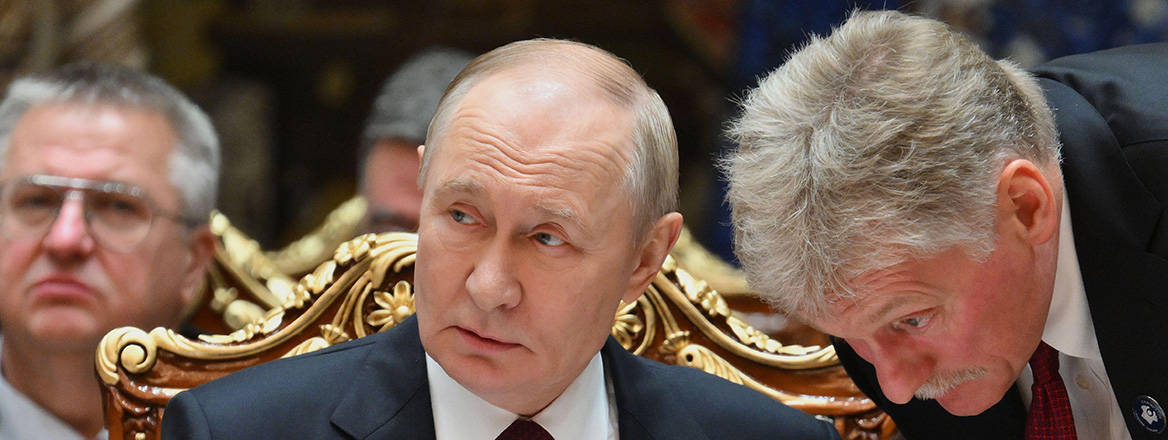
Moscow’s strategic communications cast Russia as a backseat passenger on a road to war in Europe – but war is not inevitable.
As expected, at the NATO summit in Ankara the Alliance dedicated much of its time to the importance of boosted defence spending and reiterating support for Ukraine. It is also collectively considering preparations for warfare with Russia at an as-yet-undetermined date.
NATO appears convinced that the next major war will be with Russia in Europe and is making plans accordingly. Numerous articles to this end have appeared of late, suggesting variously that Russia has designs on a limited land incursion of Poland to test Alliance resolve, despite there being no plausible evidence beyond Moscow’s usual range of scenario planning to suggest that Russia intends to do this.
But for Moscow, there are probably three parallel conversations taking place, which in the Kremlin’s understanding are entirely separate – its current war with Ukraine; its bilateral relationship with the Americans, and the potential for a future war with NATO.
Russia’s Preparations for War
Moscow’s strategy sees no contradiction between sounding the alarm over an imminent war with NATO, continuing its strikes on Kyiv and criticising the US as the ultimate orchestrators of Ukraine’s drone campaign – all while still maintaining engagement with President Trump.
Against the backdrop of Ukraine’s concerted drone campaign to knock out Russia’s logistical supply chains and ultimately bring Moscow to the negotiating table, instead Putin has taken this opportunity to further harden his position on the war. At the same time, if in previous months Kremlin-backed media had held off their criticisms of the US, now Russia’s media have framed the recent Ukrainian drone attacks on Moscow as a specific part of a US-led plan to orchestrate the counteroffensive.
Just as NATO has suggested that a Russian attack on the Alliance could be a reality in the coming 4-5 years, Alexander Volfovich, Secretary of the Belarusian Security Council (whose worldview is aligned with Moscow’s), declared similarly in May, with the converse view that NATO is preparing to attack Russia by 2030. More recently, Putin, in a 23 June address to graduates of military academies and law enforcement universities, noted that NATO is openly declaring its preparations for war with Russia through its calls for increased defence spending.
Peskov noted that western states considered to be directing Ukraine’s military campaign – specifically those who use their own territory to launch attacks on Russia – are legitimate targets
All of this has implications for how Russia delineates between the Ukraine war and a future war, where its relationship with Washington features, and how it conducts itself in any negotiations.
The Spirit of Anchorage is Dead
If any further evidence of Russia’s lack of interest in coming to the negotiating table over Ukraine was needed, one need only look to their evolving statements in the aftermath of last year’s Alaska summit.
This is not just a matter of Russia’s more general intractability and maximalist claims to Ukrainian territory.
Part of the problem in dealing with Russia is that it oscillates between hard doctrines, specific strategies and hard economic data, while at the same time overlaying this with a much more abstract and occasionally religiously-themed framework about its ‘mission’, its ‘fate’, or ‘destiny’ in the world, which are much harder to grapple with when it comes to international affairs. In recognition of this, Yuri Ushakov, a presidential aide and one of Russia’s key players in negotiations over the conflict, maintained in a recent speech at the Primakov scientific forum that Russia and the West had fundamentally different approaches to international relations, and that this schism was only set to deepen.
The August 2025 Anchorage summit and its aftermath was a useful example of where the Russians and Americans continually talk at cross purposes. Following that meeting between Trump and Putin, the Russian media alighted on the term ‘the spirit of Anchorage’ (dukh) to describe the general atmosphere of agreement and collegiality they felt it contained, despite the summit concluding without any meaningful diplomatic resolution, nor anything committed to paper.
It is unclear what the term even means. Kremlin spokesman Dmitry Peskov in February 2026 referred to dukh Ankoradzha as a vague ‘set of mutual understandings’ between the US and Russia, but there is nothing tangible to hang this understanding on; no sense from the American side that they have similar understandings, or the same interpretation of what this concretely refers to. The same vague allusions to ‘a set of understandings’ (nabor ponimanii), or ‘preliminary results’ (predvaritelnie rezultati) of the face-to-face meetings further obfuscates the picture, as there was no final written document after Anchorage to base this on. This means that each side came away with their own interpretations of the outcome.

Instead, the so-called spirit of Anchorage has in Russia become a catch-all term to refer to the general ambiguity around its relationship with the US. As there is no formal agreement to hold Russia to, it can mean whatever Russian media outlets wish to weaponise it for – variously the Americans’ apparently pleasing willingness to listen to the Russian point of view, or reproach the Trump administration for its support of Ukraine and betrayal of the essence of Anchorage.
It did not take long for the floridity around Anchorage to dissipate. By October 2025 Foreign Minister Sergei Lavrov was noting that the US had changed its rhetoric on the Ukraine war – allegedly under pressure from Europe. More recently in June 2026 Lavrov maintained with an oddly regretful tone that he did not ‘even want to think’ that the Alaska summit had been expressly designed by the Americans to buy time for Kyiv to rebuild its military potential. While the war in Iran had been hailed as a boon for the Russians due to the temporary spike in oil prices and an American leadership’s attention shifted away from the Ukraine war, that distraction has also left less time for Trump to dedicate to his relationship with Putin – a cause of disappointment for Moscow.
Shifting Language on the War
On the eve of the summit, there was a further interesting linguistic shift in Russia.
Peskov on 6 July, gave a significant and seemingly escalatory interview to government-controlled Vesti, in which he directly stated the ‘special operation’ in Ukraine had now morphed into a war, expressly due to the intervention of western countries. President of Belarus Alexander Lukashenko echoed Peskov’s statement the following day, something he has historically avoided doing, but designed to appease Moscow given the pressure he has come under in recent weeks from Zelenskyy to disable relay systems used to support Russia’s drone activity. Technically, this is not the first time the terminology has changed – Putin himself in May 2025 briefly used the term in an address to journalists.
The timing may seem unusual, as NATO has provided military support to Ukraine since the invasion.


But Peskov was talking specifically about the extension of the war in Ukraine to a much broader war with NATO’s combined forces, the ‘collective west’, and timed his remarks to coincide with the NATO summit. These words likely refer to unsubstantiated accusations from Russia’s Foreign Intelligence Service (SVR) in May that Ukraine planned to launch drones from the Baltic states to damage Russia’s supply chains. Indeed, Peskov noted that western states considered to be directing Ukraine’s military campaign – specifically those who use their own territory to launch attacks on Russia – are legitimate targets.
This, coupled with Ukraine’s increased drone attacks on Russia’s critical national infrastructure, was sufficient for Peskov to claim that Russia had been goaded into an escalatory response. If Peskov’s words do not refer to the current war, but to a future confrontation that NATO states are also preparing for, it changes what Russia considers to be a ‘legitimate target’. For now, this does not suggest that Russia is planning an operational change, but it is a veiled warning to both the West and Kyiv that Moscow would shift its targeting towards the political leadership, in response to any launch of drone counterattacks from the Baltics or other states.
For now, the likelihood that a NATO state would be used as a staging post for missile launches on Russia is low. Nevertheless, Peskov’s words carried a carefully worded warning to NATO that assisting Ukraine in this way would make them a target for a Russian response.
Despite this language, Peskov continues to affect the same note of disappointment and betrayal that seems to have characterised the senior leadership’s approach to the US since Anchorage, drawing a particular distinction between governments such as France, Belgium and Germany that supported Kyiv, and ‘unfortunately Washington’. While as ambiguous as the spirit of Anchorage itself, it highlights how the Kremlin has been trying to carefully disconnect decisions made in Washington as separate to Europe – or the European part of NATO – and, if all else fails, to suggest that the Americans are being maliciously influenced away from engaging with Russia by a ‘Russophobic’ Europe.
Over the last few months, Russia’s position has now become that the US reneged on its economic cooperation plans with Russia, and on the apparently agreed-upon parameters of the Ukraine conflict. While some of Moscow’s rhetoric on future war with NATO is escalatory, it is not yet an inevitability. Beneath this wording, Russia seems to be leaving the door open for the Americans – but the topic of the dialogue may not be what the US wants to discuss.
© RUSI, 2026.
The views expressed in this Commentary are the author's, and do not represent those of RUSI or any other institution.
For terms of use, see Website Terms and Conditions of Use.
Have an idea for a Commentary you'd like to write for us? Send a short pitch to commentaries@rusi.org and we'll get back to you if it fits into our research interests. View full guidelines for contributors.
WRITTEN BY
Emily Ferris
RUSI Senior Associate Fellow, International Security


- Jim McLeanMedia Relations Manager+44 (0)7917 373 069JimMc@rusi.org