

Lessons from the French Army’s Transformation Towards a Modern ‘Fighting Army’

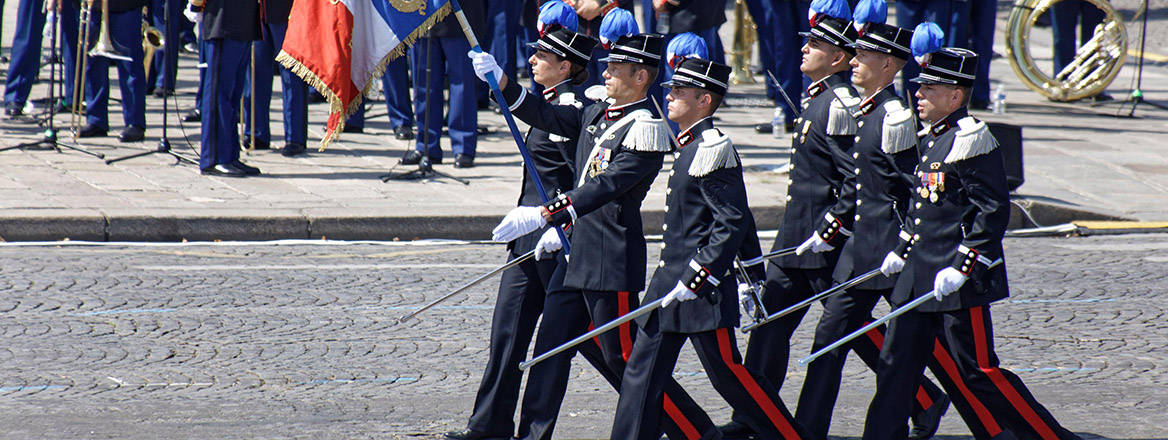
The transformation of France’s land forces to a Fighting Army, a response to the 2014 invasion of Ukraine by Russia, has lessons for the British Army.
Like most militaries across Europe, the French Army has been transforming itself for war. What began with Russia's 2014 invasion of Ukraine has accelerated with recent events. France’s military has decisively reoriented away from Counterinsurgency and Counter-Terrorism operations towards preparing for large-scale peer or near-peer conflict, and from this there is much the British Army can learn. Supported by the Military Programming Law (LPM) 2024–2030 with a €413 billion budget, the French Army of 2024 had shifted away from being an Armée au Contact to an Armée au Combat – from an ‘Army at Contact’ to a 'Fighting Army’. This next phase focuses on increased reactivity and readiness through organisational reforms and new capabilities.
The French Army’s approach has been to initiate a series of transformation ‘cycles’ under Programme SCORPION (Synergie du COntact Renforcée par la Polyvalence et l’InfovalorisatiON). Launched in the same year as the seizure of Crimea, it has successfully delivered 723 Griffon, 296 Serval and 91 Jaguar vehicle variants into service. Conceptually it has also seen widespread adoption of a distinctly ‘French style’ approach to network-centric warfare by deploying new capabilities, advanced armoured vehicles, digitised systems and integrated battlefield management. Whilst much of the equipment only began appearing in 2021, Russia’s full-scale invasion of Ukraine in 2022 hastened this cycle.
Fight Tonight – Lessons for Force Optimisation
Over recent decades, the French Army has gained extensive operational experience, setting it apart from many neighbouring European countries. Its overseas missions have provided valuable combat experience and continuous field testing of equipment, improving readiness for immediate engagement. To meet new strategic challenges, the move to a ‘Fighting Army’ signifies a major organisational reform designed to increase the force's responsiveness on a larger scale.
Command and Control (C2) was decentralised, and delegated-resources with accompanying command authorities were pushed down to the brigade level. French commanders emphasised principles of trust in mission command, critical to enable shortened decision-making cycles and maintain tempo across competition and confrontation. Their ambitions have been clearly defined: to be able to deploy a two-brigade division of approximately 19,000 personnel and 7,000 vehicles within 30 days by 2027. They have already met their 2023 milestone of being able to deploy a ‘SCORPION brigade’ in 10 days and a combined-arms brigade in 10 days in 2025.
In today’s context, in which balancing mass and sophistication is critical, France prioritises a transformation that ensures coherence to preserve the integrity of its force design
These specific goals have enabled a gradual rise in overall force readiness, starting with brigade-level preparedness and progressing towards cohering a two-brigade division within 30 days by 2027. In 2026, the focus will shift to support roles and secondary functions such as logistics and fires at the divisional level. After 2027, the goal is for HQ Rapid Reaction Corps (RRC) to be capable of commanding up to 60,000 troops in the field. The goal by 2030 is to have incorporated the personnel and all components of a full Corps, including the new 19th Artillery Brigade. The French Army continues to meet its targets, demonstrating improved readiness for immediate combat.
Fight Tomorrow – Lessons for Force Modernisation
Whilst it has quantifiably enhanced force posture and readiness, the French Army still faces limitations in mass due to decades of shrinkage and budget cuts from the post-Cold War peace dividend. Flawed planning assumptions predicated on notions of 'just-in-case’ and 'just-in-time’ readiness have reduced ammunition stocks, vehicle availability and logistics systems. The force would be dangerously exposed in the event of war. That said, like counterparts in Scandinavia and the Baltics, France opted to maintain its overall force structure with a full suite of sovereign capabilities when it reduced in size. This means that the French Army is better able to expand, modernise and transform more quickly than the British Army, which decided to prioritise selected high readiness formations and atrophy certain capabilities.
In today’s context, in which balancing mass and sophistication is critical, France prioritises a transformation that ensures coherence to preserve the integrity of its force design. This coherence-driven strategy – backed by ongoing industrial programmes alongside SCORPION – provides a clear strategic pathway and the ability to scale capabilities as needed, rather than cancelling programmes or reapportioning funding.
Despite the notable successes of French transformation there are still critics that say it is too slow. The focus remains on major industrial projects that ensure consistency and direction but fail to deliver rapid innovation and technological diversification. SCORPION is celebrated for actively transforming medium-weight capabilities and digital integration, however, and addressing heavy units and expanding integration of new technologies will not start until 2040 with programme TITAN (Terrain Informatisé Total Armée Nationale). Prioritising overall force coherence offers resilience compared to the more fragmented ‘entrepreneurial’ adaptation model of the British Army, but it reduces flexibility and delays the arrival of modern technologies.
Fight Differently – Technological Innovation and Integration
Given the political significance of large-scale industrial projects in shaping France’s military transformation, technological innovation is viewed not as an end but as a means to support broader goals of industrial and economic growth. Akin to Britain’s Defence Industrial Strategy that aims for Defence to be ‘an engine for growth’, the French Army is attempting to balance political aims with military effectiveness. Integrating emerging technologies into its ongoing transformation, focusing investment on capabilities that fill identified gaps – particularly in drones, air defence, cyber and AI.

Help your search results show more from RUSI. Adding RUSI as a preferred source on Google means our analysis appears more prominently.

Get a weekly round-up of the latest commentary and research straight into your inbox.

Under the Military Programming Law 2024–2030, France has allocated approximately €5 billion to accelerate the integration of drones and robotics into land forces. The plan aims to equip the Army with 1,200 drone systems and more than 3,000 individual drones. While the requirement for drones was established earlier, recent exercises have reinforced the imperative to employ them as an integral part of combined-arms operations. Exercise ORION 23’s use of about 100 drones marked the first step, while ORION 26 will scale up with over 1,000 drones – signalling a shift from experimentation to operational integration. The guiding principle is clear: technology is a tool (‘levelling capabilities’), not a driver underpinning transformation. Coherence remains the backbone, ensuring that new capabilities enhance operational flexibility rather than a fragmented approach.
What Should the British Army Consider?
The French Army faces many similar – and some identical – transformation challenges to those of the British Army. These include a lack of mass and shortcomings in the production capacity of its defence industry, as well as neglected supporting functions such as logistics, equipment and ammunitions stocks. Its transformation model centres on force coherence – driven by a desire for strategic autonomy and desire to develop a comprehensive suite of sovereign capabilities with minimal external dependencies. This approach is being successfully implemented, and its measurable objectives are being met. However, readiness is only increasing incrementally, which comes at risk to the French Army’s ability to fight tonight and be better prepared for tomorrow.
Emerging technologies, particularly drones, are often highlighted as key lessons from Ukraine. However, the conflict also demonstrates the continued utility of traditional combined arms manoeuvre through capabilities such as heavy artillery, infantry and attritional warfare. The French Army have taken a view that developing and integrating modern technology is essential but do not appear convinced that it is a primary driver of change.
© RUSI, 2026.
The views expressed in this Commentary are the authors', and do not represent those of RUSI or any other institution.
For terms of use, see Website Terms and Conditions of Use.
Have an idea for a Commentary you'd like to write for us? Send a short pitch to commentaries@rusi.org and we'll get back to you if it fits into our research interests. View full guidelines for contributors.
WRITTEN BY
Dr Lucie Pebay
Guest Contributor


Major Laurence Thomson
Former Chief of the General Staff's Visiting Fellow
