

The Last Mile of Rearmament: Turning New Equipment into Fighting Power

Europe is spending more on defence than ever, but real capability is built after the equipment arrives. Hungary's experience shows what the hard part involves.
Europe is spending more on defence than at any time since the Cold War, and the debate about it is mostly about money and factories. That is not wrong, but it misses the real challenge: equipment is not capability. An army is ready only when its soldiers can fight with new equipment as part of a formation, and its Allies can count on that formation when it is needed. The last mile, from delivery to genuine readiness, is slower, harder and less visible than procurement. It is also the best test of whether an army could regenerate in a long war, the theme of RUSI's Long War Conference this month. Hungary's experience of building a heavy capability almost from scratch shows what that last mile involves.
When the Hungarian Defence Forces began a comprehensive modernisation in 2016, it was less obvious than it is today that every nation needs reliable capabilities and a credible deterrent. Two core directives shaped the programme. The armed forces must credibly deter adversaries from military action, and every new capability must integrate fully within the Alliance, so that Hungary meets its NATO Capability Targets – the specific forces each Ally commits to provide. The cornerstone was a new heavy mechanised infantry brigade.
Buying is the Easy Part
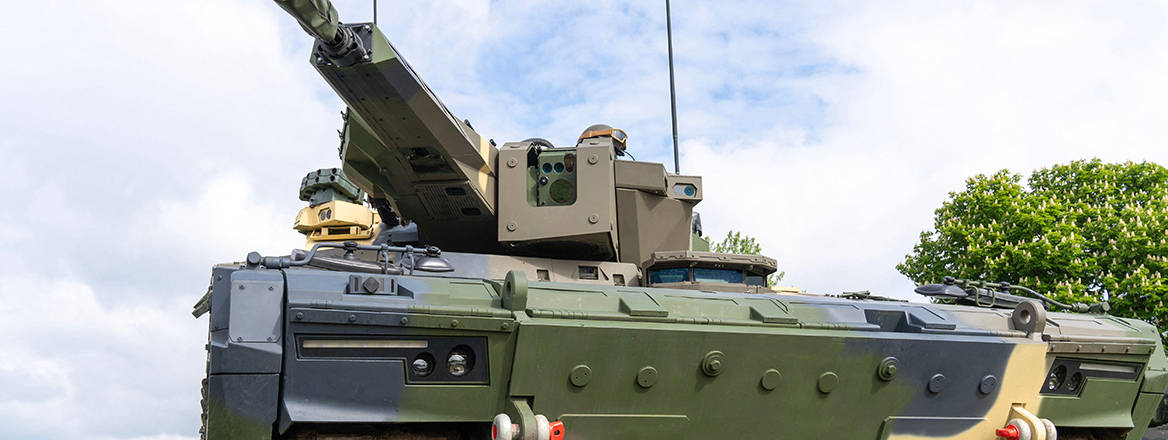
The first question was what to buy: well-proven systems widely used by Allies, or a bold leap to something new. Hungary chose a mix: Leopard 2A7HU main battle tanks, PzH 2000 self-propelled howitzers and the new KF41 Lynx infantry fighting vehicle. Every such choice carries long-term consequences, as the Lynx would show.
A brigade that reports itself ready because its vehicles are in place, while its crews, staff and logistics are not, is more dangerous than one that reports its gaps
Yet building a military capability is not the same as acquiring equipment. Procurement may even be the simplest phase: it comes down to identifying what is needed, in what quantity, and buying it. Turning equipment into capability needs much more. Infrastructure, maintenance networks and support systems must be built from scratch, and the services behind them, from maintenance and training support to recruitment and expert advice, procured quickly and transparently. That demands agile leadership as much as agile contracting. The right people must be recruited and kept, and a training and readiness system must teach them to get the most from the new combat systems. Every component must be precisely timed. Recruit soldiers too long before the equipment arrives, for instance, and they lose motivation and may leave before their training even begins. Predictable careers matter as much as equipment delivery schedules.
By 2023, enough Lynx had arrived for substantial training to begin. Rearming an existing unit is daunting enough. Hungary had to build a completely new capability and a new unit from the ground up, with only traces of the necessary knowledge left in the armed forces.
The reasons will be familiar to many Allies. For decades, like most NATO members, Hungary focused on light, deployable forces for peacekeeping, counterinsurgency and border security, still relevant today, not least in the Western Balkans. Such commitments absorb much of an army’s day-to-day staff capacity, leaving little to regenerate warfighting skills. Hungary phased out its infantry fighting vehicles and self-propelled howitzers in 2003 and 2004, as obsolete and no longer required. A generation of soldiers grew up without heavy armour and the warfighting flame began to flicker. The theory, and above all the practice, of mechanised combined arms operations faded, because Hungarian contingents did not deploy heavy equipment on operations either. What doctrine remained dated largely from before 1989 and would be unusable today even if it were NATO-compatible, which it is not.

So new concepts and doctrine had to be written, and soldiers, the most critical element of any capability, had to be trained. This is where the earlier choice of equipment showed its consequences. Had Hungary bought a system already in service elsewhere, it could have adopted allied training syllabi, simulation and methods. But the Lynx was entering service for the first time anywhere in the world. There was no blueprint to borrow.
Asking for Help
Hungary also wanted doctrine that aligned with allied concepts while respecting its own circumstances, military culture and national commitments. Experience after NATO accession argued for this: slavishly translating combat regulations from several countries had produced a dysfunctional system. Yet developing everything in-house, with the organisational knowledge almost extinct and few personnel with relevant experience and staff stretched by other commitments, would have resembled Baron Munchausen escaping a swamp by pulling himself up by his own hair.
So in 2023, the Hungarian Defence Forces asked an external UK expert advisory group for help. This was unusual, but there was precedent; after NATO accession, Hungary worked with a US advisory group to reorganise the armed forces, end conscription, build a professional force and create a NATO-compatible defence planning system. This time the need was for deep NATO understanding and proven experience of fielding heavy units. Hungarian staff and the advisers set three goals for the Lynx battalion task force: write its doctrine and manuals down to platoon level; build a training system from individual skills to full task force cohesion; and validate the result through demanding combined arms evaluation exercises against a realistic modern enemy.

Honesty and openness were the hardest part. Military organisations are proud and self-sufficient, but advisers can only help if they see a realistic picture of where the organisation starts; a plan built on a flattering baseline will fail. That candour is demanding for leaders, who must confront what they find, accept the deficiencies without becoming defensive and make the organisation fix it. It also depends on a culture in which subordinates report problems openly rather than fearing the consequences. That is difficult in any military hierarchy, and it never stops being necessary.
In under three years, the Lynx task force has been built to Alliance standards. Its doctrine and manuals are complete, and the battalion and its supporting elements are finishing readiness training and validation. A second project is now addressing the vital intelligence and fires system-of-systems. Hungary is one step closer to the heavy brigade it has committed to NATO. But a validated battalion is not yet a brigade at full operational capability, and much of the last mile is still to run.
What the Alliance Needs
From a NATO corps headquarters, the last mile looks different. A corps commander does not plan with a nation's equipment list and order book. The commander plans with formations: how many, how ready, how soon, and how reliably they can be integrated alongside Allies. National programmes are often reported in deliveries. Alliance plans need readiness, and the two are easily confused. Every NATO corps is multinational, and its commander builds the team through diplomacy, leadership and encouragement. The Alliance is not short of enthusiasm; the trick is to see past it and have an honest conversation with nations about where the shortfalls are and how to lift everyone to the same standard, without upsetting national sensitivities. That conversation rests on relationships forged in training and on operations.

What a NATO corps needs most is joined-up thinking and honest reporting. A brigade that reports itself ready because its vehicles are in place, while its crews, staff and logistics are not, is more dangerous than one that reports its gaps. The candour Hungary needed inside its own army is the same candour the Alliance needs between nations. Validation must therefore be designed to find failure, not to certify success. Hungary's new Chief of Defence made exactly this point at his confirmation hearing in May: an exercise is most useful when it fails, because pressure exposes the faults in the system. That insight is priceless.
The last mile also never really ends. The war in Ukraine has shown how quickly the tactical environment changes, with drones and electronic warfare reshaping the battlefield in months rather than years. Doctrine written for a new brigade will need revising before the brigade is complete. And in a long war, the system that built the first battalion becomes the system that must replace its losses. An army that cannot absorb new equipment in peacetime will not regenerate under fire. The adaptable training pipeline, not the factory, may prove the binding constraint.
For medium-sized Allies now entering the same cycle, three lessons stand out. First, plan the last mile as a programme in its own right, with its own budget, timeline and owner, not as a by-product of procurement. Second, invest in people first: build doctrine, training and careers alongside delivery, especially when buying equipment no one else has fielded. Hungary's Chief of Defence put it plainly: commanders should spend more time with their soldiers and less with their tanks. Third, make honest failure safe and valuable, inside the organisation and with any outside advisers.
Transformation also outlasts any single leadership. The Lynx capability was built under one Hungarian leadership; the heavy brigade will be completed under another, which has put soldiers, training and readiness at the centre of its priorities. That continuity is the point. Europe's rearmament should be measured in formations ready to fight, not just in euros committed.
© RUSI, 2026.
The views expressed in this Commentary are the authors', and do not represent those of RUSI or any other institution.
For terms of use, see Website Terms and Conditions of Use.
Have an idea for a Commentary you'd like to write for us? Send a short pitch to commentaries@rusi.org and we'll get back to you if it fits into our research interests. View full guidelines for contributors.
WRITTEN BY
Lieutenant General Sir Nick Borton KCB DSO MBE
RUSI Distinguished Fellow, Military Sciences


Lieutenant General Ferenc Kajári
Guest Contributor
- Jim McLeanMedia Relations Manager+44 (0)7917 373 069JimMc@rusi.org